

How to Build a Gym with Wholesale Gym Equipment Packages
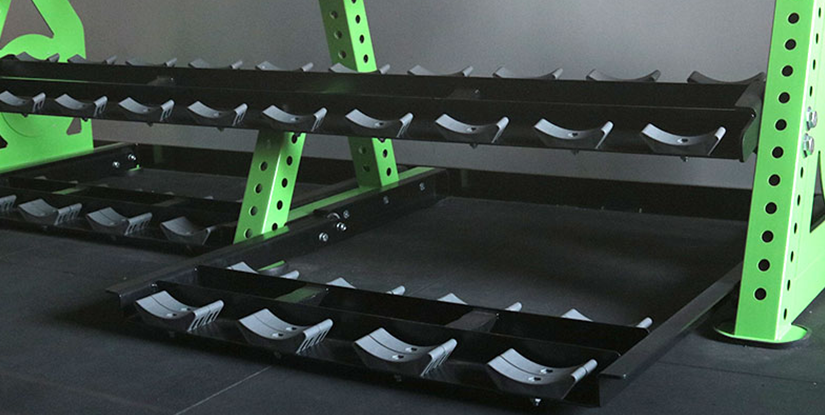
The prevailing misconception in fitness facility procurement is that higher costs automatically equate to better long-term ROI. Many operators believe that purchasing individual pieces of high-end equipment from various boutique suppliers is the only way to ensure quality. However, the structural reality is that wholesale gym equipment packages can provide superior logistical cohesion and mechanical consistency when selected with a technical mindset. The risk is not the 'package' itself, but rather a lack of technical oversight during the selection process, which can lead to mismatched load capacities or incompatible footprint requirements.
Deconstructing the Wholesale Package Procurement Model
To successfully navigate the transition from a conceptual layout to a functional facility, one must understand that a wholesale package is a curated assembly of mechanical systems. The primary benefit is not merely the discount, but the standardized engineering specifications across the product lines. When equipment is sourced from a single cohesive package, the tolerances for weight-bearing, movement mechanics, and ergonomic adjustments are more likely to be aligned.
A common mistake occurs when operators prioritize the 'aesthetic' of a package over its technical documentation. A visually striking set of machines might possess inconsistent pivot points or varying degrees of resistance profiles, which complicates user experience and maintenance. A professional approach requires auditing the specification sheets of each included unit to ensure they meet the intended usage intensity. Once the fundamental procurement logic is established, the focus must shift to the physical constraints of the installation site.
Technical Auditing of Component Specs
- Frame Construction: Verify if the steel is heavy-duty gauge (typically 11-gauge or 12-gauge) to ensure stability under high-intensity use.
- Resistance Mechanisms: Inspect the quality of cable systems, pulley smoothness, and weight stack guide rods.
- Upholstery Durability: Confirm that the foam density and vinyl coating are rated for commercial-grade friction and sweat resistance.
By validating these technical components before the purchase order is finalized, an operator mitigates the risk of mid-lifecycle failures. This technical baseline is the prerequisite for the next stage: facility spatial planning.
Optimizing Spatial Geometry and Floor Load Capacity
Before a single crate arrives at your facility, the geometric relationship between the equipment and the room must be mathematically verified. A common failure mode in gym construction is the 'density trap,' where an operator fills a room based on a list of equipment without accounting for the dynamic footprint of the machines. A piece of equipment may have a static footprint of 4ft x 6ft, but once a user is performing a movement, the dynamic radius can extend significantly further.
Furthermore, the structural integrity of the floor is a critical variable often overlooked in wholesale procurement. Heavy weight racks and large plate-loaded machines exert high point loads on the flooring. If the substrate is not prepared to handle these concentrated forces, you risk subfloor deformation or cracking. Operators should utilize a spacing buffer to ensure safety and compliance with international accessibility standards.
| Equipment Category | Static Footprint (Avg) | Dynamic Clearance Required | Floor Type Recommendation |
|---|---|---|---|
| Selectorized Machines | 3' x 5' | +2' on all sides | Rubberized Flooring (8mm+) |
| Power Racks/Squat Stands | 4' x 5' | +4' for barbell rotation | High-Impact Tile or 1/2" Rubber |
| Cardio Equipment | 2.5' x 6' | +3' for safety/airflow | Standard Commercial Carpet/Rubber |
| Free Weight Benches | 1.5' x 4' | +5' for movement range | High-Density Rubber Mats |
Establishing these spatial bounds ensures that the facility remains navigable during peak hours. With the layout and floor load requirements verified, the focus turns to the actual assembly and technical installation process.
Explore the complete technical specifications:
Fitness Equipment Wholesalers: Commercial Sourcing Partnerships Guide
The Criticality of Precision Assembly and Component Integrity
The transition from a delivered wholesale package to an operational gym depends entirely on the precision of the assembly. Even the highest-quality equipment will fail prematurely if the assembly process ignores technical tolerances. A common error is the 'forced fit,' where technicians attempt to tighten bolts or align parts that are slightly out of alignment, leading to stripped threads or weakened structural integrity.
During the assembly of wholesale gym equipment packages, it is imperative to follow the specific torque requirements for every connection point. Many high-end machines utilize specialized bolts that require precise tensioning to maintain the rigid geometry necessary for smooth motion. If a bolt is under-torqued, the frame may sway under load; if it is over-torqued, the metal may experience stress fractures over time.
Assembly Verification Checklist
- Alignment Check: Ensure that weight stacks are perfectly vertical to prevent cable fraying and pulley binding.
- Fastener Integrity: Verify that every structural bolt is tightened to the manufacturer’s specified torque range using a calibrated tool.
- Bearing Smoothness: Manually cycle every moving part to check for resistance or 'crunching' sensations that indicate debris or poor lubrication.
- Leveling: Use a precision spirit level on all flat surfaces and weight racks to prevent uneven load distribution.
Rigorous adherence to these assembly standards prevents the most common causes of mechanical failure. Once the machines are physically stable, the next priority is implementing a systematic maintenance protocol.
Systematizing Maintenance to Protect Capital Investment
Once the equipment is assembled and the facility is open, the primary challenge shifts from construction to preservation. The most significant threat to the lifespan of a wholesale package is 'reactive maintenance'—only fixing things when they break. In a commercial environment, this approach is financially disastrous due to downtime and potential liability. Instead, operators must implement a proactive, scheduled maintenance lifecycle.
Effective maintenance involves three distinct layers: visual inspection, mechanical testing, and lubrication management. Mechanical components like cables, pulleys, and bearings are subject to constant friction and tension. Without regular intervention, these parts will degrade, leading to a decline in the user experience and increased safety risks.
Layered Maintenance Framework
| Maintenance Tier | Frequency | Primary Objective | Key Actions |
|---|---|---|---|
| Tier 1: Visual | Daily/Weekly | Immediate Hazard Detection | Check for frayed cables, loose bolts, and torn upholstery. |
| Tier 2: Mechanical | Monthly | Performance Optimization | Test pulley tension, lubricate guide rods, and check weight stack alignment. |
| Tier 3: Structural | Quarterly | Longevity Assurance | Full torque audit of all structural fasteners and frame inspection. |
This structured approach ensures that minor issues are caught before they become catastrophic failures. However, even with perfect maintenance, technical troubleshooting remains an inevitable operational requirement.
Troubleshooting Common Mechanical Malfunctions
Despite rigorous maintenance, mechanical components within a gym environment are subject to wear and tear. An operator must be able to differentiate between a minor calibration issue and a genuine component failure. For example, a 'noisy' pulley could be as simple as a lack of lubricant, or it could be a sign of a failing bearing that requires full replacement. Understanding these nuances is vital for maintaining uptime.
A frequent issue in wholesale gym equipment packages involves the cable and pulley system. Cables are the most vulnerable part of any strength machine. They are susceptible to kinking, fraying, and internal wire breakage. If a cable begins to show 'feathering' (individual wires protruding from the sheath), it must be replaced immediately, as this is a precursor to a full cable snap.
Common Troubleshooting Scenarios
- Scenario: Jerky Machine Motion. Cause: Typically caused by a lack of lubrication on the guide rods or an unaligned weight stack. Fix: Clean the rods with a non-abrasive cloth and apply a silicone-based lubricant.
- Scenario: Squeaking or Grinding Noises. Cause: Worn-out bearings or insufficient lubrication in the pulley system. Fix: Inspect the pulley housing for debris and replace the bearing if the rotation is no longer fluid.
- Scenario: Uneven Resistance. Cause: Non-parallel weight stacks or an improperly tensioned cable. Fix: Re-verify the vertical alignment of the stack and adjust the cable tensioning bolts.
Effective troubleshooting minimizes downtime and ensures that the facility remains a high-performance environment. Mastering these technical aspects is the final step in successfully managing a professionally built gym facility.
Calculating and Monitoring Equipment Lifecycle ROI
The final stage of professional gym management is moving from the 'build' phase to the 'analytical' phase. To truly understand the value of how to build a gym with wholesale gym equipment packages, one must track the long-term ROI. This involves calculating the total cost of ownership (TCO), which includes the initial purchase price plus the cumulative costs of maintenance, parts replacement, and labor.
A high-quality wholesale package with a higher upfront cost may actually provide a much better ROI over a five-year period than a budget-tier package. This is due to the lower frequency of part replacement and the reduced labor hours required for troubleshooting. Operators should maintain a digital log of all maintenance events and part replacements to identify patterns of failure and refine their procurement strategies for future expansions.
By treating the gym as a complex mechanical system rather than just a collection of objects, operators can maximize both the performance of their equipment and the profitability of their facility. The ability to scale, maintain, and troubleshoot efficiently is what separates amateur setups from professional commercial fitness environments.