

Maximizing ROI through Strategic Procurement: How Gym Equipment Package Deals Save Money for Your Gym
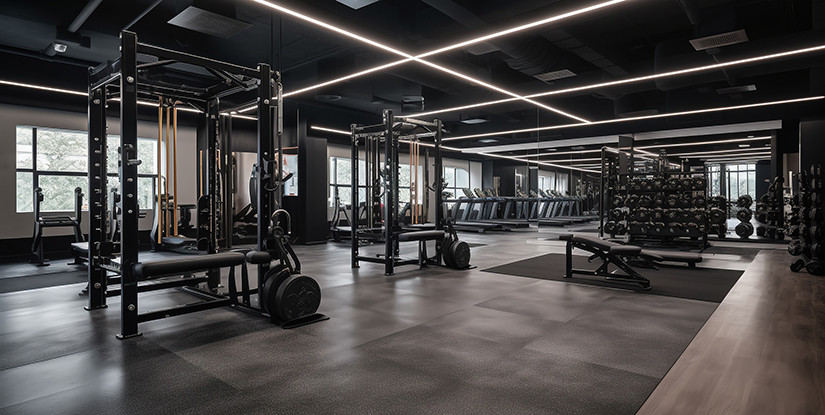
For facility operators and fitness entrepreneurs, the initial capital expenditure (CAPEX) is often the most significant hurdle to a successful launch or expansion. A common oversight in the procurement phase is treating individual equipment pieces as isolated purchases rather than components of a unified ecosystem. This fragmented approach frequently leads to inflated shipping costs, mismatched aesthetic profiles, and, most critically, higher long-term maintenance burdens. Understanding how gym equipment package deals save money for your gym requires moving beyond the simple sticker price to examine the total cost of ownership and operational efficiency.
Evaluating the Economic Advantages of Unified Equipment Bundles
The decision to purchase via package deals is rarely just about a discount on a single machine; it is a strategic move to consolidate the supply chain. When an operator selects a comprehensive bundle, they are essentially leveraging volume to reduce the per-unit cost of high-end hardware. This consolidation serves to mitigate the rising costs of logistics and administrative overhead associated with managing multiple vendors.
Volume-Based Discounts vs. A La Carte Procurement
The primary mechanism for cost reduction in package deals is the scale of the order. Suppliers are often willing to reduce margins on individual items when a large, predictable volume of inventory is moved in a single transaction. This is particularly effective for startups or large-scale renovations where the volume is high enough to shift the negotiation leverage.
| Metric | A La Carte Procurement | Equipment Package Deals |
|---|---|---|
| Shipping/Logistics | Multiple shipments; high per-unit freight | Consolidated shipping; reduced freight impact |
| Administrative Effort | High; multiple invoices and vendors | Low; single point of contact and invoice |
| Aesthetic Consistency | Variable; risk of mismatched styles | Unified; consistent design and color schemes |
| Negotiation Leverage | Weak; individual item pricing applies | Strong; volume-based discounts available |
By centralizing these variables, operators can redirect funds from logistical inefficiencies into high-value areas like marketing or facility design. Once the economic logic of bundling is established, the next critical step is ensuring that these packages meet the specific technical requirements of the intended facility type.
Analyzing Equipment Compatibility and Lifecycle Synchronicity
A significant risk in cost-saving initiatives is the pursuit of low prices at the expense of mechanical compatibility. A package deal that successfully lowers initial costs must still guarantee that the equipment components work in concert with the facility's power, space, and maintenance protocols. Without this synchronization, the supposed savings are quickly erased by operational friction.
The Peril of Mismatched Technical Specifications
A frequent mistake in rapid gym setups is neglecting the technical interplay between different equipment types. For example, purchasing high-intensity interval training (HIIT) equipment alongside heavy-duty free weights without considering floor load or vibration control can lead to premature wear on both the machines and the facility'off floor. A well-curated package deal typically addresses these compatibility issues by grouping items that share similar footprint footprints, power requirements, or maintenance needs.
Failure Mode Example: An operator purchases a bundle of cardio equipment from one source and strength equipment from another to save money. If the cardio machines require a specific voltage or specialized circuit protection that the facility's electrical plan hasn't accounted for, the resulting installation delays and electrical retrofitting costs will far outweigh the initial package discount.
To avoid these pitfalls, operators must verify that the bundle’s specifications align with their facility's infrastructure. Moving from compatibility to physical implementation, the layout of the selected equipment becomes the next vital consideration.
Explore the complete technical specifications:
Optimizing Facility Layout for Operational Throughput
How gym equipment package deals save money for your gym is also deeply connected to the spatial efficiency of the facility. Packages are often designed around specific training modalities—such as a functional training area, a cardio zone, or a heavy lifting section. These pre-configured layouts help prevent the costly error of purchasing excess equipment that does not fit the physical footprint of the room.
Strategic Zoning and Footprint Management
A professional approach involves mapping out the zones of the gym before finalizing the package. A package deal that focuses on a specific zone—for example, a "Strength & Conditioning Bundle"—ensures that the machines are scaled for the space. This prevents the "clutter effect," where poorly sized equipment hampers member movement and reduces the perceived value of the gym.
- Zoning Check: Does the package bundle items with similar footprint requirements?
- Flow Verification: Is there sufficient clearance between the bundled pieces for safe member transit?
- Load Distribution: Do the combined weights of the bundled strength equipment exceed the floor's structural rating?
Effective layout planning ensures that the capital invested in the package is utilized to its maximum potential. With the layout finalized, the focus must shift to the long-term reliability of the equipment through rigorous inspection protocols.
Establishing Maintenance Standards for Bundled Equipment
The true value of an equipment package is realized not at the time of purchase, but through its operational lifespan. Maintenance is the most frequent area where cost-saving efforts fail; if the equipment is not maintained according to the manufacturer's strictures, the high depreciation rate will destroy the initial ROI. A unified package often simplifies this by offering a consistent maintenance schedule and parts ecosystem.
Streamlining the Maintenance Workflow
When equipment is sourced from a single package, the maintenance requirements often become standardized. Instead of managing diverse lubrication types, varying bolt sizes, or disparate part numbers, the technician works with a more homogeneous set of requirements. This standardization reduces both the time spent on repairs and the cost of keeping specialized inventory on hand.
Implementation Detail: Create a unified maintenance log for all items within the package. Since the equipment shares a common lineage, you can often batch certain inspection tasks, such as checking belt tension on cardio machines or inspecting cable integrity on strength machines, within a single monthly window.
| Inspection Item | Frequency | Failure Mode to Watch For | Verification Method |
|---|---|---|---|
| Upholstery & Padding | Bi-weekly | Cracking or tearing due to sweat/friction | Tactile and visual check for exposure |
| Cables & Pulleys | Monthly | Fraying or loose tension | Manual tension test and visual inspection |
| Fasteners/Bolts | Quarterly | Vibration-induced loosening | Torque wrench verification |
| Electronics/Displays | Monthly | Software glitches or sensor failure | Functional testing of all programmed modes |
Regularity in these checks ensures that small issues do not evolve into catastrophic failures. Once the maintenance routine is established, operators must also address the procurement-related risks associated with long-term parts availability.
Mitigating Long-Term Procurement Risks and Parts Availability
A common pitfall when pursuing package deals is the assumption that the initial savings outweigh the risks of future obsolescence. If a package is sourced from a supplier with a limited parts infrastructure, the operator may find themselves with non-functional equipment and no way to repair it. This leads to a total loss of the initial investment.
Verifying Supplier Reliability and Lifecycle Support
Before committing to a large-scale bundle, it is imperative to investigate the supplier's long-term support capabilities. You are not just buying machines; you are entering into a long-term partnership for parts and technical expertise. A robust package deal should include a clear commitment to parts availability for a specified number of years.
Decision Criterion: Ask the supplier for a "Parts Availability Guarantee." A reputable supplier will be able to state how long after the discontinuation of a specific model they will continue to provide replacement components. If the answer is vague, the risk of the package becoming a liability is high.
Furthermore, verify that the bundle's components are not purely proprietary. While some proprietary systems enhance performance, a level of standardization allows for easier third-party maintenance if the original supplier fails to meet service-level agreements (SLAs). This technical nuance is the difference between a sustainable investment and a depreciating asset.
Optimizing the Total Cost of Ownership (TCO) Model
To truly grasp how gym equipment package deals save money for your gym, one must look at the Total Cost of Ownership (TCO). TCO accounts for the initial purchase, shipping, installation, training, maintenance, and the eventual disposal of the equipment. A package deal that looks cheaper upfront might actually be more expensive over five years if it requires more frequent specialized labor or has a lower resale value.
Comparing Initial CAPEX vs. Long-Term OPEX
The goal of professional procurement is to balance Capital Expenditure (CAPEX) with Operating Expenditure (OPEX). High-quality bundles often have a slightly higher CAPEX but a significantly lower OPEX due to their durability and ease of maintenance. Low-quality, fragmented purchases might lower the initial barrier to entry but result in high OPEX due to constant downtime and repair costs.
- Scenario A (Fragmented): Low initial cost, high shipping frequency, high repair frequency, low resale value.
- Scenario B (Package): Moderate initial cost, single shipping event, standardized maintenance, high resale/residual value.
By analyzing these scenarios, an operator can see that the most "economical" choice is often the one that offers the most stability over time. This leads us to the final verification: the audit of the procurement process itself.
Conducting a Post-Purchase Audit of Your Equipment Package
The final stage of a professional procurement strategy is the audit. Once the package has been delivered and installed, you must verify that the actualized savings match the projected benefits. This audit ensures that no hidden costs were overlooked during the transition from a sales quote to a physical operational reality.
Verification Checklist for Delivered Bundles
A successful audit involves more than just counting the number of machines in the crate. It requires a systematic verification of the technical and financial assumptions made during the negotiation phase.
- Inventory Match: Does every item listed in the package deal manifest in the physical delivery?
- Spec Verification: Do the technical specs (voltage, weight, dimensions) match the facility's actual implementation?
- Freight Audit: Were the shipping and installation costs within the quoted bundle range, or were there un-itemized surcharges?
- Documentation Review: Have all user manuals, maintenance schedules, and warranty certificates been received and digitized?
Completing this audit allows the operator to confirm that the package deal has indeed functioned as a tool for cost-saving rather than a source of unmanaged expense. With these control points in place, the facility is positioned for a high-performance launch and long-term profitability.