

Evaluating Gym Bench Manufacturers: A Technical Manufacturing Deep-Dive
Material Selection and Structural Integrity in Manufacturing
The lifecycle of high-quality gym equipment begins long before a bench enters a facility; it starts with the selection of raw materials that can withstand decades of mechanical stress. Many gym bench manufacturers fail to provide sufficient transparency regarding their steel grades, which leads to structural fatigue in high-traffic commercial environments. A common failure mode in lower-tier production is the use of thin-walled tubing that lacks the cross-sectional density required to prevent buckling under heavy eccentric loads.
Steel Grade and Wall Thickness Standards
To avoid the risk of frame deformation, professional operators must verify the gauge of the steel used in the primary chassis. A common mistake is assuming that any heavy steel is equal, but the distinction between mild steel and high-tensity alloys can impact both weight and durability. Industrial-grade benches typically utilize 11-gauge to 7-gauge steel for the primary frame components. If the steel is too thin, the bench will exhibit 'oscillation'—a subtle, dangerous wobbling during heavy lifts.
| Material Component | Standard Requirement | Common Defect |
|---|---|---|
| Primary Frame Steel | 11-gauge to 7-gauge heavy-duty steel | Wall thinning at weld points |
| Adjustment Pins | Hardened stainless steel | Shearing or bending under load |
| Upholstery Core | High-density (HD) foam (min 4-inch) | Premature compression or 'bottoming out' |
| Base Footing | Non-slip, heavy-duty rubber | Cracking or sliding on epoxy floors |
By prioritizing high-gauge steel and high-density foam, a facility ensures that the bench maintains its shape and stability over thousands of cycles. Understanding these material foundations is the first step toward a reliable procurement strategy, which leads directly to the critical manufacturing processes that shape these materials into a finished product.
The Precision of Steel Fabrication and Welding Processes
Once the raw materials are selected, the transition from metal sheets to a structural frame requires high-precision fabrication. The structural integrity of a bench is heavily dependent on the quality of the welding techniques employed during the assembly phase. Substandard welding is a primary cause of catastrophic failure in commercial weight rooms, often manifesting as hairline cracks around the junction points of the adjustable mechanisms.
Robotic vs. Manual MIG Welding
Modern manufacturing utilizes a mix of automated and manual processes to ensure consistency. Robotic MIG (Metal Inert Gas) welding provides extreme precision and heat control, which is essential for maintaining the metallurgical properties of the steel. Manual welding, while still necessary for complex geometries or custom adjustments, introduces the risk of 'heat soak,' where excessive heat during the welding process weakens the surrounding steel structure.
- Precision Alignment: Using CNC bending machines to ensure all angles of the bench frame are identical to within a millimeter.
- Weld Penetration: Ensuring the weld metal penetrates deep into the joint to create a unified structure rather than just a surface bond.
- Post-Weld Stress Relief: Allowing the frame to stabilize to prevent warping during the painting process.
Verifying the quality of these welds requires looking for smooth, continuous beads without 'porosity' (tiny holes) or 'undercutting' (grooves eaten into the base metal). A clean, consistent weld is a visual indicator of a manufacturer's commitment to structural safety, which is the prerequisite for a high-quality finish.
Surface Treatment and Environmental Resistance
The structural welding creates the strength, but the surface treatment determines the longevity of the bench in various environments. A common problem faced by facility managers is 'oxidation-induced failure,' where moisture enters through micro-cracks in the paint, leading to rust underneath the upholstery or within the frame joints. This is often caused by poor electrostatic powder coating applications.
Powder Coating and Finishing Protocols
The industry standard for durability is electrostatic powder coating. Unlike liquid paint, powder coating creates a hard, resilient shell that is much more resistant to impact and abrasion from barbell contact. The process involves applying dry powder particles that are then 'cured' in a high-temperature oven to create a cross-linked surface finish. When evaluating manufacturers, one must ask about the thickness of the coating and the pre-treatment process used to prepare the steel.
| Finish Type | Durability Level | Best Use Case |
|---|---|---|
| Electrostatic Powder Coating | High | Commercial gyms and high-traffic areas |
| Liquid Paint/Enamel | Medium | Home gyms or low-intensity use |
| Chrome/Metallic Plating | Varies | Decorative or specific component accents |
A high-quality powder coating should be smooth to the touch and lack any 'orange peel' texture or bubbling. If the finish is uneven, it creates a vulnerability where moisture can eventually reach the substrate. Ensuring a robust finish protects the underlying steel and maintains the aesthetic appeal of the facility.
Explore the complete technical specifications:
Upholstery Engineering and Compression Testing
While the steel frame provides the skeleton, the upholstery represents the primary contact point for the athlete. A significant pain point for gym owners is the 'bottoming out' effect, where the foam loses its ability to rebound, leaving the user feeling the hard bench beneath them. This is rarely an issue of the material itself, but rather a failure in the upholstery construction and layering technique.
Multi-Layer Foam Architectures
Professional-grade benches do not use a single block of foam. Instead, they utilize a layered approach to optimize both comfort and support. This typically involves a high-density base layer for structural support and a softer, viscoelastic top layer for ergonomic comfort. The failure to implement this multi-layer strategy leads to rapid foam fatigue and an uncomfortable training experience.
- Material Density: High-density foam should maintain its shape even after extended compression.
- Vinyl Durability: The outer cover must be a heavy-duty, antimicrobial vinyl that can withstand sweat and frequent cleaning agents.
- Seam Integrity: Reinforced stitching prevents the foam from expanding or the cover from tearing under pressure.
When inspecting a bench, a simple tactile test—pressing a thumb firmly into the foam—can reveal the quality. If the foam does not immediately return to its original shape, the density is insufficient for long-term commercial use. This level of tactile verification ensures that the comfort of the user is as reliable as the strength of the frame.
Explore the complete technical specifications:
Adjustment Mechanism Reliability and Tolerance Testing
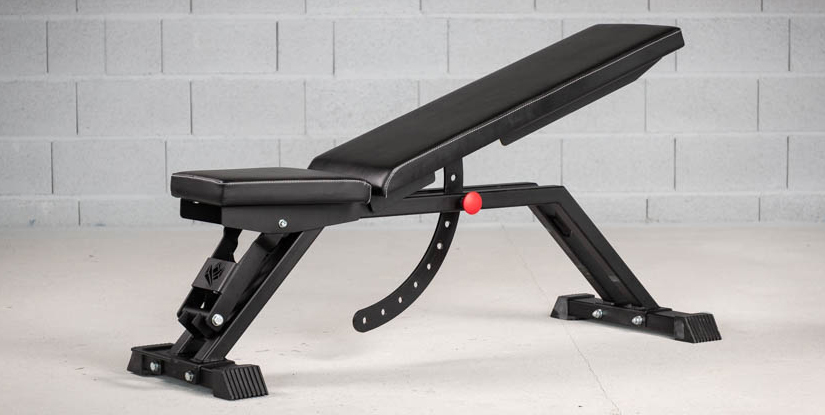
The transition from a flat bench to an incline or decline position introduces significant mechanical stress points. The adjustment mechanism is arguably the most complex part of the bench, as it involves moving parts, pins, and locking-style systems. If these components are manufactured with loose tolerances, the bench will feel unstable and potentially dangerous during heavy vertical presses.
Mechanical Tolerance and Locking Safety
A high-quality adjustment system uses hardened steel pins and precision-machined holes. A common failure occurs when the holes are not perfectly aligned, causing the pin to 'jitter' or vibrate during use. This vibration can eventually cause the metal to round off, leading to a loose, unstable feeling that undermines the user's confidence.
- Pin Diameter: The pin should fit snugly into the hole without significant play.
- Locking Mechanism: The system should provide a clear, audible or tactile 'click' when fully engaged.
- Weight Capacity: The mechanism must be rated for the same weight-load as the primary frame.
To verify quality, operators should test the adjustment by lifting the bench angle slightly while it is in the 'locked' position. Any significant movement or 'clunking' indicates a tolerance issue that could lead to mechanical failure. Once these mechanical components are validated, the focus shifts to the long-term maintenance required to keep them operational.
Explore the complete technical specifications:
Operational Maintenance and Longevity Protocols
Even the highest quality equipment requires a structured maintenance regimen to reach its full lifecycle potential. The goal of a facility manager is to move from reactive repairs to proactive maintenance. Neglecting the upkeep of a gym bench often leads to avoidable costs, such as replacing an entire unit due to a single rusted bolt or a torn seat cover.
Preventative Inspection Checklist
A routine inspection should be part of the monthly facility walkthrough. Identifying small issues before they become structural failures is the hallmark of professional gym management. Below is a standardized protocol for maintaining the longevity of your equipment.
| Frequency | Component | Action Required |
|---|---|---|
| Weekly | Upholstery | Check for tears, cracks, or discoloration |
| Monthly | Adjustment Pins | Ensure pins are tight and seating correctly |
| Quarterly | Bolts & Fasteners | Check torque on all primary frame bolts |
| Bi-Annually | Frame & Paint | Inspect for rust or coating chips |
By adhering to a strict maintenance schedule, facilities can extend the life of their equipment by several years. This proactive stance not only saves money but also ensures a safer environment for the athletes. As the industry evolves, staying ahead of these maintenance needs is vital for managing the total cost of ownership.
Explore the complete technical specifications:
Future Trends in Bench Manufacturing and Ergonomics
As we look forward, the manufacturing landscape for gym equipment is shifting toward increased personalization and intelligent design. While the core requirements of steel and foam remain constant, new technologies are influencing how these components are integrated. The next generation of benches will likely focus on even tighter tolerances and more ergonomic specialization.
Advancements in Ergonomic Design and Smart Integration
We are seeing a move toward modularity, where bench components can be swapped or upgraded to meet different training needs. Additionally, the integration of smart sensors for tracking rep speed and load distribution is a growing area of interest. While these technologies are still in the early stages, they represent the future of high-end commercial strength equipment.
- Modular Adjustments: Frames designed to accept different types of padding or accessory attachments.
- Advanced Materials: Use of carbon-fiber-reinforced polymers in non-load-bearing components to reduce weight without sacrificing strength.
- Ergonomic Precision: Using 3D scanning to design pad shapes that better fit the natural curvature of the human spine.
Staying informed about these trends allows procurement specialists to make decisions that are not just about current needs, but about future-proofing their facilities. Whether you are looking at current heavy-duty standards or upcoming technological shifts, the foundation remains the same: quality materials and precision manufacturing.