

Maximizing ROI Through Full-Body Workouts with a Commercial Cable Machine
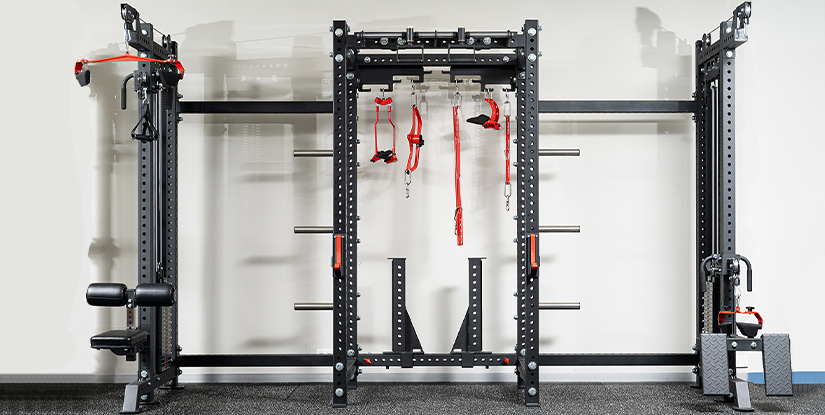
Challenging the Misconception of Limited Resistance Profiles
A persistent myth in high-end fitness facility management is that resistance cables are inherently inferior to free weights for heavy compound movements. Critics often argue that the constant tension of a cable system lacks the raw, neurological loading capacity of a barbell. However, from a market-driven perspective, this view ignores the efficiency of constant tension and the increased ability to target specific muscle fibers through varied angles. For a commercial gym operator, the goal is not just to provide heavy weight, but to provide highly adaptable resistance that maximizes member results per minute of training.
In reality, the variable resistance of a cable machine allows for a more complete range of motion in the strength curve, which is a critical factor in hypertrophy and functional longevity. While a barbell exhibits a fixed resistance path, a commercial cable system can be manipulated to match the changing strength curve of a human movement. This adaptability makes it a superior tool for diverse client bases, ranging from powerlifters to physical therapy patients. Understanding these mechanical advantages is the first step toward optimizing your facility's equipment utility. As we move from theoretical resistance to practical application, it is necessary to establish the foundational hardware requirements.
Resistance Profiles: Free Weights vs. Cable Systems
| Feature | Free Weights (Barbell/Dumbbell) | Commercial Cable Machines |
|---|---|---|
| Resistance Path | Fixed/Gravitational | Variable/Multi-Angular |
| Tension Consistency | Decreases at peak contraction | Maintains constant tension |
| Adaptability | Limited to vertical plane | High (Adjustable pulleys) |
| Primary Benefit | Neural Load/Max Strength | Hypertrophy/Muscle Control |
Recognizing that the cable's strength lies in its versatility allows operators to design more effective training programs. This versatility, however, requires a deep understanding of the mechanical setup to ensure safety and efficiency.
Ensuring Structural Integrity and Safety Verification Protocols
Because the versatility of a cable machine introduces more moving parts, the risk profile for mechanical failure is higher than that of a stationary rack. A common failure mode in commercial environments is the gradual fraying of the steel core within the nylon coating, often caused by improper pulley alignment or debris accumulation. If a cable snaps during a high-load full-body workout, the resulting kinetic energy release can pose significant liability risks to the facility.
To mitigate this, operators must implement a rigorous inspection cadence. A professional-grade cable system should undergo a three-point verification check daily. First, inspect the cable sheath for any signs of discoloration or structural bulges. Second, verify the pulley housings for free rotation; a sticking pulley creates uneven tension that can lead to sudden muscle strain. Third, check the weight stack selector pins to ensure they are fully seated and not worn down by repetitive friction. Failure to perform these checks often results in the 'stuttering' effect, where weight plates do not descend smoothly due to misaligned guide rods.
Daily Maintenance Checklist for Operators
Cable Inspection: Check for fraying or kinking along the entire length.A well-maintained machine ensures that the user experiences the smooth, consistent resistance intended by the design. With the hardware secured, we must now focus on the specific training methodologies that yield the highest return on investment.
Advanced Programming for Full-Body Workouts with a Commercial Cable Machine
Effective programming for full-body workouts with a commercial cable machine requires a shift in mindset from traditional 'reps and sets' to 'tension and angle management.' The error most users make is treating the cable machine as a direct substitute for a barbell without utilizing its unique angular advantages. For example, while a barbell squat is a vertical load, a cable-driven movement can optimize the posterior chain through a diagonal pull, providing a different stimulus to the glutes and hamstrings.
To build a comprehensive routine, an operator or trainer should structure the workout around the major movement patterns: push, pull, hinge, and squat. In a commercial setting, the efficiency of these movements is heightened by the ability to transition between exercises rapidly without changing equipment. A full-body routine should leverage the machine's ability to change resistance angles to hit supplementary muscle groups that are often neglected in a purely barbell-centric program. This methodology maximizes the utility of the machine's footprint within the gym floor.
Sample Movement Categorization for Full-Body Optimization
| Movement Pattern | Primary Muscle Group | Recommended Cable Variation |
|---|---|---|
| Vertical Push | Deltoids/Triceps | High Cable Shoulder Press |
| Horizontal Pull | Latissimus Dorsi/Rhomboids | Seated Cable Row (Low Pulley) |
| Hip Hinge | Glutes/Hamstrings | Cable Pull-Through |
| Knee Extension | Quadriceps | Single-Leg Cable Squat/Lunge |
| Core Stability | Abdominals/Obliques | Cable Woodchoppers |
This structured approach to movement ensures that every muscle group is addressed via the most efficient tension path. However, even the most perfect program will fail if the user does not understand the nuances of weight selection and progression.
Explore the complete technical specifications:
Managing Load Selection and Progressive Overload Nuances
A critical failure point in training with cables is the 'plateau effect,' where users reach a weight limit and cannot effectively progress. Unlike free weights, where adding 2.5kg is a standard increment, commercial cable stacks often have much larger jumps between weight plates. This can lead to inadequate load increments that fail to trigger new muscle adaptations, or conversely, jumps that are too heavy to maintain proper form.
To optimize progress, users should focus on 'mechanical tension' rather than just moving the weight from point A to point B. This involves controlling the eccentric (lowering) phase of the movement. A common mistake is allowing the weight to 'drop' during the return phase, which wastes a significant portion of the tension-building potential. In a professional setting, we recommend the 'Tempo Method' to ensure progressive overload: increase the time under tension (TUT) before attempting to increase the weight stack. For instance, a 3-0-3-0 tempo (3 seconds down, 0 second pause, 3 seconds up) ensures that the resistance remains constant through the entire range of motion.
Progressive Overload Strategies
- Increased Repetitions: Master a specific weight for a higher rep range (e.g., 15 reps) before moving up.
- Decreased Rest Intervals: Keep the weight the same but reduce rest from 90 to 60 seconds to increase metabolic stress.
- Improved Tempo Control: Slow down the eccentric phase to increase muscle fiber recruitment without adding weight.
- Angular Manipulation: Change the pulley height to hit a different part of the muscle while using the same weight.
Mastering these variables ensures that the training remains effective over long periods. As users progress in their ability to control these loads, the focus must eventually shift toward the long-term durability of the equipment itself.
Longevity and Lifecycle Management of High-Usage Equipment
From a commercial standpoint, the ROI of a cable machine is directly tied to its operational lifespan. High-traffic gyms often face the problem of 'premature component fatigue,' where cables or pulleys fail much sooner than the manufacturer's expected lifecycle. This is rarely a defect in the machine itself, but rather a consequence of environmental factors and user misuse that goes unaddressed by management.
To extend the lifecycle of your equipment, you must monitor two critical variables: lubricant quality and cable tension consistency. Lubricant breakdown in the guide rods or pulley bearings can lead to increased friction, which not only degrades the user experience but also puts unnecessary strain on the cable fibers. A professional recommendation is to use a high-grade silicone-based lubricant—never a heavy grease—on the guide rods every 90 days. Additionally, monitoring the 'slack' in the system is vital; if the cables appear loose or have developed a 'memory' of a certain shape, they must be replaced immediately to avoid a catastrophic snap. Managing these technical aspects ensures that your capital expenditure provides value for years rather than months.
Component Replacement Indicators
| Component | Standard Lifecycle (Estimated) | Replacement Trigger (Failure Mode) |
|---|---|---|
| Nylon/Steel Cable | 18–24 Months | Fraying, kinking, or visible core exposure |
| Pulley Wheels | 24–36 Months | Noisy rotation, visible cracking, or uneven wear |
| Weight Stack Pins | Variable (High Use) | Bent pins or loss of structural integrity |
| Guide Rods | Long-term | Scoring, deep scratches, or significant friction |
By treating equipment maintenance as a strategic asset rather than a chore, facility owners protect their investment and ensure consistent user satisfaction. This leads us to the final consideration: how to validate that your training and maintenance protocols are actually working.
Verification of Training Efficacy and Equipment Performance
The final step in a professional operational cycle is verification. For the trainer, this means verifying that the full-body workout is actually producing the intended physiological adaptations. For the facility manager, this means verifying that the equipment is performing within its design tolerances. Without a feedback loop, you are operating on assumptions rather than data.
To verify training efficacy, track metrics such as 'Rate of Perceived Exertion' (RPE) alongside traditional strength gains. If a client can no longer increase weight or reps but their RPE remains high, they may be experiencing neurological fatigue or inefficient movement patterns. To verify equipment performance, use the 'Resistance Smoothness Test': a weight stack should descend with a predictable, constant deceleration. Any erratic movement, jerking, or sudden shifts in tension are indicators that the internal mechanisms—either the cables, pulleys, or guide rods—require immediate intervention. Regular documentation of these findings ensures a transparent and professional operating environment.
The Professional Verification Loop
- Weekly: Visual inspection of all high-wear components (cables, pulleys, pins).
- Monthly: Mechanical stress test (checking for noise, friction, or erratic resistance).
- Quarterly: Deep cleaning and lubrication of all moving parts.
- Annually: Full structural audit of the mounting and support frame.