

Strategic Sourcing: A Guide to Fitness Equipment Wholesale Distributors
The High Cost of Suboptimal Procurement in Commercial Fitness
Facility operators often face a recurring crisis: equipment failure shortly after the warranty expires or, worse, during peak usage hours. This instability usually stems from a fundamental mismatch between the procurement strategy and the actual structural demands of a commercial environment. When selecting fitness equipment wholesale distributors, the goal is not merely to find the lowest price per unit, but to secure a supply chain that prioritizes structural integrity and long-term serviceability. A failure to vet distributors correctly leads to high replacement frequencies and increased liability risks.
The Root Cause: Price-First vs. Specification-First Sourcing
The primary driver of premature equipment failure is the reliance on distributors who prioritize high-volume, low-spec turnover. These entities often lack the technical support required to assist with complex installations or long-term maintenance scheduling. A professional buyer must recognize that a lower initial capital expenditure (CAPEX) can lead to exponentially higher operating expenses (OPEX) if the equipment requires frequent part replacements or specialized tools for minor adjustments.
| Sourcing Metric | Low-Tier Distributor Profile | Professional Wholesale Profile |
|---|---|---|
| Primary Focus | Lowest Unit Price | Total Cost of Ownership (TCO) |
| Product Spec | Generic/Residential Grade | Commercial-Grade/High-Durability |
| Support Model | Transactional/One-off | Long-term Service & Parts Availability |
| Compliance | Standard Safety Marks | Rigorous Structural & Electrical Certifications |
Understanding these profiles allows operators to shift their focus from immediate savings to long-term reliability. This distinction becomes critical when evaluating the specific technical standards of the hardware itself.
Verifying Material Integrity and Structural Tolerances
Once a distributor has been shortlisted, the next critical step involves a deep dive into the material specifications of the equipment. High-traffic facilities subject machines to constant vibration, thermal expansion, and mechanical stress. Relying on vague descriptions like "heavy-duty" is a common mistake that leads to catastrophic structural fatigue.
Steel Gauge and Component Thickness
A professional operator must demand specific data regarding steel gauge and component thickness. For instance, strength training racks should ideally utilize high-gauge steel to prevent frame warping under heavy loading. If a distributor cannot provide the specific gauge or the type of steel used, it is a significant red flag indicating a lack of transparency in the manufacturing process.
- Frame Construction: Look for welded joints rather than just bolted connections for high-impact areas.
- Bearing Systems: Verify the type of bearings used in cardio machines; high-quality ball bearings reduce friction and extend the lifespan of the drive system.
- Upholstery Density: High-density foam is essential to prevent the "bottoming out" effect common in cheaper commercial upholstery.
By demanding these specific metrics, you move beyond marketing jargon and into the realm of technical verification. This technical scrutiny must then be applied to the mechanical components that drive the machine's movement.
Analyzing Mechanical Drive and Resistance Systems
Mechanical failure in cardio and resistance equipment is frequently traced back to the drive systems or resistance mechanisms. Whether you are sourcing magnetic resistance for indoor cycles or heavy-duty drive belts for treadmills, the precision of these components dictates the user experience and the maintenance cadence.
Comparing Resistance Mechanisms
Different types of resistance serve different facility needs, and choosing the wrong one can lead to high failure rates. For example, friction-based resistance systems are generally more durable in low-budget settings but require more frequent calibration, whereas magnetic resistance is smoother but more sensitive to electronic control failures.
| Resistance Type | Maintenance Frequency | User Experience | Ideal Use Case |
|---|---|---|---|
| Magnetic Resistance | Low | Smooth and Consistent | High-end Commercial Gyms |
| Friction/Mechanical | High | Variable/Can be Noisy | Budget/Home-Gym Hybrid |
| Air/Wind Resistance | Moderate | High Intensity/Variable | Crossfit/Functional Training |
A distributor that understands these nuances will be able to provide advice on which systems match your facility's projected foot traffic. This ability to consult rather than just sell is a hallmark of a reliable partner. However, even the best mechanical systems will fail without a rigorous inspection and maintenance framework.
Explore the complete technical specifications:
Implementing Rigorous Maintenance and Inspection Frameworks
The longevity of your investment depends heavily on the operational discipline applied after the equipment arrives. A common failure in facility management is treating maintenance as a reactive measure—only addressing issues after a machine breaks down. To avoid this, operators must establish a proactive inspection schedule that treats maintenance as a preventative control.
Daily vs. Monthly Inspection Checklist
A structured approach prevents minor wear from evolving into major structural failures. A technician or a trained staff member should follow a standardized checklist to ensure nothing is overlooked during routine walk-throughs.
- Daily (Visual & Auditory): Check for loose bolts on high-use stations, listen for abnormal grinding or squeaking, and ensure all electronic consoles are responding.
- Weekly (Mechanical): Inspect treadmill belts for tension and alignment, check cable thickness on selectorized machines, and verify that all weight stacks move freely without sticking.
- Monthly (Deep Technical): Lubricate bearing points, test electrical continuity for powered equipment, and inspect structural welds for micro-fractures.
Maintaining these records provides a paper trail that can be used for insurance purposes and helps track the lifecycle of each individual unit. Transitioning from a reactive to a proactive stance ensures that your equipment remains an asset rather than a liability.
Explore the complete technical specifications:
Identifying the Best Fitness Manufacturer for Commercial Use
Identifying and Preventing Common Equipment Failures
Even with diligent maintenance, certain failures are inevitable if the equipment was incorrectly specified or installed. Recognizing the warning signs early can save thousands in replacement costs. A major mistake is ignoring small changes in machine behavior, such as a slight change in resistance or a subtle vibration.
Warning Signs of Structural and Electronic Fatigue
Operators should be trained to recognize the "pre-failure" state of their machines. For example, a rhythmic vibration in a treadmill is often an early indicator of a worn roller bearing or an imbalanced belt, which, if ignored, will eventually destroy the motor assembly.
- Cable Fraying: If you notice even microscopic strands of wire protruding from a machine's cable, it must be replaced immediately to prevent snap-failure.
- Electronic Drift: When consoles show inconsistent data or lag, it often indicates a power supply fluctuation or a failing control board.
- Frame Flex: Any visible bending or wobbling in a strength rack suggests the gauge of the steel was insufficient for the load being applied.
Once these failure modes are understood, the focus shifts to how to select a distributor capable of providing the necessary parts to fix these issues quickly.
Explore the complete technical specifications:
Advanced Vetting Criteria for Professional Buyers
Selecting from the vast number of fitness equipment wholesale distributors requires more than just a simple quote comparison. A professional buyer must evaluate the distributor's entire ecosystem, including their logistical capacity and their technical support depth. The goal is to build a partnership that survives the initial sale.
The Four Pillars of Distributor Verification
When interviewing a potential wholesale partner, use these four pillars to grade their professional capability. A high-quality distributor will be able to answer every question without hesitation.
- Technical Support Depth: Do they have in-house technicians, or do they only provide parts? Can they assist with complex assembly issues remotely?
- Logistical Reliability: How do they handle freight for large-scale orders? What is their process for shipping replacement parts—is it standard or expedited?
- Inventory Stability: Do they maintain a steady stock of common wear-and-tear parts, or are you at the mercy of long manufacturing lead times?
- Documentation Quality: Are their technical manuals, assembly guides, and spec sheets detailed and readily available for your maintenance team?
A distributor that excels in these areas provides a safety net for your facility, ensuring that downtime is minimized during critical periods.
Explore the complete technical specifications:
Optimization of Facility Floor Plans and Equipment Placement
Procurement is only the first half of the equation; the second half is the strategic placement of that equipment within your facility. An optimized layout reduces wear on the machines and improves the user experience, but improper placement can lead to accelerated mechanical failure.
Mitigating Environmental and Physical Stressors
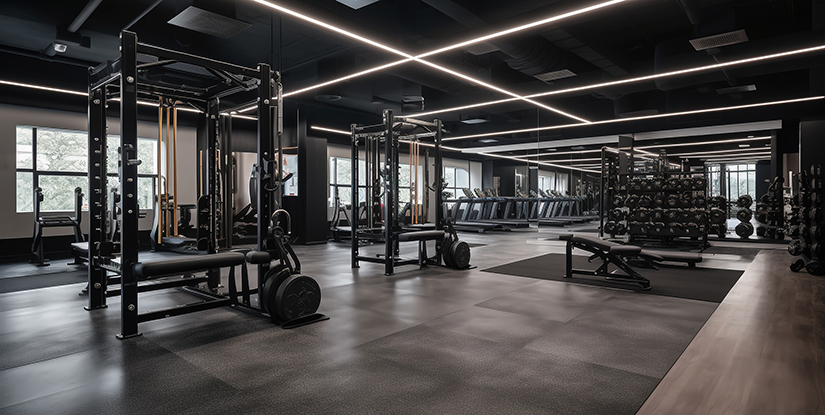
The environment in which a machine operates is just as important as the machine itself. High-traffic zones, humidity levels, and floor stability all impact the lifespan of your equipment. For example, placing heavy power racks on a non-reinforced floor can lead to uneven settling, which puts lateral stress on the frame.
- Ventilation and Heat: Place cardio equipment near ventilation or HVAC outlets to prevent the overheating of electronic consoles and drive motors.
- Clearance Zones: Ensure a minimum of 36 inches of clearance around all moving parts to prevent accidental impact and ensure proper airflow for cooling components.
- Flooring Specifications: Match your flooring to your equipment. High-impact lifting areas require heavy-duty rubber matting to dampen vibration and protect the structural integrity of the subfloor.
By treating the floor plan as an extension of the equipment's technical specs, you ensure that your wholesale investment reaches its full potential. Proper placement is the final link in a chain that begins with choosing the right wholesale partner.
Explore the complete technical specifications:
Future Outlook: Connectivity and Smart Sourcing
The landscape of fitness equipment wholesale distributors is rapidly evolving as equipment becomes more integrated with IoT (Internet of Things) and data-driven maintenance. The next generation of distributors will not just ship hardware; they will provide software-integrated diagnostic tools that alert facility managers to maintenance needs before a failure occurs.
The Shift Toward Predictive Maintenance
As connectivity becomes a standard feature, the role of the distributor will shift toward data management. Instead of waiting for a technician to report a worn belt, the machine itself will transmit real-time telemetry regarding its mechanical state. This transition from reactive to predictive maintenance will require distributors to offer more than just physical parts—they will need to offer digital support ecosystems.
For the professional buyer, this means that the criteria for selecting a wholesale partner must now include their technological sophistication and their ability to support smart, connected hardware. Investing in the future requires a vision that extends beyond the current physical dimensions of the machines.