

The Procurement Standard for Durable Branded Equipment with Custom Bumper Plates
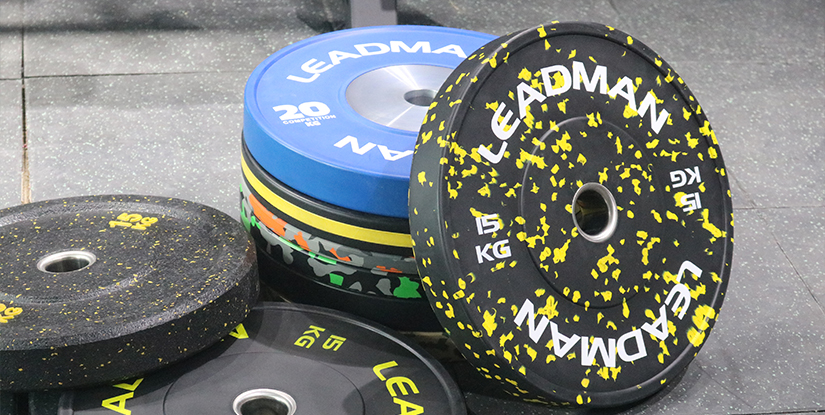
Why Standard Bumper Plates Fail Under High-Volume Use
In the commercial fitness sector, the most frequent procurement complaint isn't about aesthetics—it is about structural degradation. When an operator invests in Durable Branded Equipment with Custom Bumper Plates, they are often doing so to bridge the gap between basic utility and high-end brand identity. However, many buyers fall into the trap of prioritizing the visual 'custom' aspect while ignoring the polymer density and core durability. The failure mode is predictable: edge chipping, surface cracking, and logo delamination occurs within six months of heavy use.
The cause is rarely the weight itself, but rather a low-grade recycled rubber blend or a poor bonding process between the outer skin and the internal core. When the impact force is absorbed poorly, the kinetic energy travels back into the branding layer, causing the custom graphics to flake off. To avoid this, operators must look beyond the visual and demand specifications regarding Shore hardness and virgin rubber content. Understanding these material thresholds is the first step in ensuring your branded assets remain high-value assets rather than becoming depreciated liabilities.
Common Failure Modes in Substandard Plates
- Logo Delamination: The most common sign of a cheap printing process where the brand image fails to bond with the rubber skin.
- Edge Compression: Occurs when the rubber density is too low, leading to permanent flattening of the plate edges after repeated drops.
- Decompression Cracking: Surface cracks that appear when low-grade filler materials are used instead of high-density rubber.
Once you understand the physical causes of these failures, you can move toward selecting the right manufacturing standards for your custom orders.
Selecting High-Density Polymers for Custom Branding
Moving from the identification of failures to the selection of high-quality materials, a buyer must understand the specific technical requirements of durable branded equipment. A custom logo is only as good as the surface it is applied to. If the surface is too porous or inconsistent, the branding will look unprofessional, regardless of how much you paid for the design.
The primary decision factor for a professional buyer should be the Shore Hardness of the bumper plate. For high-impact functional training environments, a Shore A hardness in the range of 80 to 90 is typically the industry benchmark for durability. This ensures the plate is soft enough to absorb shock but firm enough to maintain its structural integrity and surface smoothness for printing.
| Material Type | Durability Rating | Ideal Use Case | Branding Compatibility |
|---|---|---|---|
| Virgin Rubber Blend | High | Professional CrossFit/Weightlifting | Excellent (Deep Etching or UV Print) |
| Recycled Rubber Blend | Medium | Standard Commercial Gyms | Moderate (Surface can be uneven) |
| Polyurethane Coating | Very High | High-End Boutique Studios | Superior (Smooth finish for graphics) |
Choosing a higher-density material increases the initial cost but drastically reduces the long-term replacement cycle. This selection process determines how well your brand image survives the rigors of a heavy training session. However, material density is only half the battle; the precision of the manufacturing process determines the actual longevity of the custom elements.
The Role of Precision in Custom Plate Manufacturing
A high-density rubber core is useless if the manufacturing process results in uneven thickness or poor dimensional tolerances. When ordering Durable Branded Equipment with Custom Bumper Plates, precision in the molding process is what separates a premium product from a commodity item. A frequent mistake made by procurement officers is failing to request specific tolerance thresholds for the inner ring and the outer diameter.
If the center hole is not perfectly concentric with the outer diameter, the weight distribution during a drop becomes uneven. This creates lateral stress that can lead to the plate 'walking' or wobbling on the barbell, which is a significant safety hazard. Furthermore, a lack of precision in the molding process creates air pockets within the rubber, which eventually lead to the surface cracking mentioned previously.
Precision Verification Checklist
- Concentricity Check: Ensure the center ring diameter and the outer diameter are perfectly aligned to prevent uneven weight distribution.
- Dimensional Tolerance: Demand a tolerance of no more than +/- 1% of the total diameter.
- Surface Smoothness: The surface must be free of significant pits or protrusions to ensure branding adhesion.
Verifying these technical specifications during the sampling phase can save a facility from receiving a bulk shipment of unusable, low-quality equipment. With the manufacturing standards established, the next critical concern is how to protect that brand identity through proper maintenance.
Explore the complete technical specifications:
Custom Weightlifting Plates: Branding, Materials, and Performance
Evaluating Branding Application and Longevity
The way a brand is applied to a bumper plate—whether through injection molding, silk screening, or UV printing—directly impacts the durability of the product. A common mistake is assuming that a simple silk screen on top of the rubber is sufficient for a high-traffic environment. In reality, these surface-level applications are highly susceptible to friction and chemical cleaning agents.
For truly durable branded equipment, the industry standard is shifting toward embedded branding or high-grade UV-cured printing. Embedded branding involves creating a recessed area during the molding process where the logo is placed, or using a different colored rubber material for the logo itself. This makes the brand a physical part of the plate's structure rather than just a topical layer.
| Method | Durability Level | Cost Impact | Visual Result |
|---|---|---|---|
| Recessed Molding | Maximum | Highest | Classy, permanent, tactile |
| UV Printing | High | Moderate | Sharp, vibrant, professional |
| Standard Silk Screen | Low | Lowest | Fades quickly with friction |
| Sticker/Decal | Very Low | Negligible | Unprofessional, peels easily |
By selecting a method that matches the intended intensity of the gym environment, you ensure that your brand remains visible and professional for years. This leads us to the most critical aspect of operational success: how to maintain these branded assets once they are in use.
Optimizing Storage and Environmental Controls
Beyond the physical act of cleaning, the longevity of Durable Branded Equipment with Custom Bumper Plates is heavily influenced by where and how they are stored. Improper storage can lead to permanent deformation of the rubber, which complicates both the branding aesthetics and the functional safety of the equipment.
One major failure mode in many facilities is the vertical stacking of unrated plates in uncontrolled environments. If plates are stored in areas with extreme temperature fluctuations—such as near an exterior wall or an uninsulated heating vent—the rubber can undergo thermal expansion and contraction cycles. This constant movement can cause the bonding layer of the custom branding to shear away from the core. To prevent this, ensure your storage area maintains a stable ambient temperature and that plates are stored in a manner that prevents heavy stacking on top of soft, high-impact plates.
Storage Best Practices
- Vertical vs. Horizontal: While vertical storage is common, ensure weight plates are not leaning at extreme angles which can cause permanent 'set' in the rubber.
- Climate Control: Keep branded equipment away from direct sunlight (UV degradation) and high-heat sources.
- Rack Integrity: Use dedicated weight tree racks to prevent plates from being crushed under excessive weight during off-hours.
Proper storage acts as a preventative measure, reducing the frequency of your maintenance cycles and extending the life of the custom graphics.
Operational Maintenance for Longevity
Even the highest quality equipment requires a disciplined maintenance protocol to reach its maximum lifespan. Many operators treat bumper plates as 'set and forget' items, which is a mistake that leads to premature degradation and a messy gym appearance. Neglecting the maintenance of these plates often starts with a failure to manage environmental and chemical factors.
The primary enemy of custom-branded rubber is chemical degradation from improper cleaning. Many commercial gym cleaners contain harsh solvents or high concentrations of alcohol that can eat away at the bonding agents in the printing layer. This leads to the 'ghosting' effect, where the logo becomes a faded, unrecognizable smear. To prevent this, implement a strict cleaning protocol that uses pH-neutral solutions and soft microfiber cloths rather than abrasive scrubbing.
Daily vs. Monthly Maintenance Tasks
- Daily: Visual inspection for any loose debris or excessive dust; wipe down with a damp, pH-neutral cloth.
- Weekly: Check for any sign of edge chipping or surface cracks; ensure plates are stored correctly in racks.
- Monthly: Full dimensional audit to ensure plates haven't undergone significant compression or warping.
Regularly following these steps ensures that the high-quality materials and branding you've invested in actually deliver the long-term ROI promised. Finally, we must address how to identify when an asset has reached its end-of-life to prevent safety incidents.
Safety Verification and End-of-Life Detection
A rigorous maintenance schedule is useless without a clear protocol for identifying when a plate is no longer safe to use. In the context of professional strength training, a damaged plate is not just a branding issue; it is a physical hazard. As an operator, you must be able to distinguish between 'aesthetic wear' and 'structural failure.'
Structural failure in bumper plates is often subtle. It may begin as a small hairline crack on the edge or a slight loss of roundness. If a plate is no longer perfectly round, it can cause an unpredictable bounce when dropped, which can injure an athlete or damage the flooring. Therefore, the final step in any operational guide for durable equipment is the implementation of a formal 'Retire or Retain' decision-making process.
The 'Retire or Retain' Decision Matrix
| Observation | Classification | Action Required |
|---|---|---|
| Minor color fading | Aesthetic Wear | Retain (Monitor) |
| Surface scratch (shallow) | Aesthetic Wear | Retain (Monitor) |
| Deep crack or split | Structural Failure | Immediate Retirement |
| Out-of-round (unbalanced) | Structural Failure | Immediate Retirement |
By empowering your staff to make these decisions based on clear physical evidence, you maintain a high standard of safety and professionalism. Successful procurement and operation of premium equipment requires this constant loop of selection, verification, and maintenance.