

The Role of Commercial Weight Lifting Equipment Manufacturers in Industry Growth
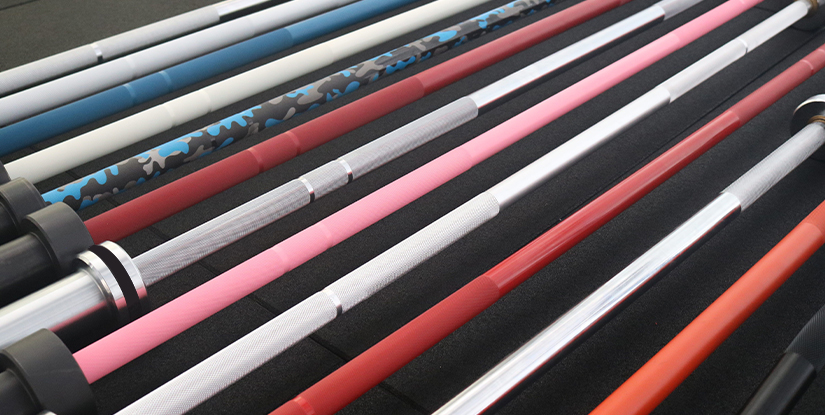
For facility operators and large-scale procurement managers, the transition from residential-grade equipment to heavy-duty commercial installations is often met with significant technical anxiety. The primary pain point is rarely the initial purchase price, but rather the long-term operational stability and the cost of unexpected downtime. A single failure in a high-traffic strength training zone can disrupt a gym's reputation and lead to high maintenance overhead. Understanding the role of commercial weight lifting equipment manufacturers in industry growth requires looking beyond the sales brochure and examining the deep-tier engineering processes that ensure longevity.
The growth of the global fitness sector is fundamentally tethered to the reliability of its hardware. As gyms scale from boutique studios to massive multi-functional training centers, the demand for sophisticated, durable, and standardized equipment rises. This article provides a technical deep-dive into the manufacturing workflows, material science, and quality control protocols that allow high-tier manufacturers to drive this industry expansion.
Analyzing Material Selection and Structural Integrity Standards
Reliability begins long before an assembly line starts moving; it begins with the chemical and structural properties of the raw materials. High-performance manufacturers focus heavily on the metallurgical composition of steel to ensure that weight racks, smith machines, and power cages can withstand decades of cyclic loading.
Steel Grade and Tensile Strength Specifications
A common mistake in procurement is failing to distinguish between low-carbon mild steel and high-tensile structural steel. While mild steel is easier to form, it lacks the fatigue resistance required for high-impact commercial environments. Professional manufacturers typically utilize cold-rolled or hot-rolled steel with specific yield strength parameters to prevent permanent deformation under heavy loads. When evaluating a supplier, a professional should look for documentation regarding the steel's thickness (often measured in gauge) and its ability to resist buckling under peak dynamic loads.
Advanced Coating and Surface Finish Technologies
Corrosion and surface degradation are the primary causes of early-stage equipment failure in high-humidity or high-sweat environments. The choice between electrostatic powder coating and liquid paint is a critical decision for any facility owner. Powder coating provides a much more durable, impact-resistant barrier that prevents the oxidation of the underlying metal. This process involves applying a dry powder to the metal surface and then curing it under heat, creating a finish that is significantly more resilient to the chemical agents used in standard gym cleaning protocols.
Understanding these material foundations is necessary because even the best design will fail if the raw inputs are substandard. Once the materials are selected and the structural integrity is guaranteed, the focus shifts to the complex assembly and fabrication processes.
The Lifecycle of High-Precision Metal Fabrication
The transition from raw steel to a finished strength machine involves several highly controlled manufacturing stages. For a manufacturer to contribute meaningfully to industry growth, they must maintain extreme tolerance control across every single component, from the frame to the smallest bolt.
Precision Cutting and CNC Machining Workflows
Modern commercial equipment relies heavily on Computer Numerical Control (CNC) technology to ensure that components are perfectly matched. Inconsistent cutting or machining leads to misaligned parts, which creates unnecessary friction and accelerated wear on moving components. For instance, if a weight stack guide rod is even slightly out of alignment due to poor machining, the smooth motion of the weight stack will be compromised, leading to potential jams or user injury.
| Manufacturing Process | Technical Objective | Common Defect to Verify |
|---|---|---|
| Laser/Plasma Cutting | Edge precision and dimensional accuracy | Heat-affected zone warping or burrs |
| CNC Bending/Folding | Angle consistency and structural uniformity | Radius deviations or structural weak points |
| CNC Machining | Thread precision and bearing housing fit | Tolerances exceeding +/- 0.5mm |
| Welding (MIG/TIG) | Joint penetration and seam strength | Porosity, slag inclusion, or undercut |
By controlling these precise stages, manufacturers ensure that the assembly phase can proceed without the common issue of 'component drifting,' where parts do not fit as intended during final integration. This precision leads directly into the more complex engineering of moving parts and mechanical interfaces.
Explore the complete technical specifications:
Commercial Weight Lifting Equipment | Longevity & Safety Guide
Engineering Motion: The Mechanics of Moving Assemblies
While the steel frame provides the skeleton, the moving parts—pulleys, cables, and bearings—provide the functionality. The failure of these components is the most frequent cause of downtime in a commercial gym setting. High-tier manufacturers treat these mechanical interfaces as high-precision engineering challenges rather than simple hardware attachments.
Cable and Pulley Systems: Tensile Strength vs. Friction
In selectorized weight machines and functional trainers, the cable system is the most critical failure point. A frequent problem is the use of low-grade nylon-coated steel cables that fray or snap under repeated tension. Professional-grade cables should be composed of high-tensile aircraft-grade steel with a sophisticated polymer coating to minimize internal friction and external abrasion. Furthermore, the pulleys must be engineered with specific bearing types (such as sealed ball bearings) to ensure smooth, fluid movement through a full range of motion.
Bearing Dynamics and Resistance Fluidity
Smooth resistance is vital for user experience and safety. If a machine exhibits 'stuttering' or uneven resistance, it is often due to poor bearing quality or insufficient lubrication. The following checklist is essential for any facility manager when inspecting new or existing equipment:
- Check for Axial Play: Ensure there is no side-to-side wobbling in the pivot points.
- Test Smoothness: Actuate the full range of motion to identify any 'dead spots' in the resistance.
- Inspect Cable Path: Verify the cable travels smoothly through all guides without excessive rubbing.
- Verify Load Stability: Confirm that weights drop or move in a predictable, linear fashion.
As we move from the mechanics of movement to the final assembly, we must address the ultimate gatekeeper of reliability: the quality control process. Without rigorous testing, even the most advanced engineering can suffer from hidden defects.
Strict Quality Control and Failure Mode Testing
The role of commercial weight lifting equipment manufacturers in industry growth is heavily defined by their ability to eliminate defective products before they reach the floor. A single shipment of faulty machines can cause massive financial losses for a distributor and a loss of trust for a retailer.
Destructive and Non-Destructive Testing Protocols
A professional manufacturing facility does not just check if a machine 'works'; they check how it breaks. Non-destructive testing (NDT), such as ultrasonic or X-ray inspection of weld seams, allows engineers to identify internal flaws that are not visible to the naked eye. Destructive testing involves taking a sample component—such as a barbell or a heavy-duty hinge—and subjecting it to extreme loads until failure occurs. This determines the actual safety margin of the product, which is far more important than the stated 'maximum capacity.'
Common Manufacturing Defects and Verification Methods
Identifying defects early can save a facility millions in replacement costs. Operators should be aware of the following typical failure modes:
- Weld Fractures: Caused by inadequate penetration or gas impurities during the welding process. Verification: Visual inspection for cracks or discoloration.
- Structural Bowing: Caused by uneven heat treatment or poor metal thickness. Verification: Using a spirit level or laser level across long spans.
- Loose Hardware: Caused by poor torque control during assembly. Verification: Using a torque wrench to ensure bolts meet specified NM requirements.
Once the production-side quality is established, the focus shifts toward the long-term maintenance required to keep these high-performance machines running at peak efficiency.
The Operator's Perspective: Maintenance and Longevity ROI
Investing in high-quality equipment from top-tier manufacturers is an exercise in long-term Return on Investment (ROI). While the initial capital expenditure is higher, the Total Cost of Ownership (TCO) is significantly lower due to reduced maintenance intervals and longer lifespans.
Routine Inspection Schedules for Facility Managers
Even the best-engineered machines require a disciplined maintenance regimen. Facility managers should implement a tiered inspection system to prevent catastrophic failures. A proactive approach is always more cost-effective than a reactive one.
| Frequency | Inspection Target | Action Required |
|---|---|---|
| Daily | Visual Surface Integrity | Check for broken upholstery or loose bolts. |
| Monthly | Moving Parts & Cables | Lubricate guide rods; check cable tension/fraying. |
| Quarterly | Structural Fasteners | Verify torque on all major frame bolts. |
| Annually | Deep Structural Audit | Full load-bearing test and comprehensive lubrication. |
Environmental Impact and Equipment Degradation
The environment in which the equipment is housed plays a massive role in its longevity. High-density fitness centers often neglect the impact of ambient temperature and floor-load distribution. To maximize the lifespan of your assets, ensure that weight machines are placed on level, vibration-dampening flooring and that the HVAC system provides adequate air circulation to prevent moisture buildup on metal components.
Comparison of Residential vs. Commercial Durability
Before making a final procurement decision, it is vital to compare the durability parameters. Commercial equipment is engineered for high-frequency cyclic loading, whereas residential gear is designed for sporadic usage. Below is a comparison of common failure modes and resistance capabilities:
- Load Cycles: Commercial machines are rated for millions of repetitions; residential-grade products often show fatigue after much lower thresholds.
- Surface Resilience: Commercial powder coating resists oxidation from sweat and high-strength cleaning agents; residential paint often peels under chemical exposure.
- Structural Rigidity: High-tier manufacturers use thicker gauge steel to prevent lateral sway during heavy explosive movements, a common failure in low-tier equipment.
By understanding the synergy between manufacturing excellence, mechanical precision, and operator-led maintenance, businesses can leverage the industry's growth to build world-class training facilities.