

A Comprehensive Guide to Weight Training Equipment for Every Gym

Establishing Baseline Standards for Weight Training Equipment Selection
Selecting the appropriate inventory for a fitness facility is not merely a matter of aesthetic preference; it is a strategic decision dictated by throughput, durability, and user safety. A common pain point for gym operators is the rapid depreciation of equipment caused by selecting 'home-grade' products for high-traffic environments. The cause is often a failure to distinguish between consumer-grade resistance and commercial-grade structural integrity. To avoid this, operators must prioritize load-bearing capacities and material specifications before the first purchase order is finalized.
When building a catalog, the primary selection criteria should revolve around the intended user demographic and the projected daily cycles of each machine. A boutique studio focusing on low-impact training has vastly different mechanical requirements than a high-intensity bodybuilding dungeon. By establishing these benchmarks early, you prevent the cycle of constant replacement and mid-tier upgrades.
| Equipment Category | Primary User Need | Standard Selection Metric | Typical Failure Mode |
|---|---|---|---|
| Free Weights | Versatility & Durability | Knurling quality and coating thickness | Rust or handle deformation |
| Selectorized Machines | Isolations & Path Control | Cable tensile strength and pulley smoothness | Cable fraying or weight stack misalignment |
| Plate-Loaded Machines | High Resistance & Stability | Frame gauge thickness (Steel Gauge) | Structural weld cracks under heavy load |
| Functional Trainers | Range of Motion | Track smoothness and weight increment accuracy | Guide rod friction or pulley seizure |
Defining these categories allows for more precise procurement strategies. Once the fundamental selection criteria are understood, the focus must shift to the specific mechanical nuances of different weight modalities.
Evaluating Free Weight Dynamics and Material Integrity
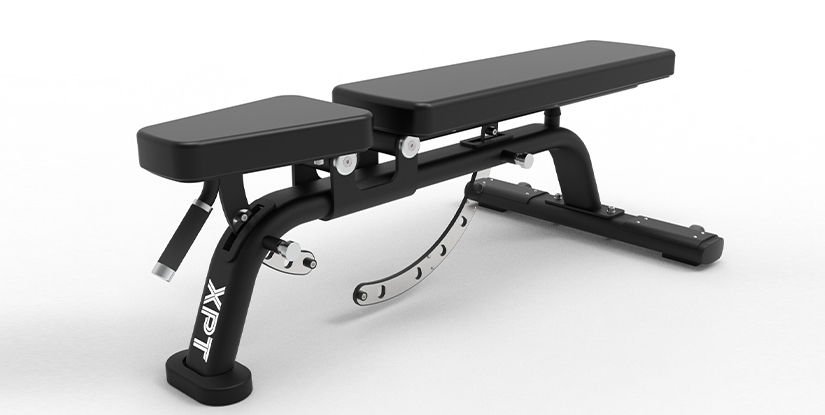
Moving from broad selection categories to specific hardware, free weights represent the most durable yet potentially highest-maintenance segment of a gym. The core challenge with free weights—specifically dumbbells and barbells—is the degradation of the grip surface and the structural integrity of the shafts. A common failure is the development of 'dead spots' in barbell rotation or the smoothing of knurling, which directly correlates to increased injury risk during heavy lifts.
Barbell and Dumbbell Specification Standards
To ensure longevity, professional operators should verify the steel grade and the plating method of all free weights. High-quality barbells must maintain a consistent whip (flexibility) and must not suffer from permanent deformation after heavy loading. When inspecting this equipment, look for any signs of 'set' or permanent bending in the shaft. Additionally, verify that the knurling remains sharp enough for grip but is not so aggressive that it causes skin abrasions during standard use.
Maintenance of these items involves more than just visual checks. It requires a systematic approach to lubrication and surface protection. A neglected weight set leads to premature oxidation, which can eventually compromise the structural integrity of the lifting surfaces. A failure to address minor surface oxidation can lead to unsightly rust that affects both aesthetics and user grip security.
Properly maintaining these foundational tools ensures that the most fundamental training movements remain safe. This standard of care must extend beyond the weights themselves and into the sophisticated machines that house moving parts.
Managing Selectorized Machine Reliability and Cable Longevity

Selectorized machines offer a level of ease-of-use and safety that is essential for commercial environments, but they introduce a new set of mechanical vulnerabilities: the cable and pulley system. The primary problem operators face is the sudden snapping of cables or the erratic movement of weight stacks. This is usually caused by inadequate lubrication of guide rods or the use of sub-standard synthetic cables that cannot withstand repeated tension cycles.
To prevent these failures, operators must implement a rigorous inspection routine for all moving parts. The following table outlines the technical parameters that should be verified during every monthly maintenance cycle.
| Component | Inspection Point | Acceptable Range/State | Corrective Action |
|---|---|---|---|
| Weight Stack Cables | Surface Texture | Smooth, no fraying or bulges | Replace immediately if any wire is visible |
| Guide Rods | Lubrication & Friction | Light film of oil; smooth travel | Clean and re-apply silicone lubricant |
| Pulleys/Sheaves | Rotation & Sound | Silent rotation; no axial play | Check bearing tension or replace pulley |
| Adjustment Pins | Tolerance & Fit | Snug fit; no significant lateral play | Replace pin or adjust seat if loose |
By monitoring these specific parameters, you transition from reactive repairs to proactive maintenance. Such consistency in machine uptime is critical for user satisfaction, but it is only one side of the operational coin; the physical strength of the frames themselves must also be scrutinized.
Structural Integrity of Weight Training Stations
Even the best cables will fail if the frame they are attached to is compromised. A major error in gym management is ignoring the structural connections—the bolts, welds, and mounting points—of large-scale weight stations. A heavy-use environment subjects these machines to constant vibration and shifting loads, which can eventually lead to metal fatigue or bolt loosening. Operators should use a torque wrench periodically to ensure all structural fasteners meet original manufacturer specifications.
Verification of structural integrity involves checking for microscopic cracks in the welds, particularly at the base and the high-stress junctions of plate-loaded machines. If a machine has been subjected to an extreme load or an uneven impact, it should be immediately decommissioned for professional assessment. Ignoring these small structural warnings often results in catastrophic frame failure during peak usage hours.
Establishing these structural and mechanical safeguards provides the necessary foundation for a safe training environment. However, the sheer variety of equipment requires a specialized approach to layout and space optimization.
Spatial Management and Equipment Placement Strategies
Once the hardware is selected and the maintenance protocols are established, the next challenge is the physical arrangement of the equipment. A poorly designed layout leads to two distinct problems: operational bottlenecks (where users wait for equipment) and safety hazards (where users collide or run out of space during a movement). The cause of these issues is rarely a lack of square footage, but rather a lack of dimensional planning.
Effective layout design requires a deep understanding of the 'operational footprint' of each piece of equipment. A weight bench might only occupy 2 square meters, but the user performing a barbell press requires a much larger 'safety zone' to account for the length of the bar and the natural range of motion. Failing to account for this leads to equipment striking other users or walls.
- Zoning Strategy: Group high-intensity/loud equipment (like plate-loaded areas) away from high-precision/quiet areas (like functional training zones).
- Clearance Buffers: Always add a 1.5-meter safety buffer around free-weight stations to accommodate eccentric movements and spotting.
- Traffic Flow: Ensure major walkways are at least 1 meter wide and are not obstructed by the footprint of a machine's weight stack or adjustment handles.
When the layout is optimized, the transition between different types of training becomes seamless, which leads directly into the necessity of consistent equipment up-time through scheduled maintenance.
Standardized Maintenance Cadence for Commercial Facilities
A highly optimized layout can only perform as well as the equipment placed within it. Therefore, the ultimate pillar of a successful facility is a non-negotiable maintenance cadence. A common mistake among facility owners is the 'if it isn't broken, don't fix it' mentality. In a commercial setting, this is a recipe for catastrophic failure and liability. Maintenance must be a scheduled, preventative process rather than a reactive response to a breakdown.
Effective maintenance is divided into three distinct tiers: daily, monthly, and quarterly. Each tier targets a specific level of mechanical or aesthetic degradation. For example, while daily checks might focus on cleanliness and visible damage, quarterly checks must focus on the hidden components like bearing integrity and cable tension. Neglecting the quarterly tier is a common way that hidden wear transforms into an expensive, unplanned capital expenditure.
To verify that your maintenance team is performing correctly, you should maintain a digital or physical logbook. This logbook serves as the single source of truth for the equipment's history and provides an audit trail in the event of an insurance or safety investigation. If a machine is failing more frequently than the documented maintenance intervals suggest, it is a sign that either the maintenance quality is insufficient or the equipment has reached the end of its viable service life.
Maintaining this high standard of readiness is the final step in a complete operational cycle, ensuring that the equipment is ready to perform when the user needs it most. However, even the best-maintained gear requires troubleshooting knowledge.
Troubleshooting Common Equipment Performance Deviations
Even with a robust maintenance program, certain performance deviations are inevitable. Understanding the relationship between a symptom and its underlying cause is essential for quick resolution. Most equipment issues fall into three categories: resistance issues, movement issues, and structural issues. Identifying these early can prevent a minor adjustment from turning into a full replacement.
Categorizing and Resolving Mechanical Issues
When a user reports an issue, the operator must follow a diagnostic path to avoid incorrect 'fixes' that might exacerbate the problem. For instance, if a user reports that a machine 'feels heavy' or 'stiff,' the cause is often not the weight itself, but friction in the movement path. A common error is to simply increase the weight setting, which puts even more strain on the failing component.
| Reported Symptom | Potential Root Cause | Primary Verification Step | Immediate Solution |
|---|---|---|---|
| Jerky or uneven movement | Dry guide rods or worn bearings | Check for residue on rods/listen for grinding | Clean and lubricate guide rods |
| Unusually loud noise | Loose bolts or friction in pulley | Inspect all fasteners and pulley alignment | Tighten bolts or realign pulley |
| Resistance feels inconsistent | Cable stretch or weight stack misalignment | Inspect cable for stretch or weight position | Adjust weight stack or replace cable |
| Squeaking/Grinding | Lack of lubrication or metal-on-metal contact | Locate contact point and check for debris | Remove debris and apply lubricant |
By utilizing this structured approach to troubleshooting, operators can minimize downtime and ensure that the facility remains professional and safe. Addressing these deviations with precision is the final step in a long-term equipment management strategy.