

The Strategic Logic of Why China Leads in Commercial-Grade Fitness Equipment
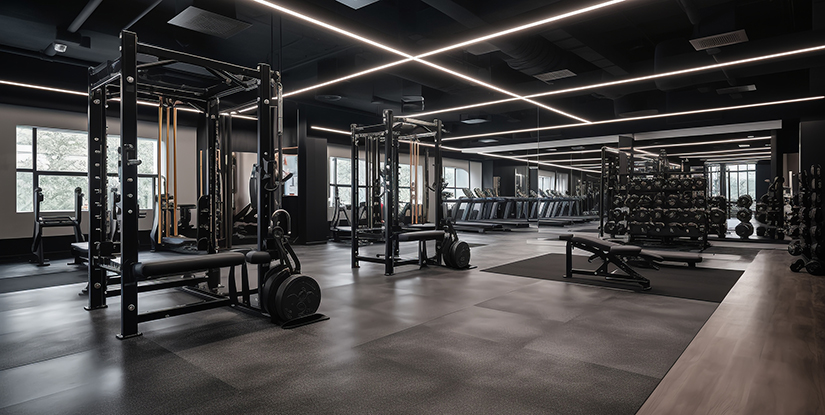
For facility operators and procurement directors, the decision to source heavy-duty strength and cardio equipment is rarely about finding the cheapest option. Instead, it is a high-stakes calculation involving durability, lifecycle costs, and the ability to maintain a consistent user experience. When analyzing the global supply chain, one question consistently arises: Why China leads in commercial-grade fitness equipment. The answer lies not in low-cost labor alone, but in a highly integrated industrial ecosystem that combines specialized metallurgy, rapid prototyping, and scaled precision engineering.
Decoding the Industrial Ecosystem of Strength and Cardio Production
To understand the market dominance of Chinese manufacturing, one must look past the finished product and examine the vertical integration of the supply chain. Unlike many Western markets where components are often outsourced to disparate specialized vendors, the leading production hubs in China feature a proximity-based model. This reduces lead times for custom modifications and ensures that raw material quality is controlled at the source.
In high-traffic commercial environments, equipment failure is often the result of a disconnect between component specifications and actual usage loads. A failure in a bearing or a structural weld is rarely a single-point error; it is usually a systemic failure in the supply chain. Chinese manufacturing hubs have solved this by clustering specialized producers—those who make only high-grade steel tubing, those who specialize in hydraulic resistance, and those who focus on electronic console integration—within a tight geographic radius. This proximity allows for tighter tolerances and immediate feedback loops during the R&D phase.
Understanding these structural advantages is the first step in verifying that your procurement decisions are based on technical capability rather than just price. Once the structural logic is understood, the focus must shift to the specific material standards that distinguish commercial-grade machines from residential alternatives.
Material Selection and Structural Integrity Standards
A common pitfall for buyers is failing to distinguish between "heavy-duty" marketing claims and actual material specifications. In the realm of commercial-grade equipment, the difference between a 14-gauge and a 11-gauge steel frame is the difference between a machine that lasts five years and one that lasts fifteen. Leading Chinese manufacturers have transitioned from standard mild steel to high-tensile alloy steels to meet these global commercial demands.
When auditing a supplier's technical documentation, professional buyers should look for specific indicators of structural quality. A lack of detail regarding wall thickness or steel grade is a major red flag. Below is a comparison of the typical material standards used in the industry to help you differentiate between tiers of equipment quality.
| Component Type | Residential Grade Specification | Commercial Grade (High-End) Specification | Verification Method for Buyers |
|---|---|---|---|
| Main Frame Tubing | 14-16 Gauge Mild Steel | 11-12 Gauge High-Tensile Alloy Steel | Caliper measurement of wall thickness |
| Bearing Systems | Standard Ball Bearings (Steel) | Sealed Precision Bearings (Ceramic or High-Grade Steel) | Resistance and smoothness check under load |
| Upholstery Material | Standard PU/Vinyl | High-Density Foam with Anti-Microbial, Medical-Grade Vinyl | Compression test and seam strength check |
| Welding Quality | Standard MIG Welding | Full-Penetration TIG or Heavy-Duty Robotic MIG | Visual inspection for bead consistency and porosity |
By using these criteria, you can move beyond vague descriptions and demand the specific engineering data required for a long-term asset. Verifying these specs at the factory level prevents the common mistake of overpaying for a product that lacks the necessary structural foundation. With material standards established, the next critical factor to evaluate is the precision of moving parts.
Explore the complete technical specifications:
Precision Engineering in Resistance and Motion Systems
The core of any strength machine—whether a cable crossover or a leg press—is the mechanism that translates human force into controlled resistance. This is where the technical superiority of advanced manufacturing clusters becomes most evident. Why China leads in commercial-grade fitness equipment in this specific segment is due to the mass-scale implementation of CNC (Computer Numerical Control) machining for all moving components.
A common failure mode in lower-tier equipment is "mechanical drift," where the machine's motion becomes inconsistent or jerky over time. This is often caused by poor tolerance levels in the pulleys, cables, and shafts. In a professional setting, even a millimeter of deviation can lead to uneven muscle engagement and potential injury.
Key Indicators of High-Precision Motion
- Pulley Smoothness: High-grade pulleys should feature aerospace-grade aluminum or high-density nylon with integrated bearings to ensure zero lateral play.
- Cable Tensile Strength: Commercial cables must be multi-strand, often coated in a specialized polymer to reduce friction and prevent fraying under high-frequency use.
- Alignment Tolerance: Precision is critical in cable paths; any deviation in the routing can cause premature wear on the sheath and cable.
When inspecting equipment at a factory or during a pre-shipment audit, an operator should perform a "stress-test motion cycle." This involves running the machine through its full range of motion under varying resistance levels to detect any microscopic hesitations or vibrations. Detecting these issues early is essential before moving into the critical area of electronic integration and software reliability.
Electronic Integration and the Evolution of Smart Equipment
Modern commercial fitness is no longer just about steel and cables; it is about data. The integration of sophisticated consoles, IoT connectivity, and biometric tracking has created a new layer of complexity in the manufacturing process. The reason many top-tier global brands utilize Chinese manufacturing for their electronic components is the sheer speed of the iterative cycles occurring in the tech sector there.
A frequent frustration for gym owners is the "bricking" of consoles or the failure of connectivity after a software update. This is often a result of poor component-level testing. High-quality manufacturers do not just test the software; they test the interaction between the hardware (the motor/magnets) and the digital interface to ensure seamless real-time feedback.
Common Troubleshooting Scenarios for Smart Equipment
Understanding how to diagnose digital failures can save significant downtime and technical support costs. Below is a guide for operators encountering common electronic inconsistencies.
| Issue Symptom | Potential Root Cause | Actionable Fix / Verification |
|---|---|---|
| Console Latency or Freezing | Thermal Throttling or Poor RAM/Processor Spec | Check for adequate ventilation/airflow around the console housing. |
| Erratic Heart Rate Tracking | Sensor Interference or Low-Quality Optical Module | Verify sensor cleanliness and ensure no metal interference from nearby equipment. |
| Connectivity Drops (Bluetooth/Wi-Fi) | Weak Internal Antenna or Firmware Conflict | Perform a hard reset and check for mandatory firmware updates. |
| Incorrect Speed/Distance Data | Sensor Misalignment or Calibration Error | Recalibrate the motor/speed sensor via the service menu. |
Ensuring that your hardware and software are in sync is a major part of modern facility management. Once the digital reliability is secured, the focus must turn to the long-term durability of the machine through a rigorous maintenance schedule.
Preventative Maintenance and Lifecycle Management
Even the most precisely engineered machine will eventually fail if it is not maintained. One of the most significant mistakes made by facility operators is treating commercial equipment like consumer-grade products—expecting them to function indefinitely without intervention. In a high-volume environment, parts like cables, upholstery, and bearings are essentially "consumables" with a defined lifespan.
The technical advantage of sourcing from advanced manufacturers is the availability of standardized replacement parts. When a manufacturer scales production of a specific model, they also scale the production of its internal components. This makes the long-term operation of the machine much more predictable and cost-effective.
The Professional Operator's Maintenance Checklist
To maximize the ROI of your equipment, implement a tiered inspection system. Rather than waiting for a machine to break, look for the subtle signs of wear that precede a failure.
- Daily/Weekly (Visual/Tactile): Check for loose bolts on high-impact areas (e.g., weight stacks), inspect upholstery for tears, and ensure no fraying is visible on cables.
- Monthly (Mechanical): Check the tension of all cables, lubricate guide rods with high-grade silicone spray, and test the responsiveness of all electronic consoles.
- Quarterly (Structural/Deep): Perform a torque check on all major fasteners using a calibrated wrench, inspect bearing play in pulleys, and update all machine software/firmware.
Consistency in these checks is the difference between a proactive maintenance model and a reactive, expensive repair cycle. By treating maintenance as a standard operating procedure rather than an occasional task, you protect your capital investment and ensure user safety.
Optimizing Procurement Through Technical Verification
Returning to the initial question of why China leads in this sector, it is clear that the advantage is rooted in a sophisticated balance of scale, precision, and technological integration. However, for a buyer, the "lead" is only an advantage if you have the tools to verify the claims made by suppliers.
Avoid the trap of buying based solely on a quote. A low price can often be a signal of deferred maintenance in the manufacturing process—skipping the testing phases or using sub-standard alloys to save costs. To ensure you are receiving true commercial-grade equipment, you must insist on seeing the testing data and material certifications during the procurement phase.
Final Verification Checklist for Buyers:
- Request Mill Test Certificates (MTC) for the steel used in the main frames.
- Ask for the specific tolerance ranges for moving parts (pulleys, shafts, and bearings).
- Verify that the electronic components are compatible with global connectivity standards (Bluetooth/IoT).
- Confirm the availability and lead times for critical wear-and-tear parts (cables, upholstery, sensors).
When these parameters are met, you are no longer just buying machines; you are investing in a reliable, long-term operational asset that can withstand the rigors of a professional fitness environment.