

Optimizing Procurement: A Technical Guide to Wholesale Gym Equipment Packages
Defining Selection Criteria for High-Performance Gym Sets
Procuring Wholesale Gym Equipment Packages requires moving beyond simple price-per-unit calculations toward a deep understanding of long-term operational viability. Many facility managers fall into the trap of purchasing disjointed individual items to save on immediate costs, only to face high maintenance overhead and aesthetic inconsistencies later. A professional selection process must prioritize the synergy between different equipment types within a single package to ensure spatial efficiency and uniform wear resistance.
When evaluating a package, one must consider the structural compatibility of the components. For instance, a package containing both heavy-duty free weights and high-velocity cardio machines must account for differing flooring requirements and vibration dampening needs. A failure to integrate these requirements during the procurement phase often leads to premature floor degradation and excessive noise pollution in commercial environments.
| Selection Metric | Low-Tier Package Indicators | High-Tier Package Indicators |
|---|---|---|
| Structural Integrity | Thin-gauge steel; exposed weld seams | Reinforced steel; smooth, finished welds |
| Component Synergy | Disjointed brands/styles | Unified aesthetic and functional design |
| Maintenance Profile | High frequency; specialized parts required | Low frequency; standardized components |
| Footprint Efficiency | Standard spacing required | Modular, space-optimized configurations |
Defining these metrics early in the procurement cycle prevents the common mistake of under-specifying the load-bearing capacity of your facility's foundation. Once your selection criteria are established, the next critical step is understanding how to audit the technical specifications provided by suppliers.
Technical Specification Auditing for Commercial Packages
Having established your baseline criteria, the focus shifts to the granular technical data that defines a high-quality package. Relying solely on marketing descriptions is a frequent failure mode in gym procurement; instead, operators must demand specific engineering data such as steel gauge thickness, bearing types, and upholstery density.
Material Composition and Gauge Standards
A common issue in budget-grade packages is the use of thin-gauge steel that may appear robust but fails under high-frequency commercial use. For strength training equipment, a steel gauge of at least 11-gauge (approx. 3mm) is a standard benchmark for heavy-duty racks and benches. Relying on lower-grade materials often results in structural flex, which compromises user safety and shortens the equipment's lifecycle.
Bearing and Motion Mechanics
For cardio and selectorized strength machines, the quality of the movement determines the longevity of the unit. High-quality packages utilize sealed industrial bearings rather than simple bushings. While bushings are cost-effective, they require frequent lubrication and are prone to friction-induced heat and wear. Operators should verify if the package includes parts that are rated for continuous, high-volume use in a commercial setting.
Verifying these technical nuances ensures that the package you purchase is built for the intended capacity. These specifications form the foundation of the installation and safety protocols that follow.
Structural Layout and Installation Protocols
A technically sound package is only as effective as its physical implementation. Even the most robust Wholesale Gym Equipment Packages can become safety hazards if the installation ignores the physical tolerances of the machinery and the human user. Effective layout planning requires a synthesis of equipment dimensions and mandatory clearance zones.
Calculating Clearance and Safety Buffers
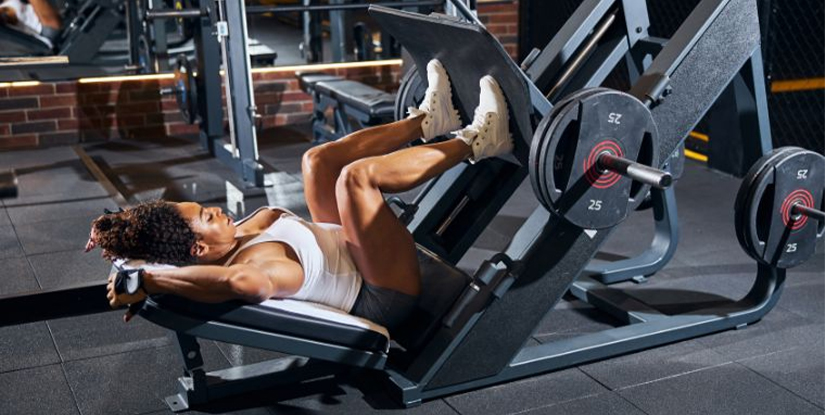
A recurring mistake in gym setup is the failure to account for the 'functional footprint.' The footprint of a machine is not just its base dimensions, but the total area required during its full range of motion. For example, a leg press machine requires significantly more depth when the carriage is fully extended than its static footprint suggests. Operators must implement a minimum 36-inch (90cm) safety buffer between all moving parts to prevent collisions.
- Static Footprint: The physical area the machine occupies.
- Dynamic Footprint: The area occupied during maximum extension.
- Safety Buffer: The mandatory clearance around the dynamic footprint.
Failure to respect these zones often results in high turnover of equipment due to accidental impacts and increased liability risks. With the layout finalized, the focus must turn to the physical assembly and fastener integrity.
Explore the complete technical specifications:
Fastener Torque and Mechanical Assembly Standards
Transitioning from layout to physical assembly, the operator must treat the assembly process as a precision engineering task rather than simple furniture construction. Most failures in packaged gym equipment stem from improper fastener tensioning during the initial build phase.
Torque Requirements and Fastener Grades
Standard hardware kits provided in wholesale packages often contain a variety of bolt grades. It is essential to distinguish between low-grade zinc-plated bolts and high-tensile structural bolts. During assembly, every primary structural bolt—specifically those in weight racks and cable machines—should be tightened to a specific torque setting. Over-tightening can strip threads, while under-tightening leads to structural oscillation and eventual fatigue failure.
The Assembly Checklist for Operators
To ensure the structural integrity of a newly arrived package, use the following verification steps:
- Visual Inspection: Check for any shipping-related deformation in the steel tubing.
- Fastener Check: Ensure all bolts are of the correct grade and color-coded/marked as specified.
- Leveling: Use a precision level to ensure all weight benches and racks are perfectly horizontal.
- Gap Analysis: Check for any uneven gaps in moving parts that might indicate misalignment.
Strict adherence to these assembly protocols reduces the likelihood of mechanical failure. However, even a perfectly assembled machine requires a rigorous maintenance routine to remain safe.
Explore the complete technical specifications:
Identifying the Best Fitness Manufacturer for Commercial Use
Maintenance Cycles for Long-Term Equipment Viability
The durability of your investment depends heavily on the transition from installation to a structured preventative maintenance program. A common operational error is viewing maintenance as a reactive process (fixing things when they break) rather than a proactive one (preventing the break).
Lubrication and Friction Management
In packages containing high-motion items like cable stacks or cardio machines, lubrication is the most critical task. Friction is the primary enemy of smooth movement and part longevity. Operators should maintain a strict schedule for applying silicone-based lubricants to guide rods and cable pulleys. Using petroleum-based lubricants on certain surfaces can actually degrade the cables or the synthetic coatings, leading to accelerated wear.
The Inspection Cadence Model
| Frequency | Focus Area | Key Action |
|---|---|---|
| Daily | Visual/Aesthetic | Check for frayed cables, loose upholstery, or spilled fluids. |
| Weekly | Moving Parts | Verify smooth motion in cardio units and selectorized machines. |
| Monthly | Structural Integrity | Test bolt torque on all main load-bearing frames. |
| Quarterly | Deep Mechanical | Inspect bearings, cable tension, and upholstery stitching. |
Consistent adherence to this cadence ensures that minor issues are caught before they become catastrophic failures. Once a maintenance schedule is in place, the operator must also be prepared for troubleshooting common mechanical deviations.
Explore the complete technical specifications:
Custom Heavy Duty Gym Rig & Power Rack Manufacturer | 75x75x3mm Steel
Troubleshooting Mechanical Deviations and Wear Patterns
Even with a structured maintenance program, technical issues may arise. Understanding the relationship between a symptom and its cause is the first step in effective troubleshooting within a gym environment.
Diagnosing Motion Impediments
If a user reports a 'rough' feeling during a lift or a cardio session, the problem is rarely a single failure but often a buildup of friction or a component misalignment. A common cause of jerky movement in cable machines is a frayed or improperly seated cable within the pulley. Another frequent issue is the lack of proper tension in the cable system, which leads to inconsistent resistance profiles.
Common Failure Modes and Fixes
The following table outlines common symptoms and their technical causes:
- Symptom: Squeaking or grinding sound. Cause: Dry bearings or lack of lubrication on guide rods. Fix: Apply high-grade silicone lubricant.
- Symptom: Excessive vibration during use. Cause: Uneven floor surface or loose base bolts. Fix: Re-level the unit and tighten structural fasteners.
- Symptom: Cable 'jumping' or uneven tension. Cause: Worn pulleys or improper cable routing. Fix: Replace pulleys and re-route the cable following manufacturer specs.
Recognizing these patterns allows for rapid resolution and minimizes equipment downtime. Successfully addressing these issues leads directly into the final phase of operational management: the long-term ROI perspective.
Explore the complete technical specifications:
Long-Term Operational ROI and Lifecycle Management
The final stage of managing Wholesale Gym Equipment Packages is shifting focus from the initial purchase to the total cost of ownership. A package that is 20% cheaper upfront may actually cost 50% more over five years if it requires frequent part replacements and higher labor costs for maintenance.
Calculating Total Cost of Ownership (TCO)
To properly evaluate the ROI of a wholesale package, facility managers must look at the 'Cost Per Use' rather than the 'Cost Per Unit.' High-quality commercial-grade equipment has a higher initial entry price but features a significantly lower T-CO due to its durability and standardized parts. In contrast, low-end packages often have a high 'replacement frequency,' which drives up both capital expenditure and operational disruption.
The Future of Equipment Procurement
As fitness technology evolves, the trend in wholesale packages is moving toward 'smart' integration and modularity. Future-proofing your facility means selecting packages that allow for easy component upgrades (such as adding digital displays to cardio units) without requiring a full replacement of the mechanical frame. This modularity is a key component of a sustainable, long-term business model.
By prioritizing technical specifications, rigorous installation, and proactive maintenance, operators can transform a simple equipment purchase into a high-performing, long-lasting asset.