

Wholesale Exercise Equipment: A Technical Procurement and Operational Guide
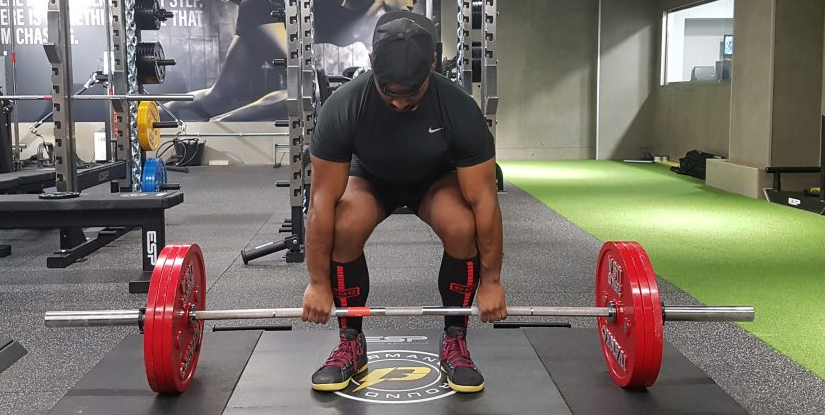
Mitigating Procurement Risk in Wholesale Exercise Equipment Acquisitions
The primary challenge for facility managers and fitness entrepreneurs is not merely finding a vendor, but managing the inherent risks of high-volume orders. When sourcing Wholesale Exercise Equipment, the most frequent failure mode is a mismatch between the technical specification and the actual operational demand of the facility. A shipment of heavy-duty strength machines that arrives with undersized bearings or lightweight gauge steel cannot be easily returned once assembled on-site, leading to catastrophic downtime and safety liabilities.
To avoid these pitfalls, one must move beyond superficial aesthetics and focus on structural integrity. The cause of most post-purchase dissatisfaction is a lack of standardized technical verification during the bidding process. A robust procurement strategy requires a multi-layered approach: vetting material grades, verifying load-bearing capacities, and establishing a rigorous inspection protocol before the final wire transfer. By mastering these technical benchmarks, operators can ensure their capital expenditure translates into long-term asset reliability. This technical baseline is essential before moving into the granular details of structural material selection.
Material Integrity and Structural Load Capacities
Building upon the necessity of a rigorous procurement framework, understanding the material science behind the equipment is the next critical step. A common mistake in the wholesale market is assuming that all steel is created equal. High-traffic commercial environments demand specific metallurgical standards to withstand millions of mechanical cycles without fatigue failure.
Steel Gauge and Tubing Geometry
The structural stability of a weight rack or a cable machine is directly proportional to the wall thickness of the steel tubing. Operators must demand clarity on the gauge of the metal. Using thin-walled tubing (e.g., 14-gauge or 16-gauge) in a high-intensity strength area is a frequent error that leads to structural swaying and eventually, catastrophic collapse under heavy loads. For commercial-grade applications, 11-gauge or 12-gauge steel is the industry standard for primary load-bearing frames.
Metallurgical Standards and Surface Finishes
Beyond thickness, the quality of the powder coating and the grade of the steel itself determine the equipment's lifespan. In humid environments, inferior coatings lead to premature oxidation (rust), which can compromise the integrity of the connection points. Verification of the powder coating thickness and the use of rust-resistant alloys is a non-negotiable requirement for long-term durability. This structural understanding informs how one evaluates the mechanical components that move within these frames.
| Component Type | Requirement for Commercial Use | Common Failure Mode | Verification Method |
|---|---|---|---|
| Main Frame Steel | 11-12 Gauge Cold-Rolled Steel | Structural buckling or frame sway | Measurement of wall thickness with calipers |
| Surface Coating | Electrostatic Powder Coat | Flaking or oxidation/rusting | Visual inspection for uniform coverage |
| Load-bearing Bolts | High-tensile Grade 8 or equivalent | Shear failure under max load | Verification of manufacturer material certs |
| Bearing Housing | Reinforced steel or thick aluminum | Ovalization and play in movement | Manual stress test for lateral stability |
Ensuring the frame is robust provides the foundation for the moving parts. Once the structural integrity is confirmed, the focus must shift to the mechanical endurance of the kinematic components.
Explore the complete technical specifications:
Mechanical Endurance: Bearings, Cables, and Pulley Systems
A rigid frame is useless if the internal mechanical components fail within six months of operation. In the realm of Wholesale Exercise Equipment, the most frequent technical complaints involve the degradation of cable systems and the loss of fluid motion in pulley machines. These failures are rarely spontaneous; they are usually the result of inadequate component specification during the ordering phase.
Cable Tensile Strength and Coating Specifications
The failure of a cable is often caused by choosing a nylon-coated steel cable with insufficient tensile strength for the machine's intended use. While nylon provides a smooth glide, it can also hide fraying within the strands. A professional operator must verify the breaking strength of the cable and ensure it is rated for at least double the maximum expected load of the machine. Furthermore, the sheath material must be resistant to UV and mechanical abrasion to prevent internal wire fatigue.
Pulley System Fluidity and Bearing Precision
Smooth motion is the hallmark of high-quality equipment. Friction in a pulley system is caused by low-grade bushings or poorly sealed bearings that allow dust and sweat to enter the race. When selecting wholesale lots, operators should look for precision bearings that are specifically designed for high-cycle mechanical environments. A lack of smoothness is a precursor to component wear and eventual failure.
- Mistake: Selecting pulleys with plastic wheels instead of machined aluminum or steel.
- Consequence: Rapid degradation of the pulley track and inconsistent resistance profiles.
- Fix: Specify aluminum pulleys with ball bearings for all high-frequency machines.
- Verification: Perform a manual high-speed cycle test to check for vibration or resistance shifts.
Understanding these mechanical tolerances allows for a more effective maintenance schedule, which is the second pillar of long-term asset management.
Explore the complete technical specifications:
Preventative Maintenance Cycles for High-Volume Facilities
While quality equipment requires less frequent intervention, no machine is maintenance-free. The transition from a successful purchase to a long-term asset depends on a disciplined maintenance protocol. Neglecting this step is the primary cause of premature equipment retirement in commercial settings.
The Inspection Hierarchy: Daily vs. Monthly
Maintenance should not be viewed as a reactionary measure but as a scheduled operational requirement. Operators often fail by only performing 'emergency' maintenance when a machine breaks. A structured hierarchy ensures that small issues are caught before they become expensive repairs.
| Interval | Target Component | Action Required | Success Metric |
|---|---|---|---|
| Daily | Upholstery and Grips | Sanitization and visual check | No tears or sweat buildup |
| Weekly | Cables and Pulleys | Tension check and visual inspection | No fraying or visible rust |
| Monthly | Fasteners and Bolts | Torque verification | No loose or vibrating connections |
| Quarterly | Lubrication Points | Application of silicone or grease | Silent, fluid mechanical movement |
A structured approach to maintenance significantly lowers the Total Cost of Ownership (TCO). However, even with perfect maintenance, a failure in the initial assembly or layout can negate all efforts. Thus, the technicalities of installation and spatial layout must be addressed.
Explore the complete technical specifications:
Optimization of Facility Layout and Installation Ergonomics
The final stage of the technical guide involves the physical implementation of the equipment. Even the highest quality Wholesale Exercise Equipment will suffer from accelerated wear if installed in an environment with improper floor loading or poor spatial distribution. This is often the most overlooked aspect of the procurement-to-operation pipeline.
Floor Loading and Impact Absorption
Strength equipment, particularly free weights and heavy machines, exerts significant dynamic force on the flooring. A common failure occurs when heavy machines are placed on standard commercial flooring without adequate impact-damping. This causes vibrations that can loosen the structural bolts of adjacent machines, creating a chain reaction of instability throughout the facility.
Spatial Buffer Zones and User Safety
Ergonomics extends beyond the machine itself to the space surrounding it. Operators must calculate a 'functional footprint' that includes the machine's dimensions, the maximum range of motion (ROM), and a safety buffer for the user. Neglecting these dimensions leads to collisions and mechanical interference, especially in crowded high-traffic zones.
- Implementation: Use high-density rubber flooring (minimum 15mm thickness) in strength zones.
- Implementation: Ensure a minimum of 0.5 meters of clearance between machines for safety.
- Verification: Use a floor plan scale model to simulate the maximum ROM of the largest machine in the room.
By integrating these spatial considerations with mechanical rigor, facility owners can maximize the lifecycle of their investments and ensure a safe environment for their users.