

Strategic Procurement Guide: Weight Room Equipment—What Every Gym Needs
Addressing Structural Integrity in High-Traffic Weight Rooms
Facility managers often encounter a recurring failure mode: the premature degradation of load-bearing structures under heavy use. This issue is rarely caused by a single heavy lift, but rather by the cumulative mechanical fatigue of sub-standard steel gauges and poor weld integrity. When a gym installs weight room equipment that lacks a rigorous certification for commercial-grade stress, the long-term ROI diminishes as replacement cycles shorten. To mitigate this risk, operators must shift from a cost-per-unit mindset to a durability-per-lifecycle calculation.
Identifying Material Deficiencies in Steel Frameworks
The primary cause of structural failure in power racks and weight benches is often the use of thin-walled tubing. While residential-grade equipment may use 14-gauge steel, commercial environments demand 11-gauge or even 7-gauge steel for high-impact zones. A common mistake is failing to verify the thickness of the steel profiles before purchase, assuming that 'heavy-looking' equipment is inherently strong. Operators should demand technical specification sheets that explicitly state the steel gauge and the grade of the steel used.
Verification Checklist for Load-Bearing Stability:
- Check for consistent weld uniformity across all major joints.
- Verify that the steel gauge matches the intended commercial usage level.
- Ensure the footprint of the equipment is wide enough to prevent tipping during lateral load shifts.
- Inspect the base plates for thickness and stability.
By establishing these baseline material requirements, you move from reactive purchasing to proactive asset management. However, selecting the right frame is only the first step; the movement mechanisms within that frame require even tighter tolerances to prevent mechanical failure.
Mechanical Movement and Precision Tolerances in Resistance Machines
Even the most robust steel frame becomes a liability if the moving parts—such as guide rods, pulleys, or bushings—operate with excessive friction or play. Inconsistent mechanical movement is a significant pain point for gym operators, often resulting in user discomfort, increased injury risk, and high maintenance costs. The cause is usually a lack of precision in the assembly of guide rods and the quality of the bearing surfaces.
The Impact of Friction and Guide Rod Alignment
High-quality resistance machines rely on smooth, linear movement. If the guide rods are slightly bent or if the bushings are made of low-grade plastic rather than high-density polymer or metal, the machine will exhibit 'stuttering.' This stuttering is not just a nuisance; it creates uneven load distribution that can snap cables or damage the machine's structural integrity. Operators must ensure that the movement is fluid throughout the entire range of motion.
| Component Type | Common Failure Mode | Required Specification/Check |
|---|---|---|
| Guide Rods | Bending or surface scoring | Must be straight, polished, and free of vertical striations. |
| Cables/Pulleys | Fraying or uneven rotation | Steel cables should have high tensile strength; pulleys must rotate without lateral wobble. |
| Bushings/Bearings | Increased friction or heat | Use high-density polymers or sealed bearings for longevity. |
| Adjustment Pins | Shearing or loose fit | Pins must fit snugly without excessive lateral play. |
A machine that demonstrates smooth movement across its full range of motion will significantly reduce the frequency of emergency repairs. Once the internal mechanisms are secured, the focus must shift toward the external interface: the weight storage and load management systems.
Optimizing Weight Storage and Loading Protocols
A disorganized or poorly designed storage system leads to two distinct problems: physical damage to the equipment and operational inefficiency. When weight plates are dropped onto uneven surfaces or stored in cramped, poorly designed racks, the resulting vibrations and impacts can loosen the bolts of the primary machines. Proper weight room equipment must include dedicated, structurally integrated storage solutions that protect both the plates and the machine itself.
Preventing Impact Damage through Proper Storage
A common mistake in gym setup is the placement of plate trees or weight racks in high-traffic areas where they are subject to constant accidental collisions. This causes micro-fractures in the metal and eventually leads to structural failure. To prevent this, weight storage should be categorized by weight class and placed in zones that minimize collision-prone movement paths.
Standard Loading Protocols for Commercial Gyms:
- Weight Class Zoning: Group plates (e.g., 45lb/20kg, 35lb/15kg) in dedicated, color-coded sections to prevent mixing and searching.
- Vertical vs. Horizontal Loading: Prefer vertical plate trees for smaller footprints, but ensure they are weighted at the base to prevent tipping.
- Loading Height Verification: Ensure that the loading height of barbells is ergonomly consistently to prevent repetitive strain on both users and staff.
By organizing these physical assets effectively, you preserve the lifespan of your machines. However, even the best-stored equipment is subject to wear and tear, necessitating a disciplined approach to routine maintenance and inspection.
Explore the complete technical specifications:
Best Commercial Gym Equipment Manufacturers | Technical Guide
Implementing Rigorous Preventative Maintenance Schedules
The difference between a gym that lasts ten years and one that requires a full overhaul in three years is the implementation of a preventative maintenance schedule. Most operators treat maintenance as a reactive process—fixing things once they break. This approach is inherently more expensive and results in more downtime. A proactive schedule focuses on the lubrication, tensioning, and tightening of components before they reach a critical failure state.
The Cost of Reactive vs. Proactive Maintenance
Reactive maintenance often involves emergency shipping for parts and unexpected equipment downtime, which can lead to member dissatisfaction. Proactive maintenance, conversely, involves regular, scheduled tasks that can be integrated into the facility's low-traffic hours. This strategy optimizes the operational budget and ensures a consistent user experience.
| Task Category | Frequency | Primary Focus Area | Verification Method |
|---|---|---|---|
| Visual Inspection | Daily/Weekly | Wear, loose bolts, torn upholstery | Eyes-on check of all critical connection points. |
| Mechanical Lubrication | Monthly | Pulleys, guide rods, sliding parts | Test for smooth, frictionless movement. |
| Hardware Tightening | Quarterly | Bolts, pins, and mounting plates | Torque wrench verification on major structural joints. |
| Cable/Belt Tension | Bi-Annually | Cable integrity, pulley alignment | Physical inspection for fraying or stiffness. |
Following a structured maintenance cadence ensures that the precision established during procurement is maintained throughout the equipment's lifecycle. This brings us to the final, and perhaps most critical, element: the safety of the environment for the user.
Explore the complete technical specifications:
Ensuring Ergonomic Compliance and User Safety Standards
Ultimately, the quality of the weight room equipment is judged by the safety and comfort of the user. Ergonomic failure—such as a bench that is too narrow or a machine with a non-anatomical movement path—leads to chronic injuries for users and liability risks for the operator. Safety is not just about the absence of accidents; it is about the presence of design features that accommodate a wide range of human physiologies.
Ergonomic Design Criteria for Modern Gyms
When selecting equipment, the operator must look beyond the aesthetics and examine the ergonomic interfaces. This includes the upholstery, the grip diameters, and the adjustment ranges. A failure to provide an adjustable and anatomical experience can alienate certain demographics and lead to a decline in membership retention.
- Grip Diameter and Texture: Bars and handles should have consistent, non-slip textures and diameters that prevent excessive wrist strain.
- Upholstery Durability and Density: Seating surfaces must be high-density foam that does not bottom out under heavy loads, which could lead to spinal misalignment.
- Adjustability Ranges: Ensure that machines have sufficient adjustment increments to accommodate both the smallest and largest users in your target demographic.
By prioritizing these human-centric specifications, you bridge the gap between a functional gym and a high-performance facility. This holistic approach ensures that your investment in weight room equipment—what every gym needs—is a long-term strategic success.
Optimizing Floor Surface and Impact Absorption
The surface beneath your weight room equipment is just as critical as the equipment itself. A common failure mode in facility management is neglecting the subfloor and the specialized flooring, leading to accelerated damage to both the building structure and the equipment. High-impact zones, particularly near free weights and power racks, require specialized treatment to mitigate kinetic energy transfer.
Choosing the Right Flooring Material
A frequent mistake is using standard thin rubber mats that provide aesthetic coverage but lack the density required for impact absorption. When heavy weights hit a thin surface, the shockwave travels directly into the concrete subfloor and back into the equipment, eventually causing micro-fractures in the machine frames. Operators should evaluate flooring based on density and thickness rather than just cost.
| Zone Type | Recommended Material | Primary Purpose | Failure Risk if Neglected |
|---|---|---|---|
| Free Weight Areas | High-density vulcanized rubber (20mm+) | Shock and sound absorption | Subfloor cracking and machine frame vibration |
| Cardio/Low-Impact | Thin EVA foam or low-profile rubber | User comfort and noise reduction | Surface slipping or tripping hazards |
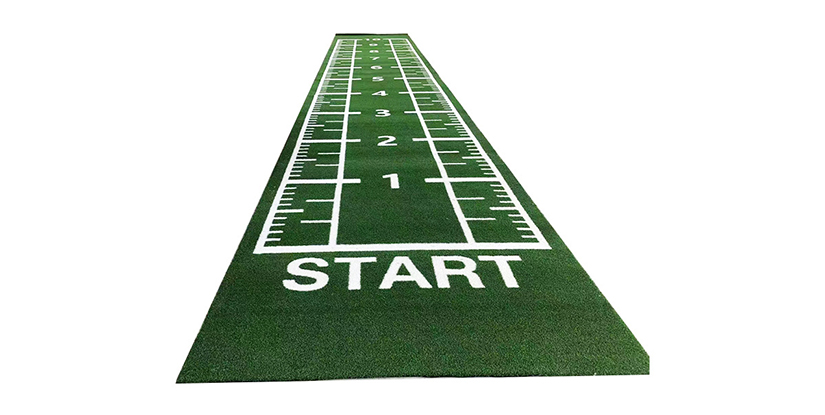
| Functional Training | Turf or specialized multi-layer mats | Lateral stability and traction | Uneven movement and joint strain |
Selecting the right floor protects your structural assets and provides a safer environment for the user. However, once the flooring and the machines are installed, the focus must shift toward the long-term logistics of volume and traffic flow.
Navigating Space Utilization and Equipment Layout
A premium weight room is defined not just by what is inside it, but by how the items are arranged. A common pitfall for new facility owners is maximizing the quantity of equipment while ignoring the necessary clearance zones. Cramped layouts lead to equipment collisions, user frustration, and an increased risk of accidents during heavy lifts.
Establishing Clearance and Flow Zones
Effective space management requires a balance between equipment density and the "safe zone" around each piece of gear. For instance, a power rack requires significant clearance not just for the rack itself, but for the movement of the barbell during a lift. A common mistake is failing to account for the width of the plates on the barbell when calculating the total footprint of a station.
Layout Optimization Checklist:
- The 3-Foot Rule: Maintain at least a 3-foot buffer between any two pieces of equipment to allow for safe movement and cleaning.
- Transition Zones: Create clear pathways between strength stations and cardio zones to prevent bottlenecks.
- Visual Sightlines: Ensure that high-intensity zones (like the heavy lifting area) are visible to staff or trainers for monitoring safety.
A well-planned layout enhances the user experience and protects the longevity of your assets. By understanding the relationship between structural integrity, mechanical precision, and spatial design, you can build a facility that stands the test of time.