

Mastering the Squat Workout: A Technical Guide to Biomechanics and Programming
Biomechanical Foundations of an Effective Squat Workout
Executing a professional-grade squat workout requires more than mere muscular effort; it demands a precise understanding of kinetic chains and center of mass management. A common problem encountered by lifters is the unintended shifting of the center of gravity, which often results in spinal flexion or excessive shear force on the lumbar vertebrae. This structural failure is typically caused by a lack of intra-abdominal pressure or improper foot positioning. To correct this, operators must prioritize the bracing mechanism and mid-foot stability.
The Role of Intra-Abdominal Pressure
Achieving optimal stability begins with the Valsalva maneuver—not just breathing, but creating a pressurized cylinder in the torso. By inhaling into the abdomen rather than the chest, the lifter stabilizes the spine from the inside out. Without this internal pressure, the mechanical load shifts from the musculature to the passive connective tissues, increasing the risk of injury. Verify your technique by checking if your midsection expands laterally during the descent phase.
Foot Rooting and Ground Force Reaction
A successful lift is predicated on the ability to transfer force into the ground efficiently. If the feet are unstable, the force leak results in knee valgus (caving) or heel elevation. Ensuring a 'tripod foot'—pressure distributed between the heel, the base of the big toe, and the base of the pinky toe—creates a rigid platform for the squat movement. When this foundation is solid, the kinetic energy can move unimpeded through the posterior chain.
Once the fundamental biomechanics are established, the operator must select the appropriate equipment and movement variations to match their specific training objectives.
Evaluating Squat Variations and Implementation Criteria
Choosing the right variation for a squat workout is a decision-making process based on individual anatomical constraints and performance goals. A common mistake is attempting high-intensity barbell movements before mastering the requisite mobility. The following table provides criteria for selecting a movement based on specific technical requirements and intended outcomes.
| Variation Type | Primary Focus | Complexity Level | Best Suited For |
|---|---|---|---|
| High Bar Back Squat | Quad Dominance | Moderate | Hypertrophy & General Strength |
| Low Bar Back Squat | Posterior Chain/Leverage | High | Maximum Weight/Powerlifting |
| Front Squat | Thoracic Extension/Core | High | Quad Isolation & Anterior Loading |
| Goblet Squat | Mobility/Technical Proficiency | Low | Beginners & Corrective Training |
| Box Squat | Explosive Power/Breaking Inertia | Moderate | Developing Vertical Force |
Selecting the correct variation ensures that the mechanical load aligns with the desired adaptation. However, even with the right movement selection, mechanical failure can occur if the load-bearing equipment is not correctly configured.
Equipment Setup and Safety Protocol Verification
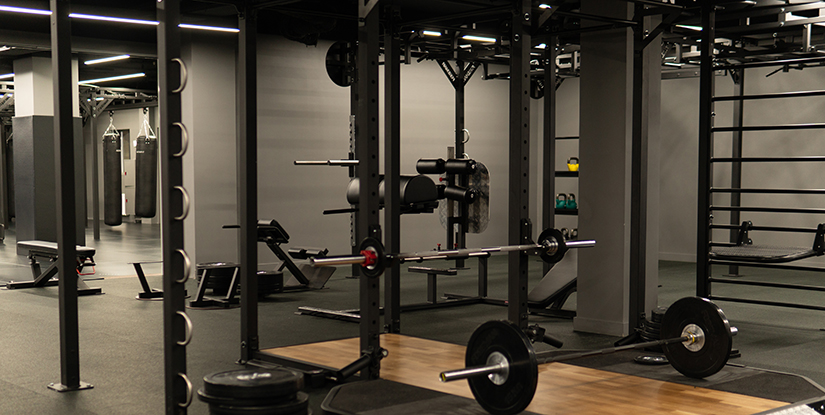
The stability of the squat workout is heavily dependent on the integrity and setup of the rack and barbell. A frequent failure mode in training environments is the improper height of the J-cups or the lack of safety pins, which can lead to catastrophic failure during a missed lift. A professional must treat the setup phase as a critical pre-flight checklist.
Barbell and Rack Configuration Standards
Before any load is applied, the following parameters must be verified to ensure operational safety:
- J-Cup Height: The bar should sit at a height that allows for a seamless unrack without excessive calf engagement or loss of spinal neutrality.
- Safety Pin Placement: Safety rails or pins must be positioned approximately 1-2 inches below the lowest point of the intended eccentric phase to prevent spinal compression if a rep is failed.
- Barbell Knurling and Rotation: Ensure the barbell has smooth sleeve rotation; if the sleeves are seized, the rotational force of the plates will torque the lifter's wrists and elbows.
Verification of these parameters prevents the 'stuck' sensation and ensures that the descent remains controlled. Once the equipment is secured, the focus shifts to the actual execution of the movement cycles.
Optimizing the Eccentric and Concentric Phases
The effectiveness of a squat workout is determined by the control of both the descent (eccentric) and the ascent (concentric) phases. A common technical error is 'dropping' into the hole, where the lifter loses tension at the bottom of the movement. This causes a sudden spike in load at the most vulnerable point of the range of motion.
The Controlled Descent (Eccentric Phase)
The descent should be a deliberate, controlled movement that maintains tension in the musculature. By controlling the eccentric phase, the lifter optimizes time under tension and prepares the nervous system for the transition at the bottom. If the descent is too fast, the lifter may lose the ability to maintain an upright torso, leading to the 'good morning' squat error where the hips rise too quickly.
The Reversal and Ascent (Concentric Phase)
The transition at the bottom—the 'hole'—is where most failures occur. The objective is to maintain a constant tension throughout the reversal. The ascent should be a continuous upward drive, focusing on pushing the floor away rather than just lifting the weight. Verify success by ensuring the hips and shoulders rise at the same rate, preventing the mechanical imbalance that leads to lumbar strain.
Effective execution of these phases is the backbone of strength, but long-term progress requires a structured approach to load management and recovery.
Load Progression and Programming Variables
A sustainable squat workout requires a mathematical approach to progression rather than random intensity increases. The primary pain point for many lifters is the 'plateau,' where progress stalls due to insufficient stimulus or improper fatigue management. Plateaus are often caused by non-linear loading or failing to account for cumulative fatigue.
Managing Intensity and Volume
To avoid stagnation, operators should balance intensity (percentage of 1RM) with volume (total sets and reps). The following matrix outlines how to shift variables to drive different physiological adaptations:
| Objective | Intensity (Load) | Volume (Reps/Sets) | Rest Intervals |
|---|---|---|---|
| Absolute Strength | High (85-95%+) | Low (1-5 reps) | Long (3-5 mins) |
| Hypertrophy | Moderate (70-80%) | Moderate (8-12 reps) | Medium (90-120 secs) |
| Endurance/Capacity | Low (50-65%) | High (15+ reps) | Short (<60 secs) |
By manipulating these variables, the lifter can cycle through different phases of training to ensure continuous adaptation. However, even the best program will fail if the lifter does not address common technical and physical setbacks.
Troubleshooting Common Movement Faults
Technical errors in a squat workout are rarely isolated; they are usually symptoms of a deeper mechanical deficiency. Identifying the cause is essential for long-term progression and injury prevention.
Identifying Knee Valgus and Hip Instability
If the knees collapse inward during the ascent, the cause is likely weak hip abductors or poor foot stability. This 'valgus collapse' puts excessive strain on the MCL and can lead to chronic knee pain. To fix this, focus on external rotation of the hips and ensure the feet are actively 'screwing' into the floor. Verification involves recording a set from a frontal view to check for knee tracking over the second toe.
Managing Excessive Forward Lean
Excessive forward lean occurs when the hips move backward too quickly or the thoracic spine fails to remain upright. This is often a byproduct of poor ankle dorsiflexion or weak upper back musculature. If the ankles are immobile, the body compensates by shifting the center of mass forward. To resolve this, incorporate mobility drills for the calves and thoracic spine, and ensure the bar position is optimized for your limb lengths.
Addressing these faults ensures that the structural integrity of the lift remains intact throughout the entire training cycle.
Long-Term Sustainability and Maintenance of Physical Capacity
The ultimate goal of any structured training regimen is long-term progress without injury. A technical approach to a squat workout must include periodic deloads and mobility maintenance to manage the cumulative stress on the central nervous system and connective tissues. Neglecting these aspects is a leading cause of overtraining syndrome and degenerative joint issues.
The Necessity of Deload Cycles
A deload is a scheduled reduction in training volume and/or intensity. It is not a sign of weakness but a strategic tool to allow the body to supercompensate. Most high-level programs incorporate a deload every 4 to 8 weeks. During this period, the lifter should reduce the load by approximately 30-50% while maintaining technical precision to allow the nervous system to recover.
Mobility and Accessory Support
Strength is useless without the range of motion required to express it. A professional training regimen should include accessory movements that target the weak links identified during troubleshooting. For example, if hip stability is a recurring issue, Bulgarian split squats or lateral lunges should be integrated. This comprehensive approach ensures that the lifter is not just strong, but functionally robust.
With a deep understanding of biomechanics, equipment, and programming, a lifter can transform a simple movement into a sophisticated tool for total-body development.