

Engineering Excellence in Major Fitness Equipment Manufacturers
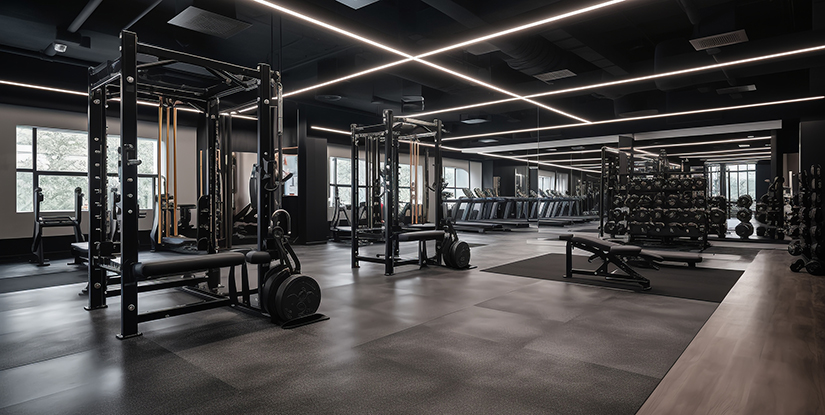
The Structural Foundation of High-End Fitness Production
For procurement officers and facility managers, the decision to partner with specific major fitness equipment manufacturers is rarely about aesthetic appeal; it is a calculated risk management strategy. A primary pain point for large-scale operators is the premature failure of load-bearing components, which often stems from inadequate metallurgical selection or substandard welding techniques. When a commercial gym experiences frame fatigue or structural cracking, the root cause is rarely the user, but rather a deficiency in the initial manufacturing lifecycle.
The production of heavy-duty resistance machines and cardio hardware begins with the selection of high-grade raw materials. Most premium manufacturers utilize high-tensile carbon steel or reinforced aluminum alloys to ensure both structural rigidity and weight efficiency. The process is a rigorous journey from raw ingot to a precision-engineered piece of machinery.
Material Selection and Metallurgy
The durability of a piece of equipment is dictated by its chemical composition. High-quality steel must possess a specific balance of carbon, manganese, and silicon to prevent brittness under repetitive impact. If the carbon content is too high, the steel becomes prone to cracking during the bending process; if it is too low, the frame may lack the necessary stiffness for heavy lifting applications. Manufacturers must verify the mill test reports (MTRs) of their incoming steel to ensure compliance with international structural standards.
The 0→1 Manufacturing Workflow
The transformation from raw steel to a finished product follows a highly controlled sequence. It begins with precision CNC (Computer Numerical Control) cutting, where laser or plasma cutters shape the components according to strict digital blueprints. Once cut, the parts undergo cold or hot rolling to achieve the desired profile. This initial stage is critical because any deviation in the cutting geometry will result in cumulative errors during the assembly phase. Achieving a seamless transition from individual parts to a unified machine requires uncompromising control over these initial inputs.
With the basic structural geometry established, the focus shifts to the permanent joining of components, which brings us to the critical role of welding integrity.
Advanced Welding and Joint Integrity Standards
Building on the established structural forms, the next phase of the manufacturing process involves joining disparate parts into a cohesive frame. In many high-traffic facilities, the most common failure mode is a broken weld at a pivot point or a structural junction. This is often caused by inconsistent penetration or the presence of slag, which weakens the joint over time.
To mitigate this, major manufacturers employ specialized welding processes that are highly repeatable and easy to inspect. The quality of a joint is not merely visible; it is a matter of metallurgical fusion.
Common Welding Techniques in Fitness Hardware
Most commercial-grade equipment utilizes either MIG (Metal Inert Gas) or TIG (Tuchsten Argon Inert Gas) welding. MIG is favored for its speed and efficiency in large-scale production of frames, while TIG is often reserved for high-precision components or thinner-walled tubing where aesthetic and structural perfection is paramount. A successful weld must exhibit full penetration into the base metal without causing excessive heat-affected zones (HAZ) that could embrittle the surrounding steel.
Failure Modes in Load-Bearing Joints
Operators should be aware of specific defects that can occur if the welding process is poorly managed. Below is a checklist for inspecting finished welding on new equipment:
- Undercutting: A groove melted into the base metal next to the weld toe, which can act as a stress concentrator.
- Porosity: Small holes or cavities within the weld bead caused by trapped gas, significantly reducing structural strength.
- Incomplete Penetration: When the weld metal does not reach the root of the joint, creating a hidden weak point.
- Lack of Fusion: When the weld metal fails to fuse with the base metal or the previous weld bead.
Identifying these defects during the receiving process can save a facility from significant liability issues. Once the frames are securely joined, the manufacturing focus moves toward surface protection and finishing.
Surface Treatment and Corrosion Resistance Protocols
A strong frame is only as useful as its ability to withstand the environment. Even the best-engineered machines can fail if the surface finish is inadequate, leading to oxidation and material degradation. This is particularly true in high-humidity environments or fitness centers that lack advanced climate control.
The goal of surface treatment is twofold: to protect the underlying metal from environmental factors and to provide a durable, aesthetically pleasing exterior that can withstand the chemical cleaning agents used daily by facility staff.
Electrostatic Powder Coating Processes
The industry standard for high-end equipment is electrostatic powder coating. This process involves applying a dry powder to the metal surface using an electrostatic charge, which is then cured in an industrial oven. This method is superior to liquid painting because it creates a much thicker, more uniform, and more durable protective layer. A high-quality coating should be free of 'orange peel' textures or uneven thickness, which can indicate poor application or insufficient curing.
Testing for Coating Durability
To verify the quality of the finish, manufacturers often perform standardized tests. Operators can perform a simple visual and physical inspection to ensure the coating meets expectations:
| Test Parameter | Method of Verification | Ideal Result |
|---|---|---|
| Adhesion Test | Cross-hatch tape test on a sample area | No coating lifting or peeling after tape removal |
| Uniformity | Visual inspection under high-intensity light | Consistent color and smooth texture without pinholes |
| Chemical Resistance | Wipe with common disinfectant (Isopropyl alcohol) | No discoloration or softening of the surface |
| Thickness Check | Dry film thickness (DFT) gauge measurement | Consistent micron depth across all surfaces |
Maintaining a high standard for surface treatment ensures that the machine remains visually striking and structurally sound throughout its service life. However, even a perfect finish cannot compensate for flaws in the moving parts and mechanical interfaces.
Explore the complete technical specifications:
Core Certification Systems for Professional Fitness Equipment Manufacturers
Precision Engineering of Moving Components and Bearings
While the frame provides the skeleton, the moving parts—pulleys, bearings, and cables—represent the nervous system of the machine. If the frame is the strength, these components are the precision. The primary failure mode in cardio and resistance machines is a 'clunky' or irregular motion, which is often the result of poor tolerance control in these mechanical sub-assemblies.
High-quality manufacturers treat these components as high-precision assemblies, often sourcing them from specialized sub-suppliers to ensure the highest possible grade of mechanical movement.
Bearing Assemblies and Friction Management
Bearings are the most critical components in both strength and cardio equipment. A bearing must be able to handle both radial and axial loads while maintaining minimal friction. In high-tier manufacturing, stainless steel or high-grade chrome steel bearings are used to prevent corrosion and ensure longevity. The internal clearances within these bearings are strictly controlled to ensure that the rotation remains smooth even under heavy, repetitive loading.
Cable and Pulley Systems: The Core of Resistance
For cable-based machines, the quality of the cable and the pulley sheath is vital. A common failure in low-tier equipment is the fraying of cables or the cracking of nylon pulley wheels. This is often caused by a mismatch between the cable'%s tensile strength and the machine's maximum load capacity.
- Cable Composition: Premium cables are typically aircraft-grade stainless steel or high-tensile galvanized steel, often encased in a high-density polyethylene (HDPE) sheath to reduce friction and prevent fraying.
- Pulley Sheath Integrity: Pulleys should be made of high-density nylon or acetal to ensure they can withstand constant friction without shedding micro-plastics or overheating.
Properly engineered moving parts ensure that the user feels a consistent resistance throughout the entire range of motion. Once the mechanics are perfected, the final step is the integration of technology and electronics.
Explore the complete technical specifications:
Hidden Costs of Choosing the Wrong Fitness Equipment Manufacturer
Electronic Integration and Control Systems
Modern fitness equipment is increasingly complex, moving from purely mechanical machines to sophisticated electronic systems. This shift introduces a new set of challenges: the integration of digital consoles, sensors, and electromagnetic resistance controls. The primary problem for operators here is electronic obsolescence or failure due to environmental interference.
A robust manufacturing process for electronics must account for both the precision of the internal circuits and the durability of the user interface (UI).
The Architecture of Digital Consoles
The digital consoles on treadmills or smart trainers are essentially specialized computers. They require high-quality, weather-resistant enclosures to protect the internal circuitry from sweat, moisture, and dust. The circuit boards themselves must be designed to handle the voltage spikes and electromagnetic interference (EMI) commonly found in large-scale commercial facilities.
Electromagnetic Resistance Control
In many high-end machines, resistance is no longer provided by physical plates but by electromagnetic motors. This requires precise control of current to adjust the resistance levels seamlessly. A common defect in these systems is 'jitter' or uneven resistance, which occurs when the sensor-to-motor feedback loop is poorly calibrated or when the electronic components cannot handle high-frequency switching.
| Electronic Component | Key Verification Metric | Potential Failure Mode |
|---|---|---|
| Console Display | Brightness/Contrast levels under bright light | Screen flickering or dead pixels |
| Sensor Calibration | Accuracy of RPM/Speed readings | Data lag or inconsistent feedback |
| Motor Controller | Heat dissipation and thermal stability | Power fluctuations or complete shutdown |
| Connectivity Module | Signal strength (Bluetooth/ANT+) | Intermittent pairing or connection loss |
The integration of these digital systems must be seamless, as a failure in the electronic component can render a perfectly functional mechanical frame useless. This leads us to the final, crucial phase of the manufacturing journey: the rigorous testing and quality control protocols.
Explore the complete technical specifications:
Rigorous Quality Control and Compliance Standards
The culmination of all the preceding manufacturing steps is the final testing phase. No piece of equipment should leave a factory without undergoing a series of stress tests designed to simulate years of heavy use. For an operator, this is the most important documentation to review when evaluating potential suppliers.
Quality control (QC) is not just a single step at the end; it is a continuous process that happens at every stage, from the first cut of steel to the final electronic calibration.
Simulated Load Testing and Fatigue Cycles
To ensure that a machine can handle the rigors of a commercial gym, manufacturers perform fatigue testing. This involves a machine (or a robotic actuator) applying repetitive, high-impact loads to the equipment for hundreds of thousands of cycles. This test is designed to identify any latent defects in the welding, bearing, or cable systems that might not be apparent during a single-session test. If a machine fails to meet the required cycle count without structural or mechanical deviation, the entire batch is often scrutinized for systemic errors.
Pre-Shipment Inspection Checklists
A professional buyer should ask for the specific QC checklists used during the final assembly. A high-quality checklist will include:
- Geometric Tolerance Check: Ensuring all moving parts align within strict millimeter-level tolerances.
- Electrical Safety Test: Verifying proper grounding and insulation for all electronic components.
- Weight and Balance Verification: Ensuring cardio equipment (like treadmills) is balanced to prevent vibration.
- Cosmetic Inspection: Confirming no scratches, dents, or coating imperfections are present.
By verifying these technical details, a facility manager can transition from a reactive maintenance posture to a proactive management strategy, ensuring the longevity of their investment.
Explore the complete technical specifications:
Fitness Equipment Factory Tour - Rubber, Barbell & Casting Workshop
Designing for Longevity: The Operator's Final Assessment
After understanding the intricate manufacturing processes of major fitness equipment manufacturers, the final decision becomes one of long-term ROI rather than upfront cost. Every decision made in the factory—the steel grade, the welding technique, the coating thickness—directly impacts the total cost of ownership (TCO) for the gym operator.
The most successful facility managers are those who look beyond the marketing materials and focus on the technical specifications and the manufacturing standards of the equipment. They understand that a cheap piece of equipment is often the most expensive one in the long run due to the inevitable repair and replacement costs.
In conclusion, the path from raw material to a finished, high-performance fitness machine is a complex chain of precision-driven steps. By focusing on the material foundations, structural integrity, and the technical details of both mechanical and electronic components, an operator can select equipment that stands the test of time and provides reliable service to their users.