

Selecting a Professional Dumbbell Manufacturer: A Technical Production Guide
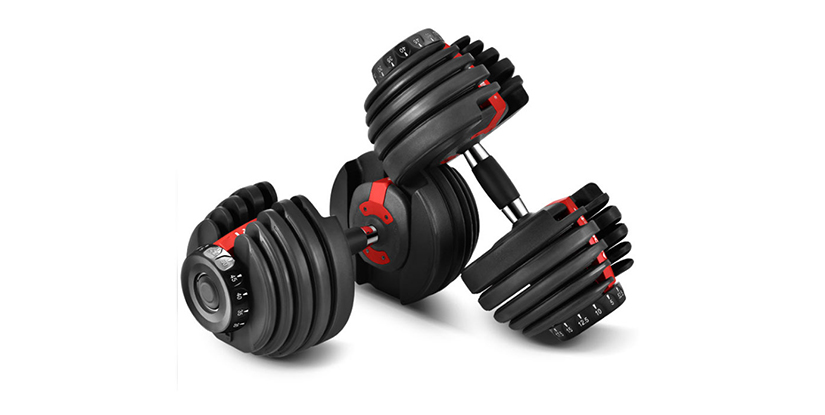
Procuring high-quality strength equipment requires a deep understanding of the manufacturing lifecycle, moving from raw material selection to the final inspection of the finished product. For procurement officers and gym owners, the primary challenge lies in the invisibility of the manufacturing process; once a product arrives, the structural integrity and coating durability are already determined. A professional Dumbbell Manufacturer must demonstrate rigorous control over metallurgical inputs and casting consistency to prevent the common pain point of uneven weight distribution or premature surface degradation. This guide explores the technical evolution of a dumbbell, providing the necessary criteria to audit a supplier's capabilities.
The Critical Role of Raw Material Selection and Metallurgical Purity
The foundation of any high-quality weight begins with the chemical composition of the raw material. A professional Dumbbell Manufacturer must prioritize the purity of iron or steel to ensure long-term structural stability. For instance, high-carbon steel is often selected for the handle to provide the necessary tensile strength, while cast iron is used for the weights to ensure density and shape retention.
When auditing a supplier, one should look for specific indicators of material grade. A common mistake is overlooking the inclusion of impurities like high sulfur or phosphorus levels, which can lead to brittleness in cold temperatures. A checklist for material assessment should include:
- Verification of material certificates (Mill Test Reports) for metal cores.
- Assessment of iron ore quality to prevent excessive slag or impurities.
- Check for consistent grain structure in steel handles to prevent snapping under high tension.
Advanced Casting and Molding Processes: Precision in Form
Once the materials are selected, the casting process determines the geometric integrity of the weight. The industry standard typically involves sand casting or centrifugal casting, depending on the desired weight class and shape. A reliable Dumbbell Manufacturer utilizes precise mold temperature controls to prevent thermal shock and cracks.
A significant failure mode in low-end manufacturing is 'pitting'—small air bubbles or holes on the surface caused by improper degassing or poor sand density in the mold. To evaluate a manufacturer's casting capability, one should examine the surface texture of their samples. High-quality molds result in a smooth, uniform finish, whereas poor-quality molds exhibit irregular edges and rough textures. This precision in the casting phase is vital because any irregularity in the mold will later lead to uneven weight distribution or poor adhesion of the outer coating.
Achieving Precision in Weight Distribution and Balance
Weight accuracy is more than just a number on a scale; it is about the distribution of mass around the handle's center of gravity. If a Dumbbell Manufacturer lacks strict control over the molding and machining phases, the resulting dumbbell may feel 'off-balance' or 'lopsided' during use, which can lead to user injury or improper form.
A technical audit should demand the following parameters:
- Tolerance Ranges: Industry-standard high-end manufacturers should maintain a variance within a very narrow percentage of the target weight.
- Centering Accuracy: The alignment of the handle through the center of the weights must be perfectly coaxial to ensure the center of mass is stable.
- Mass Uniformity: In a production batch, the weight difference between individual units of the same denomination should be minimal.
Explore the complete technical specifications:
Identifying the Best Fitness Manufacturer for Commercial Use
Surface Treatment and Material Adhesion Technologies
The longevity of strength equipment is largely determined by its outer layer, whether it be rubber, urethane, or powder coating. A failure in this stage often manifests as peeling, cracking, or oxidation. A top-tier Dumbbell Manufacturer employs specific chemical bonding or thermal processes to ensure the coating adheres to the metal core under extreme impact and temperature fluctuations.
Comparison of common coating methods:
| Coating Type | Primary Benefit | Common Failure Mode |
|---|---|---|
| Neoprene/Rubber | Impact absorption and noise reduction | Peeling due to poor adhesion or aging |
| Polyurethane | Extreme durability and chemical resistance | Hardness variations if incorrectly cured | High density and aesthetic consistency | Rust formation if the coating is scratched |
Explore the complete technical specifications:
Iron Casting Factory | Precision Weight Plates & Barbell Manufacturing
Structural Integrity of Handles and Grip Engineering
While the weight is the most visible part, the handle is the most critical component for safety. A Dumbbell Manufacturer must ensure that the handle can withstand significant torque and bending forces. This is achieved through specialized heat treatment and high-quality metal selection.
One must differentiate between standard knurling and poor-quality etching. High-quality knurling is a precision-machined geometric pattern that provides grip without being overly abrasive. A common failure in low-cost production is 'shallow knurling,' which wears down quickly and offers no traction when the user's hands are sweaty. A technical specification should define the depth and pattern consistency of the knurling to ensure it meets commercial ergonomic standards.
Explore the complete technical specifications:
Hidden Costs of Choosing the Wrong Fitness Equipment Manufacturer
Quality Control Protocols: Testing and Statistical Sampling
Quality control (QC) should not be a single step at the end of production, but a continuous loop throughout the entire manufacturing cycle. A professional Dumbbell Manufacturer utilizes several layers of verification to maintain high standards across large-scale orders.
A robust QC program includes:
- In-line Inspection: Checking the dimensions of the casting before it reaches the coating station.
- Tensile Strength Testing: Periodic testing of handles to ensure they meet breaking-point specifications.
- Drop Testing: Simulating impact to ensure the coating and weight units do not separate.
Explore the complete technical specifications:
Facility Inspection: Auditing the Production Environment
When conducting a factory audit, look beyond the products and examine the environment. The cleanliness and organization of a facility often reflect the precision of their manufacturing processes. A highly organized Dumbbell Manufacturer will have dedicated zones for raw material storage, casting, machining, and packaging.
Specific indicators of a high-standard facility include:
- Controlled Environments: Dedicated, temperature-controlled areas for the curing of urethane or rubber coatings.
- Inventory Management: Clear separation between raw iron, processed weights, and finished products to prevent cross-contamination.
- Tool Maintenance Logs: Documented schedules for the sharpening of knurling tools and the calibration of casting molds.
Explore the complete technical specifications:
Fitness Equipment Factory Tour - Rubber, Barbell & Casting Workshop
Final Verification and Procurement Logistics
The final stage of the procurement process involves the transition from production to shipping. Even with a high-quality Dumbbell Manufacturer, poor packaging can lead to significant damage during international transit. The weight and volume of the products make them particularly susceptible to impact damage.
The final checklist for procurement professionals before signing off on a shipment should include:
- Packaging Strength: Are the dumbbells secured in reinforced boxes with internal dividers to prevent movement?
- Compliance Documentation: Has the manufacturer provided all necessary material and weight certificates?
- Batch Uniformity Check: A final random sampling of the finished goods using calibrated scales and visual inspection.