

Commercial Strength Machines—A Worthwhile Investment for Growth

The Hidden Costs of Substandard Equipment Selection
Facility operators often face a recurring dilemma: the temptation to reduce initial capital expenditure by procuring light-duty or residential-grade equipment. However, this decision frequently triggers a cycle of premature component failure and increased maintenance overhead. When a fitness facility scales, the sheer volume of repetitive mechanical stress can cause low-grade machines to fail within months, not years. The problem is not just the broken machine, but the resulting downtime, loss of member trust, and the high cost of replacement. To treat commercial strength machines as a worthwhile investment for growth, one must understand that durability is a financial hedge against future operational disruptions.
Identifying the Lifecycle Failure Pattern
A common mistake in procurement is failing to distinguish between 'heavy-duty' and 'commercial-grade.' Residential machines are designed for intermittent use, whereas commercial machines are engineered for constant, high-frequency loading. When an operator chooses the wrong tier, they witness early signs of structural fatigue, such as loose welding points or worn bushings, which lead to a complete cessation of machine utility. Understanding these failure modes allows for more strategic purchasing decisions.
| Failure Indicator | Primary Cause | Impact on Growth |
|---|---|---|
| Erratic Cable Movement | Poor pulley lubrication or low-grade coating | Reduced user experience and higher repair frequency |
| Structural Rattling | Insufficient bolt torque or thin-walled tubing | Perception of poor facility quality and safety concerns |
| Seat Foam Compression | Non-density compliant upholstery | Increased ergonomic complaints and discomfort |
By recognizing these indicators early, operators can pivot from reactive repairs to proactive asset management. This transition from troubleshooting to prevention begins with a deep understanding of machine architecture and material integrity.
Evaluating Structural Integrity and Load-Bearing Specs

Building on the need to avoid early-stage failures, the next critical step involves scrutinizing the actual physical properties of the machines. A machine's ability to sustain a growth-oriented business model relies heavily on its structural stability under peak loads. A single improperly built chassis can compromise the entire layout and safety rating of a facility. Therefore, analyzing the gauge of steel and the quality of the welds is not just a technical exercise, but a risk management strategy.
Material Selection and Frame Geometry
High-quality commercial machines typically utilize heavy-gauge steel tubing. The thickness of this steel directly correlates to the machine's ability to resist torsional forces during heavy lifting. A common failure in budget-friendly options is the use of thin-walled steel, which may appear sturdy but will eventually buckle or vibrate excessively under tension. Operators should verify the gauge specifications before finalizing any purchase order.
- Steel Gauge: Aim for high-density, thick-walled steel to ensure long-term rigidity.
- Welding Standards: Inspect for continuous, smooth welds rather than spot welds, which are prone to cracking under stress.
- Powder Coating Thickness: A robust coating prevents oxidation and protects the metal from sweat-induced corrosion.
Once the structural foundation is verified, the focus must shift from the frame to the moving parts that dictate the fluidity of the user experience.
Optimizing Mechanical Motion and Pulley Systems
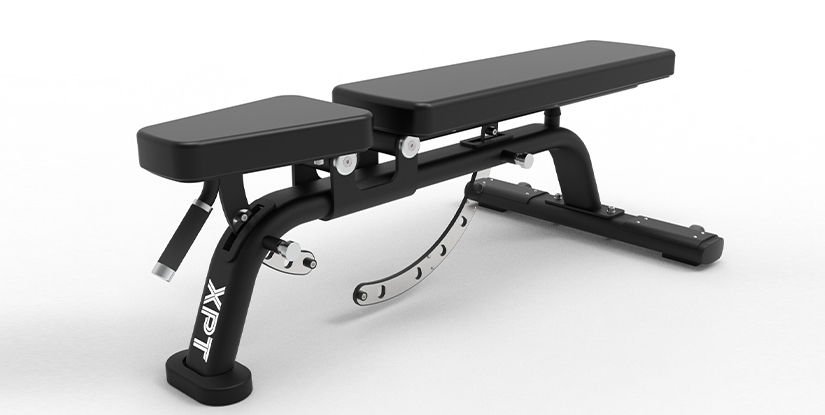
Even the sturdiest frame is rendered useless if the mechanical motion is jerky or inconsistent. As operators strive for a premium environment, the precision of the pulley and cable system becomes a defining factor in member retention. Resistance through cables must be smooth and predictable; any hitch or 'jump' in the motion is a sign of mechanical misalignment or poor component quality. This smoothness is essential for both hypertrophy training and injury prevention.
The Role of Precision Bearings and Pulley Alignment
The smoothness of a machine's movement is determined by the quality of its bearings and the precision of its pulley alignment. Low-quality pulleys often use plastic or low-grade metal parts that degrade rapidly under high friction, leading to a 'grinding' sensation. This is a classic problem where the cause is a lack of precision engineering, and the fix is upgrading to industrial-grade components. Operators can verify performance by observing the ease of movement under different resistance levels.
| Component Type | High-Performance Spec | Low-Performance Indicator |
|---|---|---|
| Pulley Material | Aluminum or high-density nylon | Thin plastic with visible friction marks |
| Bearing Type | Sealed ball bearings | Open or poorly lubricated bushings |
| Cable Construction | Multi-strand nylon-coated steel | Single-strand or uncoated wire |
Ensuring these components meet commercial standards provides the reliability necessary to support a high-traffic environment. However, even the best machines require a rigorous upkeep schedule to maintain this standard.
Developing a Preventive Maintenance Cadence
Relying solely on the quality of the machine is a mistake; even the best commercial strength machines require a structured maintenance routine to remain a worthwhile investment for growth. Without a schedule, small issues like a slightly loose bolt or a dry bearing will escalate into expensive structural failures. A preventive approach shifts the expenditure from 'emergency replacement' to 'routine maintenance,' which is significantly more cost-effective in the long run.
Daily, Weekly, and Monthly Inspection Checklists
A successful maintenance program is tiered by frequency and intensity. For example, a daily visual check can prevent catastrophic failure, while a monthly deep-dive into the mechanics ensures the longevity of the unit. Operators should implement a standardized checklist that every staff member can follow to ensure no critical component is overlooked.
- Daily Checklist: Inspect cables for fraying, check seat upholstery for tears, and wipe down surfaces.
- Weekly Checklist: Test all adjustment pins, check for loose bolts, and verify that all moving parts move without resistance.
- Monthly Checklist: Lubricate pulleys and cables, inspect welding points for stress cracks, and perform a deep-clean of the chassis.
By following these steps, operators can verify the performance of their equipment through consistent, observable metrics. This data-driven approach leads directly into the necessity of proper installation and spatial planning.
Strategic Layout and Ergonomic Implementation
Maintaining the equipment is only one half of the equation; the other half is how that equipment is integrated into the facility's footprint. A machine that is perfectly maintained but poorly placed becomes a bottleneck for growth. Proper layout considerations must account for both the physical movement of the machine's parts (like weight stacks or levers) and the ergonomic needs of the human body. Incorrect spacing leads to collisions and user frustration, which can stifle the growth of a high-end facility.
Spatial Constraints and Machine Clearance
A common error in gym design is failing to account for the 'total footprint' of an active machine. This includes not just the base, but the full range of motion of the weight stack, the expansion of pedals, and the room required for a person to safely approach the machine. For instance, a cable crossover machine requires significantly more vertical and lateral clearance than its static footprint suggests. Operators must measure the maximum extension of all moving parts before finalizing a floor plan.
- The 3-Foot Rule: Aim for at least 3 feet of clear space around heavy machines to allow for safe access and movement.
- Workflow Mapping: Arrange machines in a logical sequence (e.g., warm-up to heavy compound movements) to prevent traffic jams.
- Access Pathways: Ensure primary pathways remain unobstructed by even the largest machines to maintain fire safety compliance.
With a thoughtful layout in place, the facility is ready for the final stage: the actual deployment and verification of the equipment's utility.
Verifying Performance Post-Installation
Once the machines are installed and the layout is finalized, the work is not done. A formal verification process is required to ensure that the shipment matches the technical specifications promised by the supplier. It is easy to assume that a machine is 'ready to go' upon arrival, but many components can be misaligned during transit. This final step validates that your investment is truly ready to support your growth objectives.
The Post-Setup Validation Protocol
The validation process should be systematic. Instead of just turning the machine on, an operator should perform a series of stress tests and alignment checks. This ensures that the mechanical and structural integrity verified during the procurement phase remains intact after the rigors of shipping and assembly.
| Verification Step | Action Required | Desired Outcome |
|---|---|---|
| Bolt Torque Check | Use a torque wrench on all structural bolts. | All fasteners meet specified tightness levels. |
| Cable Tension Test | Cycle the weight through its full range. | Smooth, consistent tension with no hitching. |
| Leveling Verification | Use a spirit level on the main chassis. | Machine sits perfectly flat to prevent uneven wear. |
Completing this protocol ensures that your facility is not just opening its doors, but opening them with a reliable, high-performance foundation. This systematic approach to procurement, maintenance, and installation is what truly turns equipment into a growth engine.
Long-Term ROI: From Capital Outlay to Asset Appreciation
Looking at the long-term horizon, the goal of purchasing commercial strength machines is to transform a capital expense into a high-yield asset. While the initial cost of high-tier equipment is higher, the total cost of ownership (TCO) over five to ten years is often much lower than that of cheaper alternatives. A machine that lasts a decade with minimal repairs is a much more efficient use of capital than a machine that needs replacing every two years.
Calculating the Total Cost of Ownership (TCO)
To make an informed decision, operators must move beyond the sticker price and calculate the TCO. This calculation should include the purchase price, estimated shipping and installation costs, the cost of annual maintenance, and the potential cost of downtime. When these variables are accounted for, the value proposition of premium commercial equipment becomes undeniable.
- Direct Costs: Purchase price + Installation + Shipping.
- Indirect Costs: Annual lubrication + Replacement parts + Staff training time.
- The Cost of Inaction: Lost revenue from broken machines and member turnover.
Ultimately, treating equipment as a long-term strategic asset, rather than a short-term expense, is the cornerstone of a successful facility management strategy. By investing in quality today, you are securing the stability and growth of your business for the future.