

Navigating Global Sourcing: A Market Overview of Chinese Gym Equipment
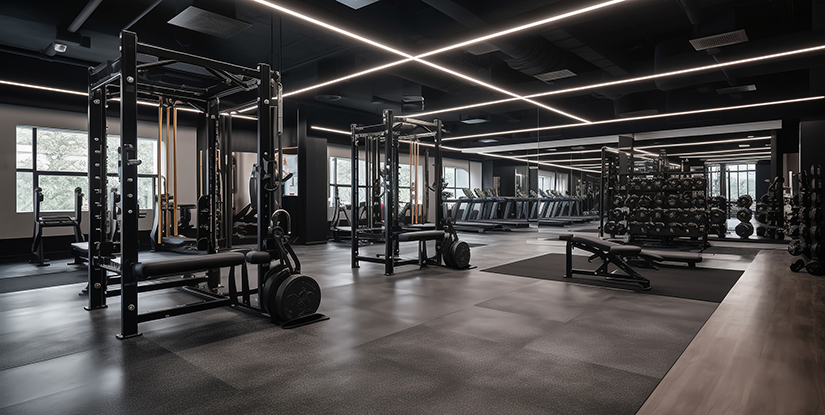
For facility operators and procurement managers, the decision to source from the East is often a calculation of high-volume availability against potential quality variability. A market overview of Chinese gym equipment reveals a landscape that has shifted from low-cost manufacturing to high-spec engineering. However, without a rigorous technical framework, buyers often fall into the trap of prioritizing upfront savings over long-term operational durability. To achieve a high return on investment (ROI), one must look beyond the price tag and evaluate the underlying structural integrity and manufacturing precision of the machinery.
Strategic Selection Criteria for High-Volume Procurement
The first hurdle in a market overview of Chinese gym equipment is identifying the tier of manufacturing that aligns with your specific facility needs. The market is broadly divided into three categories: economy-grade, mid-tier commercial, and high-performance professional equipment. Choosing the wrong tier leads to premature component failure and increased maintenance overhead.
Categorizing Equipment Tiers by Intended Use
Before placing an order, it is essential to define the intended load profiles. For instance, a boutique studio may prioritize aesthetic finish and compact footprints, whereas a high-traffic commercial gym requires heavy-duty steel gauges and industrial-grade bearings. Mistaking a mid-tier commercial machine for a professional-grade unit is a common error that results in accelerated wear on pivot points and cable systems.
| Equipment Tier | Typical Steel Gauge | Bearing Standard | Ideal Application |
|---|---|---|---|
| Economy/Home | 14-16 Gauge | Standard Bushings | Home Gyms / Small Studios |
| Commercial Mid-Tier | 11-12 Gauge | Sealed Ball Bearings | Mid-sized Fitness Clubs |
| Professional/Elite | 9-11 Gauge | Precision/High-Load Bearings |
Understanding these tiers allows a buyer to set realistic expectations for both the initial purchase price and the expected lifespan of the equipment. Once these tiers are established, the focus must shift to the specific physical properties of the materials used in construction.
Material Integrity and Steel Gauge Verification
A critical component of a market overview of Chinese gym equipment involves the technical verification of structural materials. Many operators face the problem of 'thin-wall' fatigue, where machines appear robust but lack the gauge thickness required for heavy lifting. This often leads to structural bowing or catastrophic weld failure under high kinetic loads.
Evaluating Steel Thickness and Weight Distribution
The strength of a strength-training machine is directly proportional to the steel gauge and the quality of the powder coating. A common failure mode is the use of thinner gauge steel (e.g., 14-gauge) on machines marketed as commercial-grade. This can lead to subtle structural shifts that eventually misalign the movement paths of the weights.
- The Problem: Visible wobbling or structural creaking during heavy usage.
- The Cause: Insufficient steel thickness or poorly executed fillet welds.
- The Fix: Request technical spec sheets that explicitly state the steel gauge (e.g., 11-gauge or 3mm thickness) for all load-bearing frames.
- Verification: Use a digital caliper to measure the thickness of the tubing at various points on a sample unit.
When the structural base is verified, the next layer of complexity resides in the mechanical components that drive movement, such as cables and pulleys.
Explore the complete technical specifications:
Best Commercial Gym Equipment Manufacturers | Technical Guide
Mechanical Component Longevity: Cables, Pulleys, and Bearings
While the steel frame provides the skeleton, the mechanical components define the user experience. In the context of a market overview of Chinese gym equipment, the reliability of cables and bearings is the primary differentiator between premium and budget manufacturers. Failure in these components is often the first sign of a declining ROI.
Identifying High-Wear Component Standards
A common mistake is overlooking the specifications of the cable coating and the bearing type. Low-quality cables with thin nylon jackets fray rapidly, creating dangerous metal exposure. Similarly, unsealed bearings attract dust and sweat, leading to friction-induced resistance and eventual seizing.
| Component Type | Standard Specification | Risk of Low-Quality Option |
|---|---|---|
| Weight Cables | 7x19 Strand with Nylon Coating | Fraying, snapping, and high friction. |
| Pulleys | Sealed Ball Bearings (Chrome Steel) | Noise, resistance, and premature seizure. |
| Weight Stacks | Zinc-Plated or Stainless Steel | Corrosion and uneven sliding movement. |
Ensuring these parts meet high industrial standards is vital. Once the mechanical smoothness is guaranteed, operators must turn their attention to the electrical and digital aspects of modern fitness technology.
Explore the complete technical specifications:
Digital Integration and Electronics Reliability
As the market evolves, more manufacturers are integrating digital consoles and IoT connectivity. A thorough market overview of Chinese gym equipment must address the potential for 'electronic obsolescence' and the lack of software support for integrated consoles.
Managing Connectivity and Console Stability
The problem often encountered is a console that becomes unresponsive or fails to connect to local networks due to outdated firmware or poor hardware integration. This is frequently caused by using consumer-grade microchips in a commercial environment that requires constant uptime.
To avoid this, operators should verify that the digital components are designed for continuous use. Ask the supplier for the lifecycle rating of the touchscreens and the availability of long-term firmware updates. If the console is a modular component, it is easier to replace in the future than an integrated, non-serviceable system.
With the electronics addressed, the logistical challenge shifts to the physical arrival and assembly of the machines.
Logistical Optimization and Pre-Shipment Inspection Protocols
One of the most significant pain points in sourcing from overseas is the gap between the factory sample and the final mass-produced shipment. A robust market overview of Chinese gym equipment is incomplete without a discussion on quality control (QC) at the source.
The Pre-Shipment Inspection (PSI) Framework
The most frequent failure in procurement is the 'Mismatch Gap,' where the final order arrives with inferior components compared to the prototype. This is caused by a lack of strict onsite supervision or a failure to execute a formal inspection protocol.
Recommended Inspection Checklist:
- Visual Audit: Check for consistent powder coating thickness and absence of weld splatter.
- Mechanical Test: Run every machine through a full range of motion 20 times to detect friction or noise.
- Weight Verification: Ensure the weight stacks match the declared weight precisely.
- Hardware Audit: Confirm all bolts and fasteners are the specified grade (e.g., Grade 8.8 or higher).
Successful inspection prevents the high cost of returning heavy machinery. However, even a perfectly inspected machine requires a structured approach to long-term maintenance to protect the initial investment.
Operational Longevity: Maintenance and Preventative Care
Once the equipment is installed, the focus moves from procurement to operations. The durability of the machines is not just a factor of how they were built, but how they are maintained in a high-usage environment.
Routine Maintenance Cycles for Commercial Facilities
The primary cause of machine downtime is neglected maintenance, particularly regarding lubrication and tensioning. A common mistake is waiting for a machine to become 'noisy' before taking action. By the time a noise is audible, the internal components may already be experiencing permanent damage.
Operators should implement a tiered maintenance schedule. Daily tasks should include wiping down surfaces, while weekly tasks should involve checking cable tension. Monthly or quarterly tasks must include more technical interventions like deep-lubricating the bearings and checking the torque on all structural bolts. Maintaining a detailed logbook is the best way to verify that these protocols are actually being followed by staff.
Consistent maintenance effectively extends the lifecycle of the equipment, ensuring that the higher-quality components selected during the procurement phase perform to their full potential.
Evaluating Total Cost of Ownership (TCO) vs. Initial Price
The final step in a professional market overview of Chinese gym equipment is shifting the mindset from 'Purchase Price' to 'Total Cost of Ownership.' A low-priced machine that requires replacement in three years is significantly more expensive than a premium machine that lasts eight years.
To calculate TCO, you must factor in the initial cost, shipping, assembly, spare parts, and the cost of downtime. A thorough analysis will often show that investing in the 'Mid-Tier' or 'Professional' categories yields a much higher ROI because the frequency of replacement and repair is drastically lower. For facility managers, the ability to predict maintenance costs and equipment life is the ultimate goal of a sophisticated sourcing strategy.
By implementing these rigorous technical and financial standards, operators can successfully navigate the complexities of the international fitness equipment market.