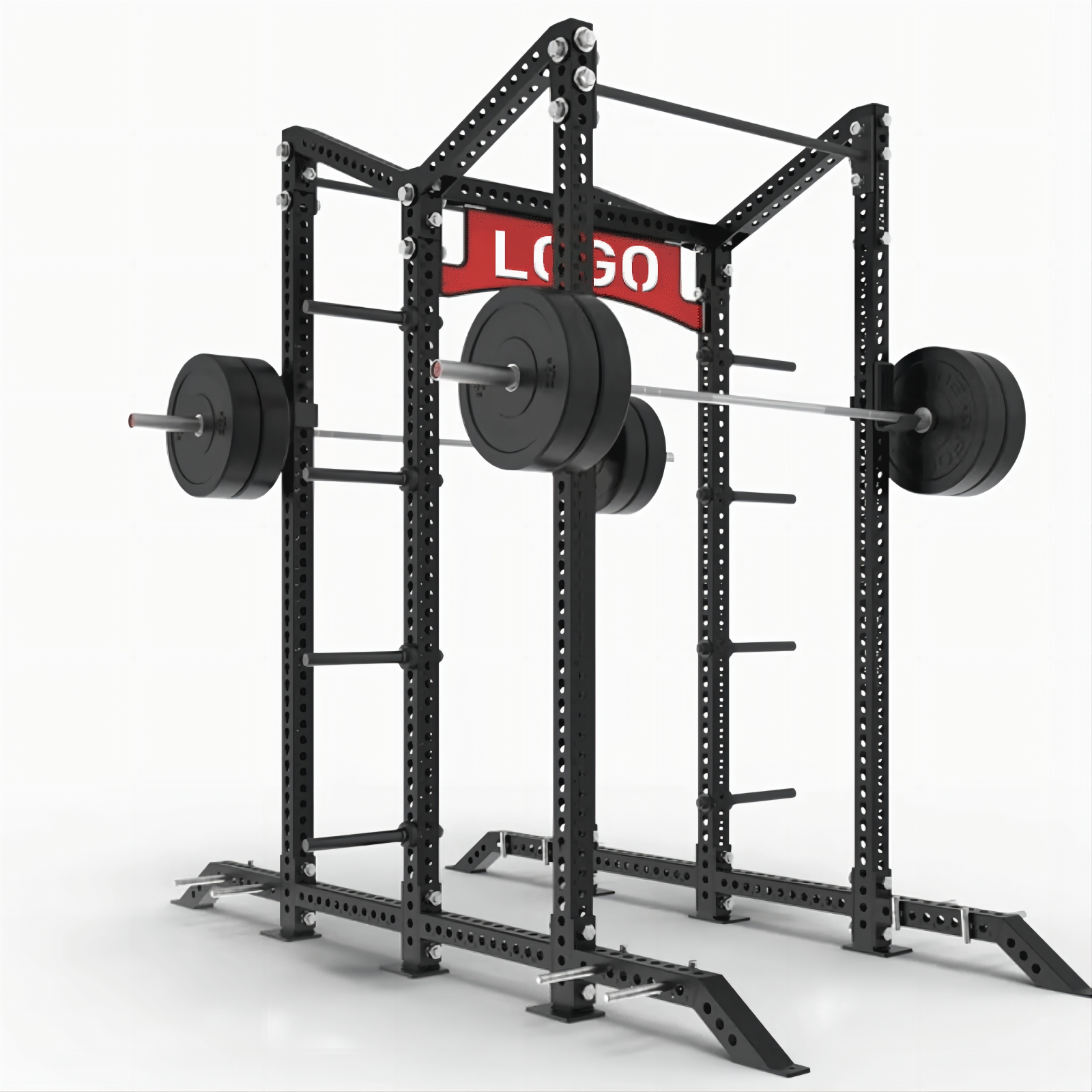
The portable squat rack has emerged as a critical solution for fitness professionals operating without a fixed training location—including mobile personal trainers, hotel gym consultants, and outdoor boot camp instructors. Unlike permanently bolted power racks that require dedicated floor space and concrete anchoring, this equipment class prioritizes disassembly, transport weight, and setup speed. However, the engineering trade-offs are substantial: portability directly competes with stability, weight capacity, and safety. Understanding these compromises allows buyers to select a unit that matches their specific mobility needs without accepting dangerous levels of wobble or insufficient load ratings. For commercial applications, portable racks are typically reserved for temporary event setups, outdoor training zones, or multi-purpose studio spaces where permanent equipment is impractical, not for daily high-volume free weight work.
From a structural engineering standpoint, the portable squat rack category divides into three distinct sub-types, each with different stability mechanisms. Fold-flat racks use hinge joints that allow the uprights to collapse against a base plate, typically reducing packed depth to 4-6 inches. Stability depends entirely on the width and weight of the base—wider bases (36+ inches) resist forward tipping during re-racking, while narrow bases (under 30 inches) require the user to step back carefully to avoid contacting the uprights. Tripod or A-frame racks use three legs per side, spreading the load over a larger footprint. These often achieve better stability-to-weight ratios because the legs can be hollow aluminum or thin-wall steel tubing. However, their open design creates tripping hazards for other gym users and limits plate storage on the uprights. Telescoping tube racks represent the most packable option, using nested square tubes that extend for use and collapse into a carry bag. These are almost exclusively rated for lighter loads (under 300 lbs) due to the play inherent in telescoping joints, which creates noticeable forward-back wobble under a loaded barbell. For professional use, the minimum acceptable design feature across all sub-types is a rear stabilization bar or ground-extending feet that prevent the rack from tipping forward when the lifter re-racks the barbell aggressively. Models lacking rear support rely entirely on the user's careful placement, an unacceptable assumption in commercial or unsupervised settings.
For procurement professionals or mobile trainers evaluating a portable squat rack, four operational factors determine real-world safety and usability. Weight capacity vs. unit weight reveals engineering efficiency: a well-designed portable rack should support at least 3-4 times its own weight. For example, a 35 lb rack rated for 350-400 lbs meets this threshold; a 50 lb rack rated for only 300 lbs suggests inefficient material use or poor joint design. J-hook design matters enormously—magnetic or snap-in hooks often dislodge when brushing past the rack during setup, sending the barbell crashing. Look for through-bolted hooks or gravity-locking designs that require deliberate lifting to disengage. Floor interface separates professional units from hobbyist gear: rubberized feet or full-length rubber base strips prevent scratching and provide friction on smooth surfaces. Hard plastic feet slide on polished concrete or rubber flooring, creating dangerous instability during the walkout. Setup time and hardware completes the evaluation. Quality portable racks use captured pins or cam-lock mechanisms that require no tools for assembly. Units requiring wrenches or Allen keys for each use will see lower compliance over time, leading to users skipping safety fasteners or abandoning the rack's portability entirely. For mobile professionals transporting racks in vehicles, padded carry bags with reinforced stitching and shoulder straps reduce wear on upholstery and improve daily logistics. Finally, recognize the use case limits: no portable rack matches the stability of a bolted power rack for maximal or near-maximal lifting. For 1-rep max testing or heavy (85%+ 1RM) squatting, a permanent rack remains the appropriate tool. Portable racks excel for warm-ups, submaximal working sets, technique practice, and outdoor or temporary installations where permanent equipment is impossible—not as a universal replacement for traditional racks.

Let our experts design the perfect gym solution for your business. Get a free consultation and quote today.