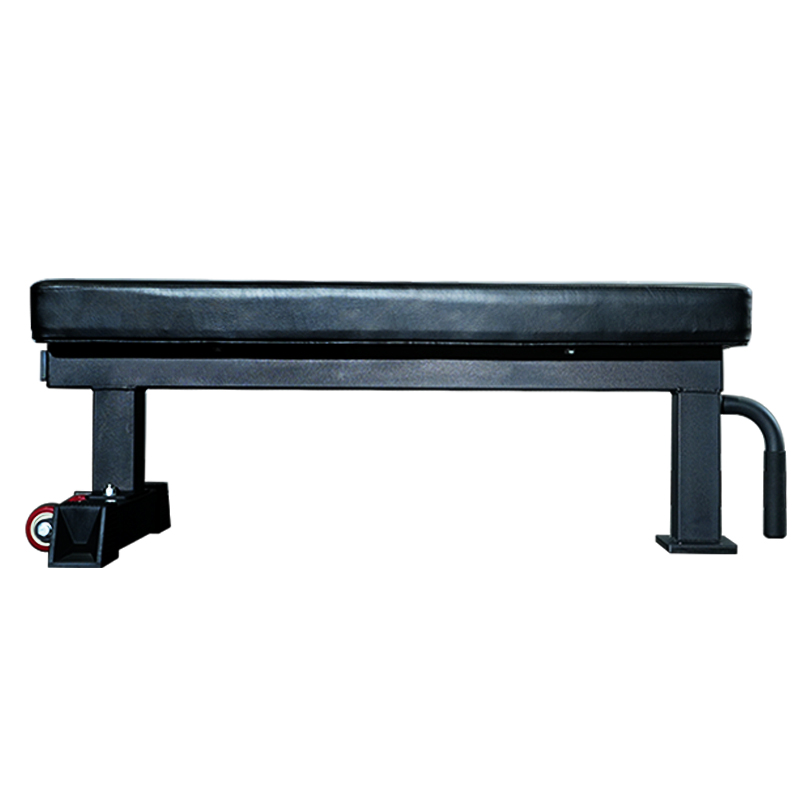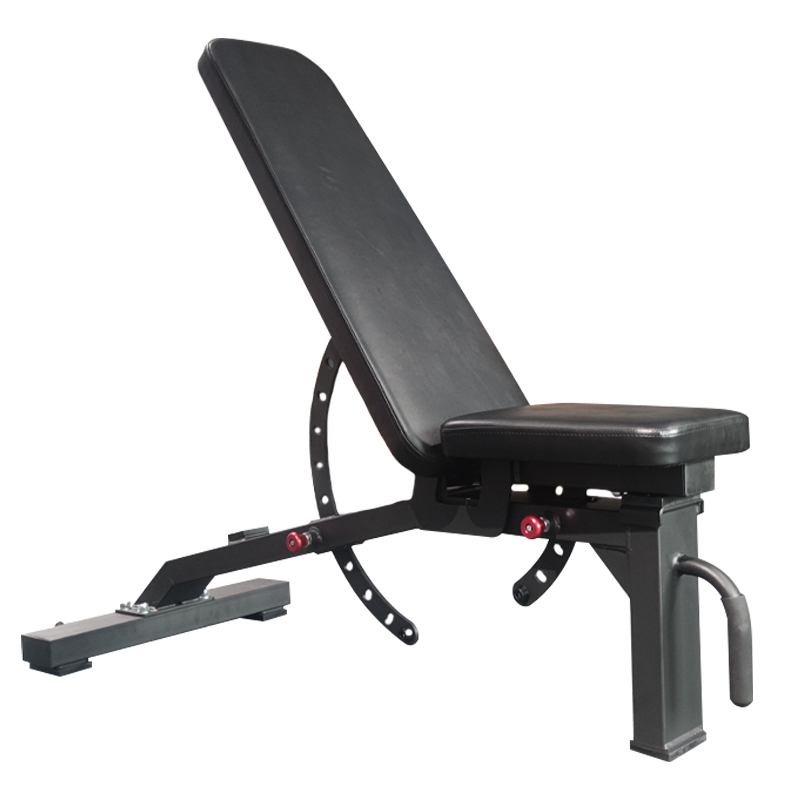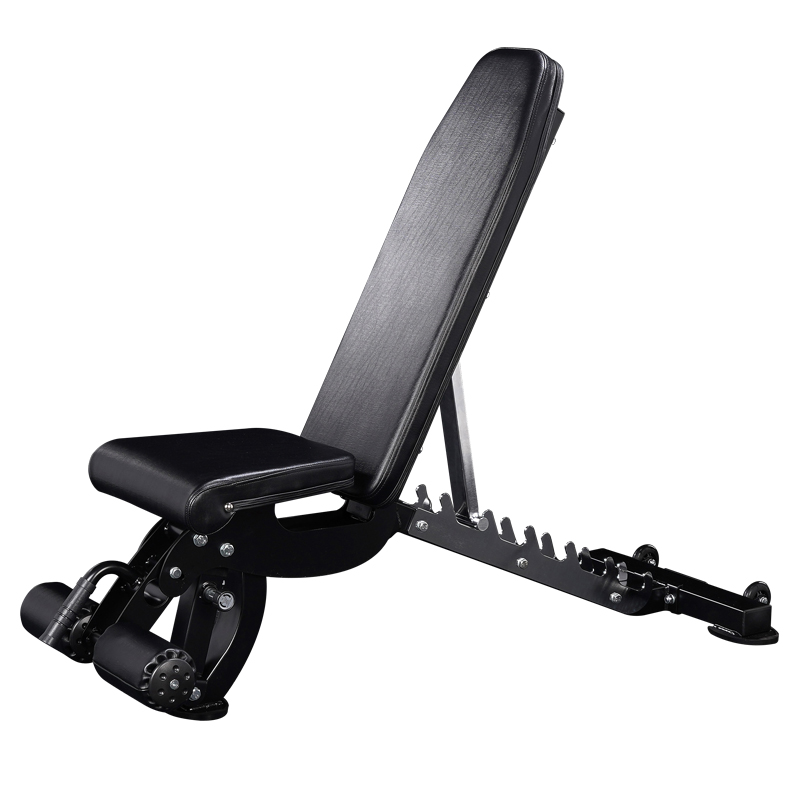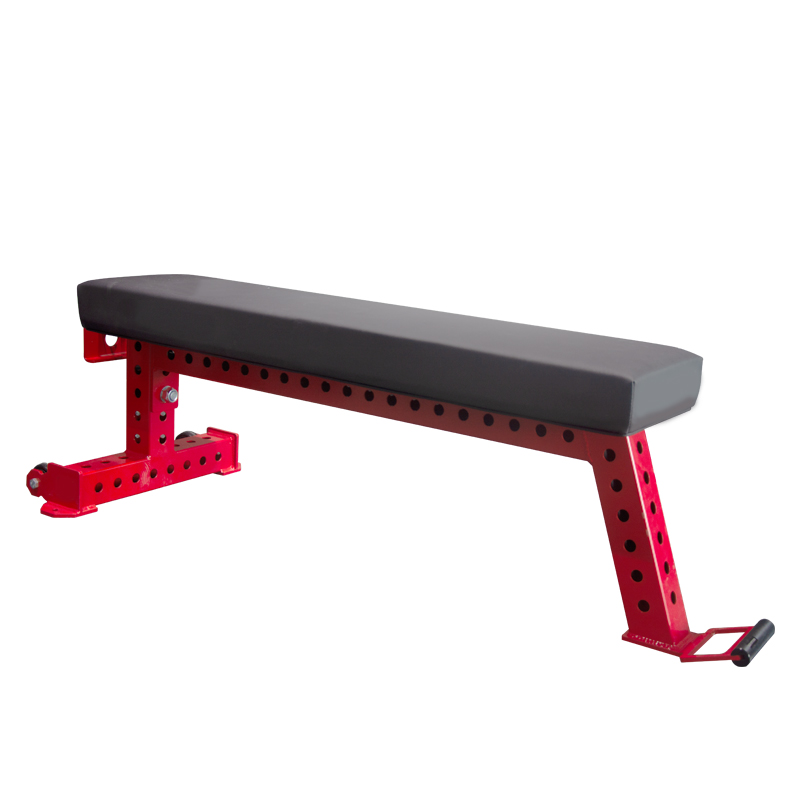
A commercial bench press bench is a dedicated flat bench designed for high-frequency, high-load barbell bench pressing in commercial gym environments. Unlike home or multi-purpose benches, commercial flat benches prioritize extreme rigidity, competition-spec dimensions, and floor anchoring provisions over portability or storage features. These benches withstand daily use by athletes pressing 300-600+ lbs without developing wobble, frame flex, or pad compression.
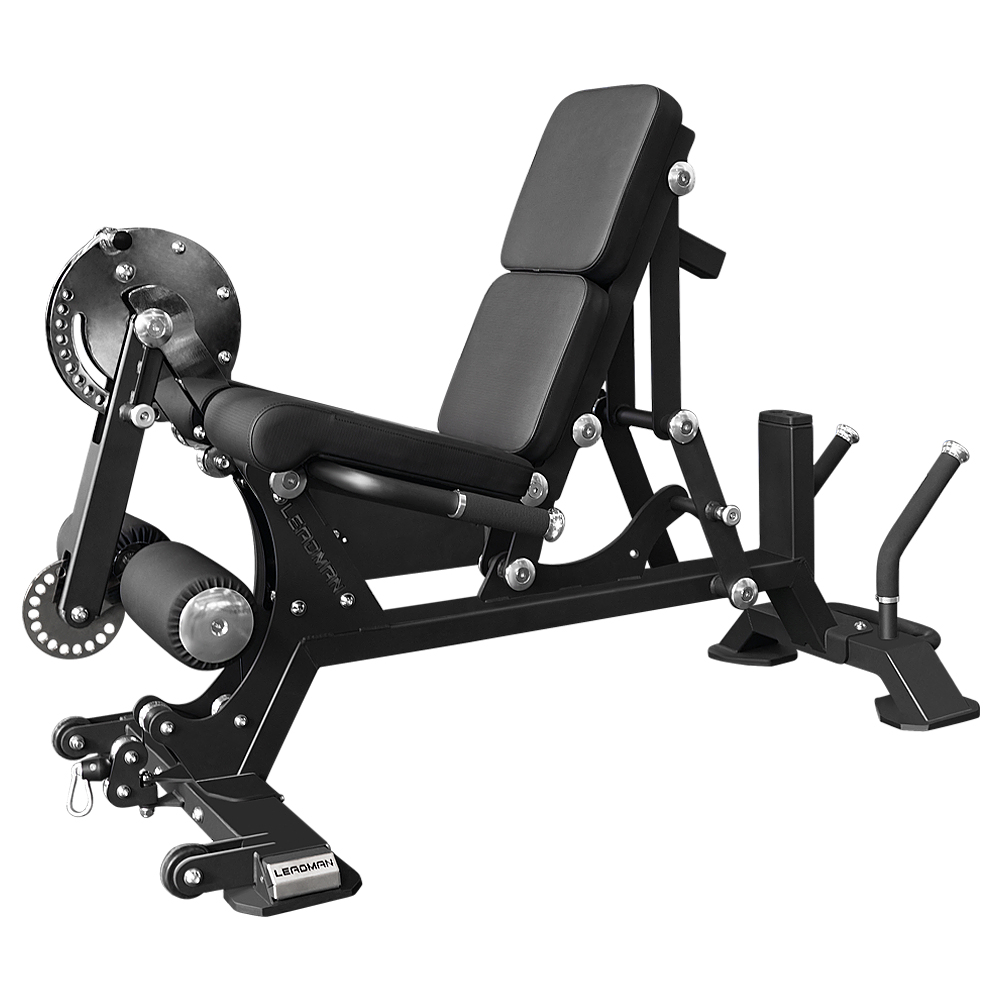
The defining structural feature of a commercial bench press bench is the triangulated or boxed frame design. Entry-level benches use C-channel or unbraced square tubing, which torques under heavy loads. Commercial units employ 11-gauge (3mm) or thicker steel with gusseted corner joints and cross-bracing between the front and rear feet. The bench's footprint typically spans 48-54 inches in length and 26-32 inches in width, providing stability against lateral rocking during unracks and reps. Commercial benches weigh 100-150 lbs versus 40-60 lbs for home models, a direct indicator of steel mass and rigidity.
Industry testing data from fitness equipment certification labs indicates that pad durability is the most common failure point on commercial bench press benches. High-density foam (4-6 lb/cu ft density) with tear-resistant vinyl (minimum 18-gauge, 30,000+ double rubs) survives 5+ years of commercial use. Budget benches use 2-3 lb foam and 12-gauge vinyl, compressing within 12-18 months. A 2023 survey of 300 commercial gym managers found that pad replacement frequency averaged 18 months for budget benches versus 54 months for premium commercial benches. The second critical metric is pad width: competition standard is 12 inches (30cm); wider pads (14-16 inches) offer shoulder comfort but are not competition-legal.
For buyers selecting a commercial bench press bench, prioritize frame rigidity under dynamic load. Test the bench by placing it on an uneven surface and applying side-to-side pressure at the pad end—any flex or rocking indicates insufficient bracing. Verify pad gap (distance between pad and frame uprights when benching with a spotter or safety arms)—excessive gap allows head or foot entrapment. Assess floor anchoring compatibility: most commercial benches have pre-drilled feet for bolt-down installation; rubber feet alone are insufficient for high-traffic facilities. Check UHM W plastic or rubber-lined front uprights for racking the barbell—bare steel uprights damage knurling. For competition prep or powerlifting-specific facilities, verify IPF or USAPL specifications (pad height 42-45cm, pad length minimum 122cm, pad width 29-32cm). Expect to pay $500-1,200 for a true commercial flat bench; sub-$300 benches lack the steel gauge, welds, and pad density for institutional use.