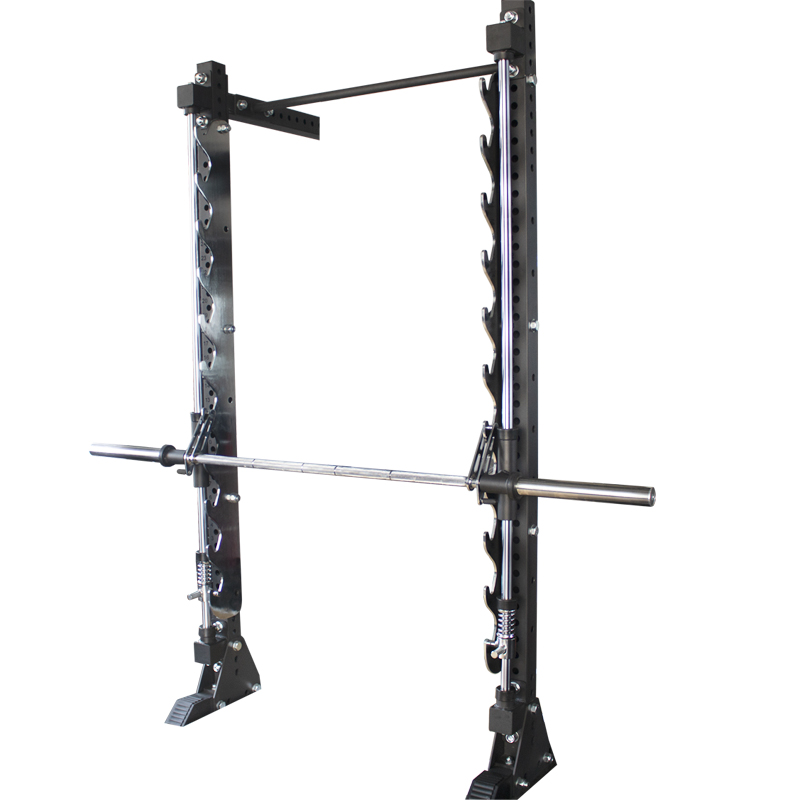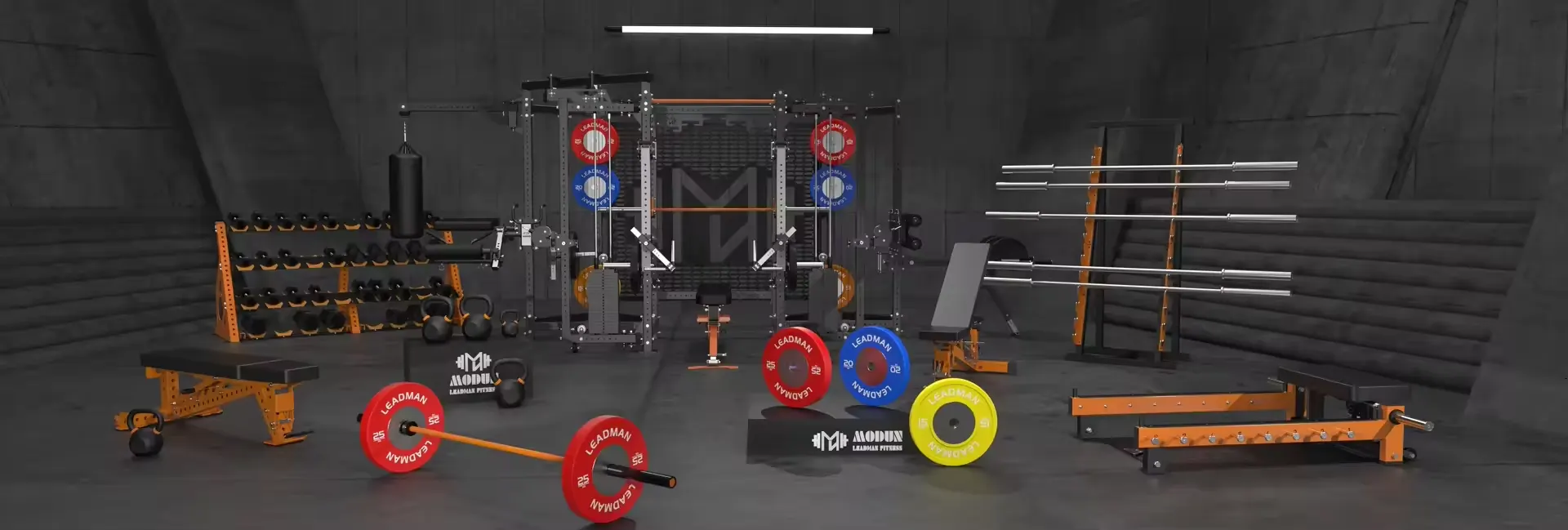
The iron power smith machine is a guided barbell system designed for safe, heavy strength training, featuring a barbell that moves along fixed vertical or slightly arced steel guide rods. Unlike free-weight squat racks, the smith machine constrains the bar’s path, eliminating the need for balance and spotter assistance during maximal lifts. The “iron power” designation typically indicates a commercial-grade unit with 11-gauge or 7-gauge steel frame, linear bearings or bronze bushings on the carriage, and a counterweight system (reducing the bar’s starting weight from 50 lbs to 15-25 lbs). Key specifications include guide rod diameter (1-1.25 inches chrome-plated), bar travel length (50-60 inches for full range of motion), and safety catch mechanisms (rotating hooks or pop-pins that engage at multiple heights). Modern smith machines feature multi-angle bar paths (5-15 degrees of forward/backward travel) that better mimic natural squat and press mechanics, reducing knee and shoulder shear. The counterweight system uses a weight stack (typically 50-100 lbs) or gas springs to offset the barbell’s mass, making the bar feel lighter—critical for rehabilitation and high-rep training. The base must be bolted to concrete (1/2-inch anchors) for stability, as a 600 lb squat rerack produces lateral forces that can shift unanchored units. For commercial gyms, smith machines are popular for beginner lifters learning squat depth, bodybuilders performing high-volume quad work, and solo trainers needing built-in safeties. However, the fixed bar path reduces stabilizer muscle activation by 20-30% compared to free-weight squats. Maintenance involves cleaning guide rods bi-weekly, applying dry lubricant (never oil), and inspecting linear bushings for wear (replace when lateral play exceeds 0.5mm).
Let our experts design the perfect gym solution for your business. Get a free consultation and quote today.