

Hex vs. Round Dumbbells: What Gyms Need
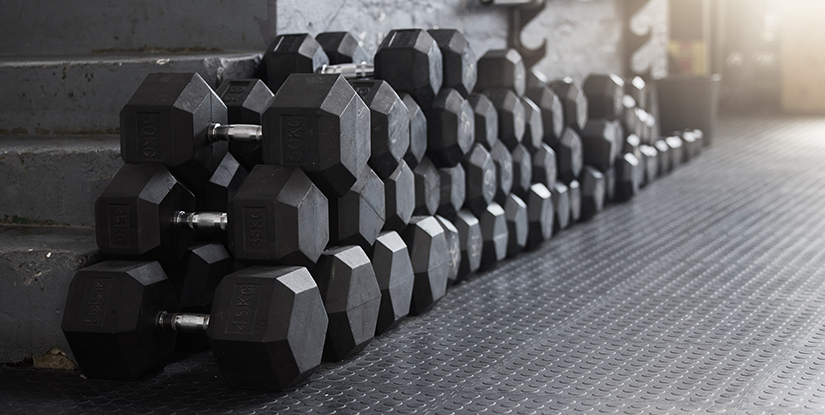
Hex or round. Which one belongs in a commercial gym? Most people treat this as a cosmetic question. It is not. The choice affects material cost, service life, floor maintenance, and daily operations. Pick the wrong one, and three years later the worn-out rack and member complaints will remind you of the decision. This article compares them across four dimensions. Material. Construction. Use case. Long-term cost.
Related reading: Bumper Plates: What Separates Good from Bad
Hex Dumbbells: Stable but Corners Wear Fast
The hex shape exists for one reason. It stops rolling. A hex dumbbell sits motionless on the floor. It will not roll under a members feet. It will not disappear under a bench. It will not slide into the gap between two machines. In a busy commercial gym with dozens of people moving around, this is a real safety feature.
Hex dumbbells also rack neatly. The flat sides allow them to sit flush against each other. Members do not need to align them carefully. Just drop them on the rack and they stay put. One less thing for staff to monitor. One less complaint about messy equipment.
The trade-off is corner wear. Every time a member grabs a hex dumbbell, their fingers contact the same corners. Every time they set it down, those same corners hit the rack or floor first. After two or three years of daily use, the coating on the corners wears through. Rubber cracks. Powder coating flakes off. Bare cast iron shows through. This is not poor quality. It is geometry.
Round Dumbbells: Traditional but They Roll
Round dumbbells are the older design. Fixed round dumbbells are cast as a single piece or welded. They have been used in gyms for decades. The main advantage is manufacturing cost. Round dumbbells are cheaper to produce, especially at entry-level price points.
But they roll. Set one on a slight slope and it will travel. Knock it accidentally and it rolls across the floor. In a crowded gym, a rolling dumbbell is a tripping hazard. It can hit someone's ankle. It can roll under a leg press machine and get stuck. Managing this requires member discipline. Do not leave dumbbells on the floor. Always return them to the rack. That means staff need to enforce the rule constantly.
Round dumbbells also have inconsistent handle orientation. When you set one down, the handle can end up pointing at any angle. The next member to pick it up may need to adjust their grip before lifting. Hex dumbbells, because the base is flat, keep the handle in a consistent orientation. Small difference. But members notice.
Materials and Construction: Where Real Quality Lives
Shape matters. But材料is what determines whether a dumbbell lasts five years or fifteen. Cast iron grade is the first thing to check. Gray iron is cheap and brittle. Drop it on concrete and it may crack or chip. Ductile iron costs more but is tougher. It survives repeated drops without breaking. Commercial dumbbells should use ductile iron. Period.
Surface finish is next. Powder coating is the lowest tier. Low cost, but it wears quickly. In a commercial setting, powder coated dumbbells show significant wear within twelve months. Rubber coating is the commercial standard. Five to eight millimeters of rubber absorbs impact, protects floors, and extends dumbbell life. Urethane coating is the premium option. It outlasts rubber by three to five times. It does not stain, does not oxidize, and leaves no black marks on floors or hands. But it costs thirty to fifty percent more.
Handle construction separates good from bad. Solid steel bar handles do not bend. Hollow tube handles can bend under heavy drops. Test it. Tap the handle with a metal object. A solid handle produces a dull thud. A hollow handle rings. Knurling also matters. A well-cut knurl provides grip without tearing hands. Run your fingernail across the handle. Sharp, uniform teeth mean good knurling. Shallow, uneven teeth will wear smooth within months.
Suppliers will not tell you which grade of iron they use. They will not tell you if the handle is hollow. They will not tell you the rubber thickness. You have to ask. And you have to verify.
Hex vs. Round: Direct Comparison
| Factor | Hex Dumbbells | Round Dumbbells |
|---|---|---|
| Rolling resistance | Excellent. Does not move. | Poor. Rolls easily. |
| Floor impact | Concentrated at corners. Faster floor wear. | Distributed over curve. Slower floor wear. |
| Coating life | Corners wear first. Shorter effective life. | Curved surface wears evenly. Longer life. |
| Manufacturing cost | Higher. Complex mold. | Lower. Simple mold. |
| Best environment | High traffic, hard floor, minimal staff | Staffed floor, rubber matting, boutique setting |
Related reading: Why Mass Production Differs from the Sample
Flooring Changes the Calculation
Flooring is often ignored in the hex versus round debate. But it changes everything. Rubber matting is the standard floor in most commercial gyms. On rubber, the rolling problem of round dumbbells is reduced. The rubber surface adds resistance. A round dumbbell will not roll far on thick matting. On concrete or wood, the difference is dramatic. Round dumbbells roll freely. A slight bump sends them traveling. On hard floors, hex dumbbells are clearly safer.
But hard floors punish hex dumbbells differently. The corners concentrate impact. Drop a hex dumbbell on concrete and the corner hits first. That same corner will chip the concrete or dent the wood over time. Round dumbbells spread the impact over a larger surface. Less damage per drop. On hard floors, round dumbbells are gentler on the floor itself.
Platforms and竞技地板s are a separate case. Weightlifting platforms combine wood and rubber. The wood surface scratches easily. Round dumbbells rolling on wood leave marks. Hex dumbbells dropped on wood leave dents. Neither is ideal. The solution is member behavior. Do not leave dumbbells on the platform. Return them to the rack after every set. Flooring alone does not decide the choice. But it should inform it.
Long-Term Cost: Purchase Price Is Just the Start
A cheap dumbbell costs less upfront. But what does it cost over five years? Hex dumbbells wear at the corners. In a busy gym, a powder coated hex dumbbell will show bare iron at the corners within twelve months. Rubber coated hex dumbbells last two to three years before the corners crack. Round dumbbells wear more evenly. Under the same use, their coating lasts twenty to thirty percent longer.
Then there is replacement cost. A pair of commercial dumbbells costs anywhere from fifty to two hundred dollars. If a set lasts three years before looking worn, versus another set lasting eight years, the annual cost difference is significant. Urethane coated dumbbells cost more at purchase. But they last longer. Over ten years, their total cost is often lower than replacing rubber dumbbells twice.
There is also the hidden cost of management. Round dumbbells require staff to constantly remind members to return them to the rack. Hex dumbbells do not. Members can leave them on the floor without creating a rolling hazard. That staff time costs money. Hard to measure. But real.
Avoiding these costs starts with choosing the right supplier. The hidden costs of choosing the wrong fitness equipment manufacturer explains what happens when you buy based only on price.
What the Market Actually Does
Market data shows a clear pattern. Large American gym chains buy hex dumbbells. The reason is not performance. It is management scale. With hundreds of locations and thousands of members, anything that reduces staff workload wins. Hex dumbbells require less policing. Members leave them on the floor. No problem. They do not roll. The racks stay organized with less effort.
European boutique studios and high-end hotel gyms buy round urethane dumbbells. The reason is appearance and member experience. Urethane looks premium. It does not stain hands or floors. It resists odor. The round shape feels traditional. These facilities have enough staff to manage rolling. Members are fewer and more attentive. The rolling problem is controlled through supervision.
Mid-tier commercial gyms often mix both. Hex dumbbells for the main free weight area. Round urethane dumbbells for the functional training zone or small group rooms. There is no single correct answer. The right choice depends on your traffic volume, staffing level, and floor surface.
Related reading: Professional Fitness Equipment Manufacturer Certifications
Three Questions for Any Dumbbell Supplier
Before you buy, ask three questions. The answers will tell you more than any brochure.
First, what grade of cast iron do you use? What is your weight tolerance? Gray iron or ductile iron? The difference is brittleness. Ductile iron survives drops. Gray iron chips. For weight tolerance, ask for plus or minus one percent. The industry allows three percent. That is too wide for commercial use. Ask for material certificates and batch weigh records.
Second, is the handle solid or hollow? Solid steel bar handles do not bend. Hollow handles can bend under heavy use. Tap the handle. Solid sounds dull. Hollow rings. If the supplier does not know, that is a red flag.
Third, what is the coating thickness and type? Rubber or urethane? How many millimeters? Five millimeters minimum for rubber. Three to four millimeters is enough for urethane. Press the coating with your thumb. It should not depress easily. Ask for salt spray test data and coating adhesion reports.
Suppliers who know their product will answer these questions immediately. Those who hesitate or give vague answers are hiding something. Move on.
Conclusion: Shape Is Secondary to Material
Hex or round. Both have a place in commercial gyms. Hex is safer and easier to manage. Round looks cleaner and wears more evenly. Neither is universally better. The right choice depends on your floor, your staff, and your members.
But shape is secondary. What really matters is ductile iron, solid handles, and a durable coating. A hex dumbbell made of gray iron with a hollow handle is junk. A round dumbbell with ductile iron, a solid handle, and urethane coating will last a decade. Choose materials first. Then pick the shape that fits your facility.
A reliable manufacturer makes both shapes well. Identifying the best fitness manufacturer for commercial use gives you a framework for finding a supplier that does not cut corners on either.