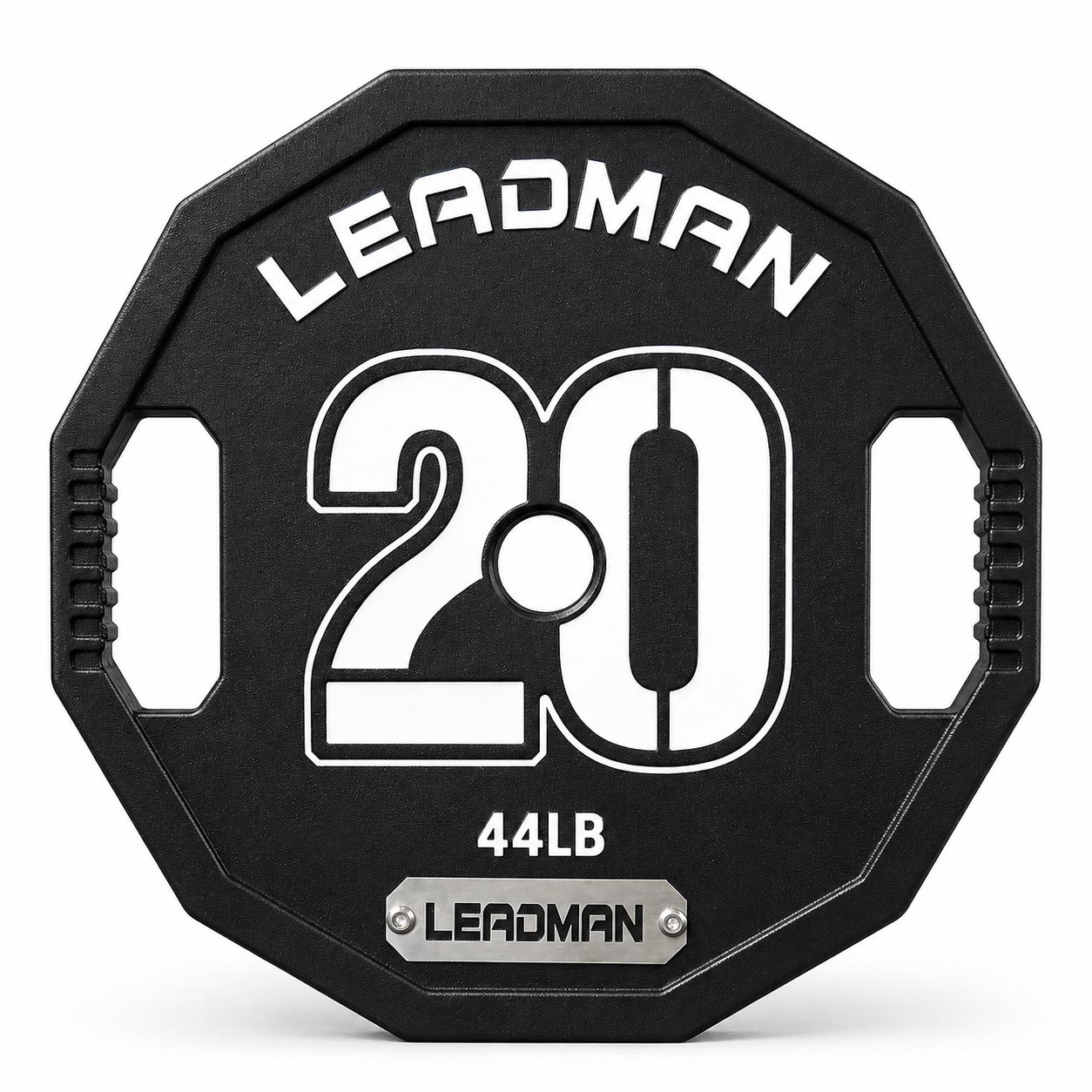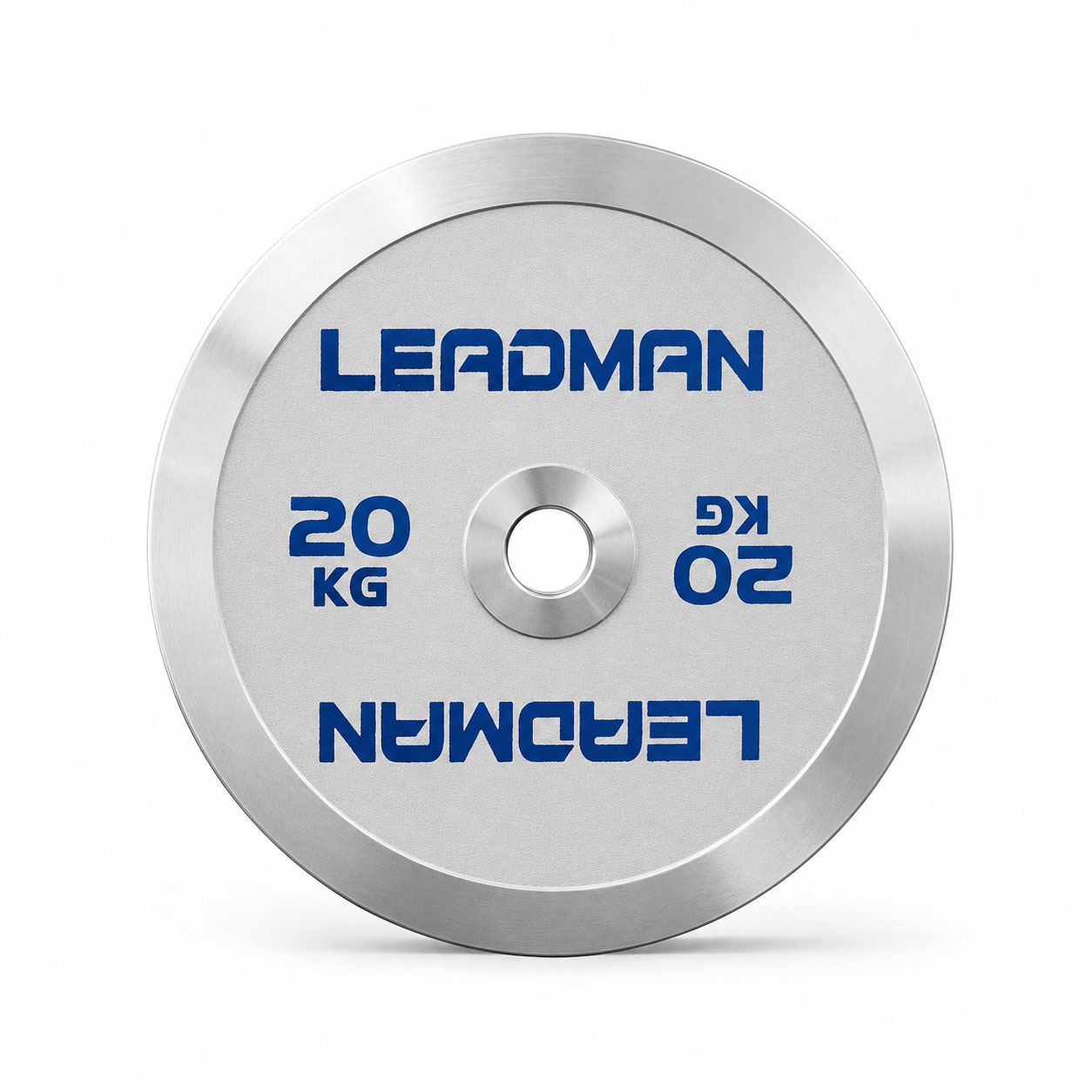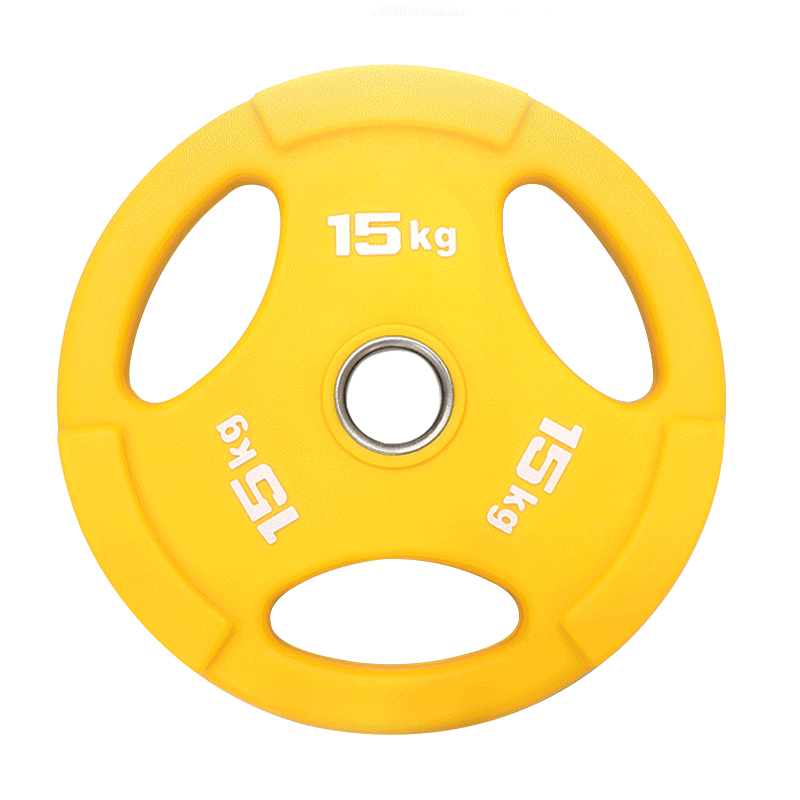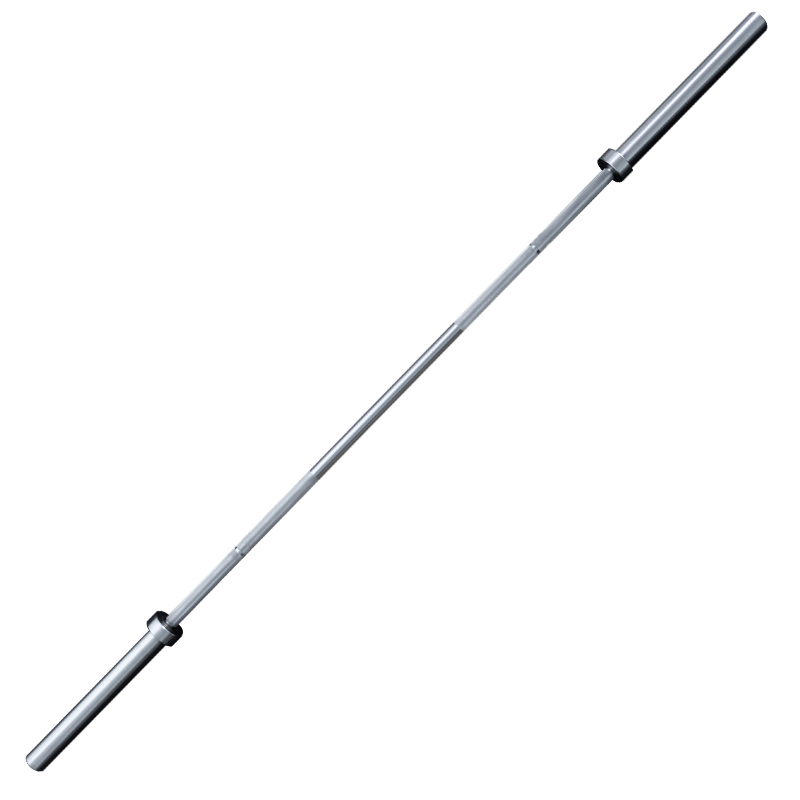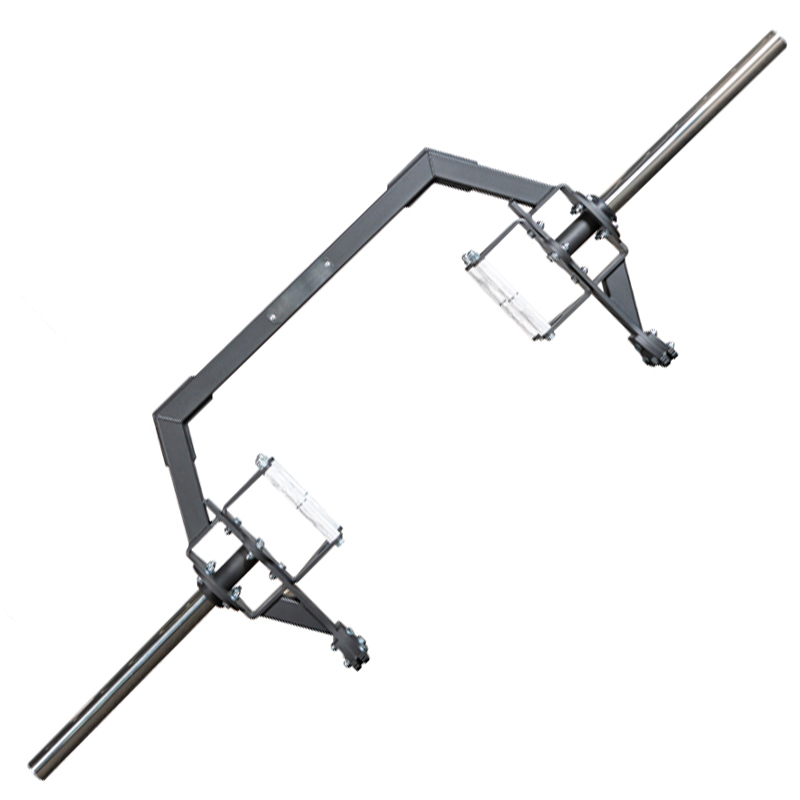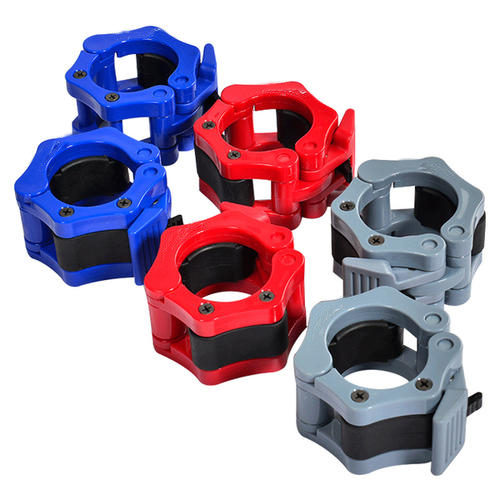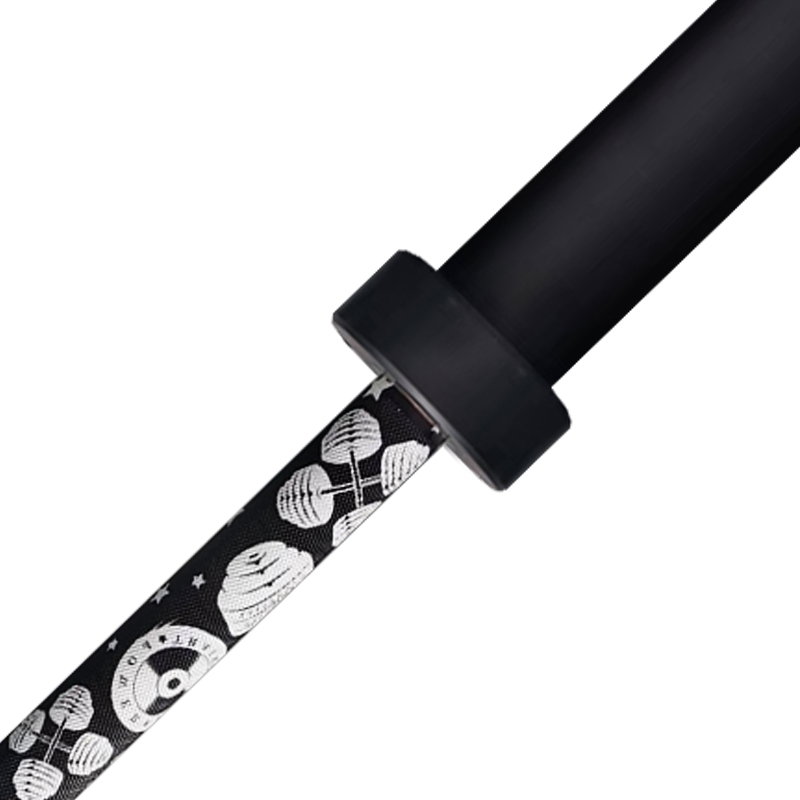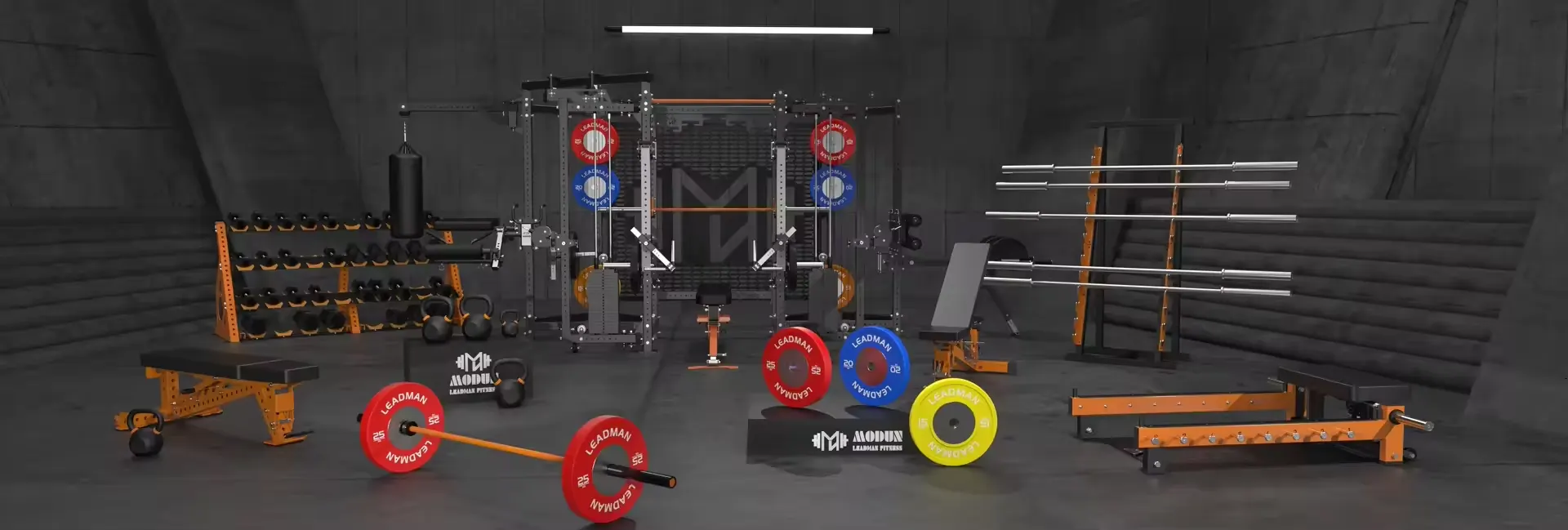
Gym weight plates are classified by center hole diameter (1 inch for standard bars, 50mm for Olympic bars) and construction material. Sand-cast iron plates are the baseline, weighing 19-21kg for a nominal 20kg plate (±3-5% tolerance). They are inexpensive but chip paint easily, produce 110-120dB noise when dropped, and are unsuitable for overhead dropping. Machined cast iron improves tolerance to ±1-2% and smooths the inner hub to 50.4mm. Calibrated steel competition plates achieve ±15g tolerance, measure 25-30mm thick for a 25kg plate (versus 30-35mm for cast iron), and cost $4-8 per pound—4-8× more than sand-cast. These are reserved for competition platforms and dedicated powerlifting areas.
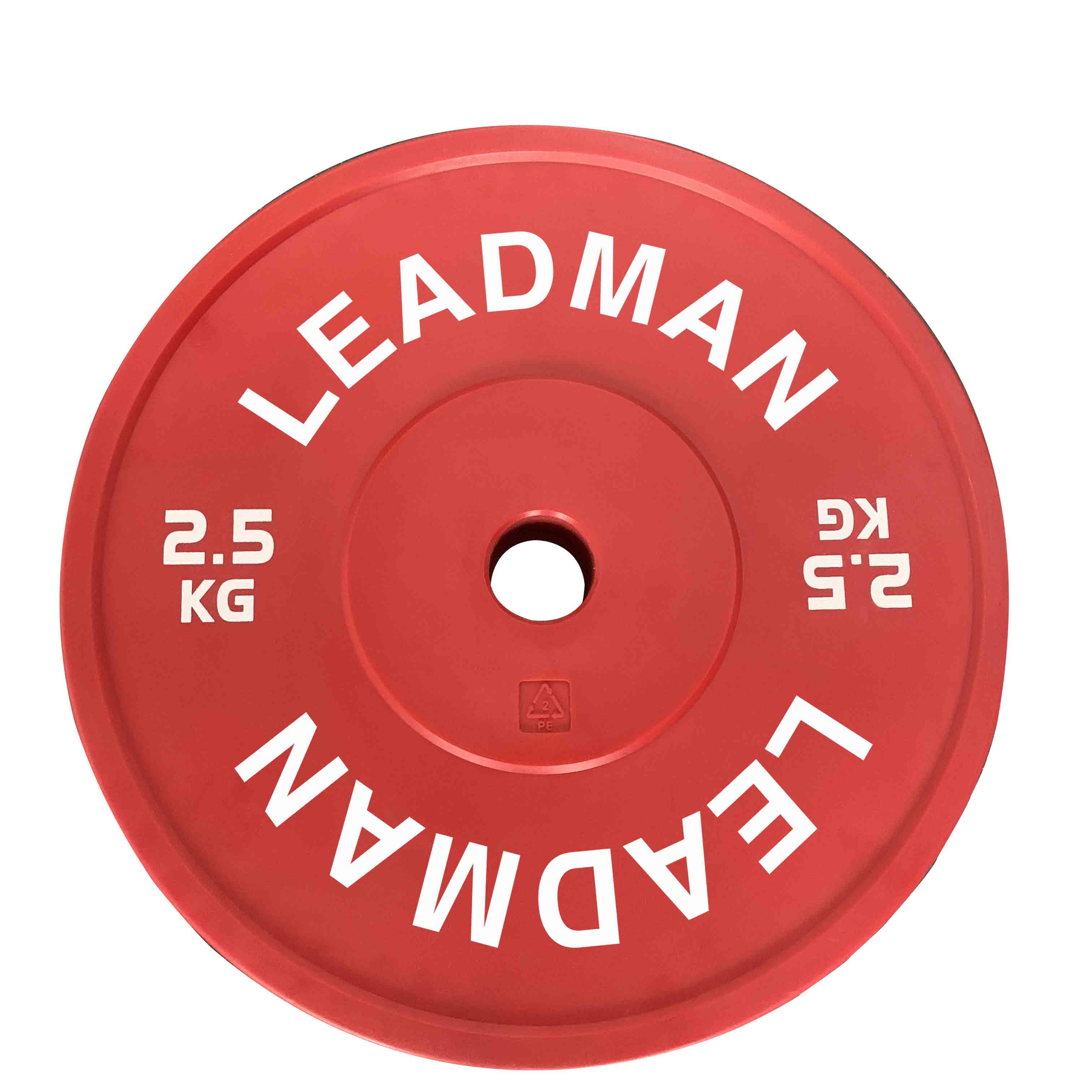
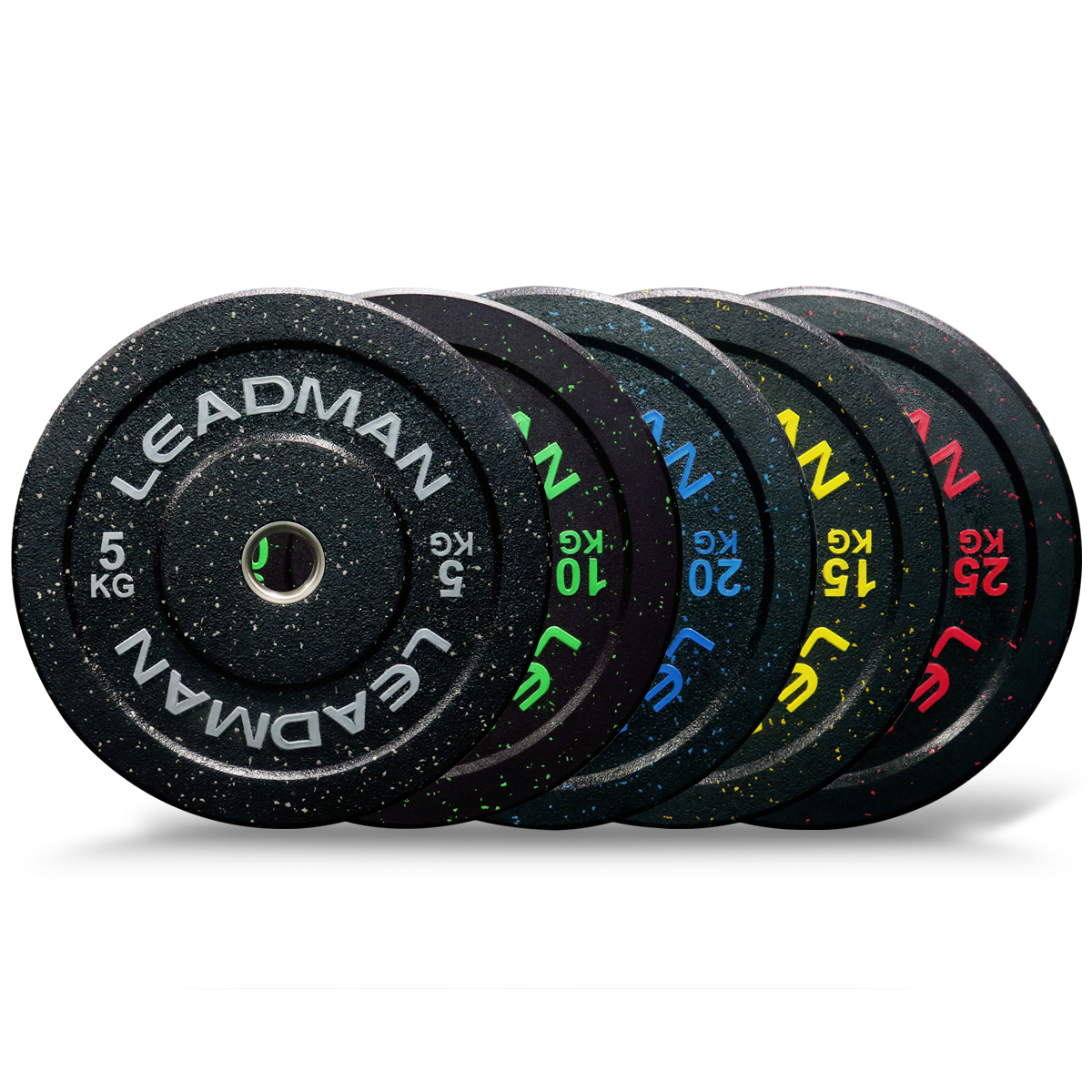
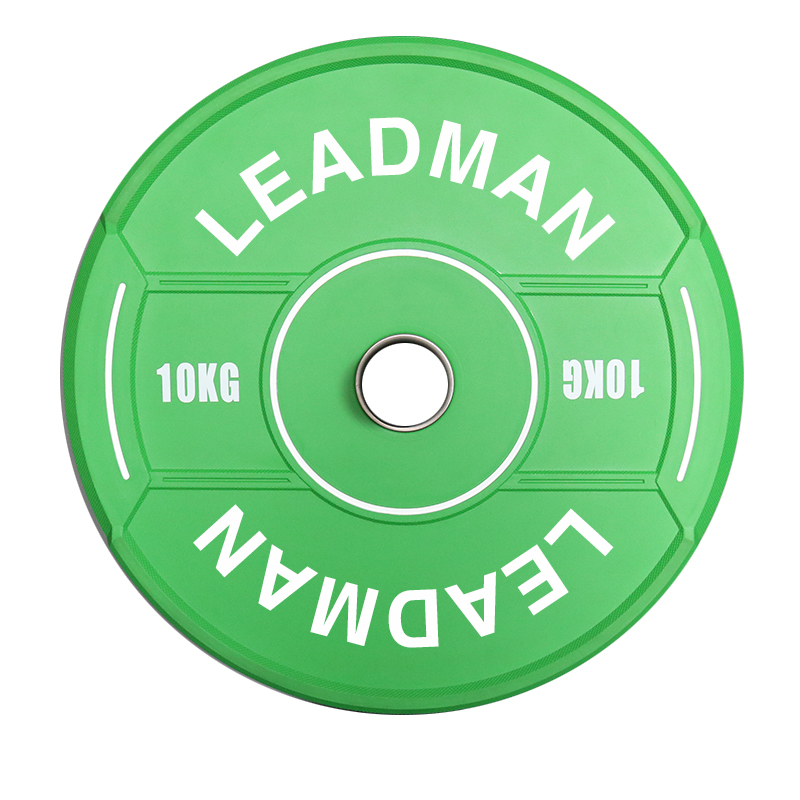
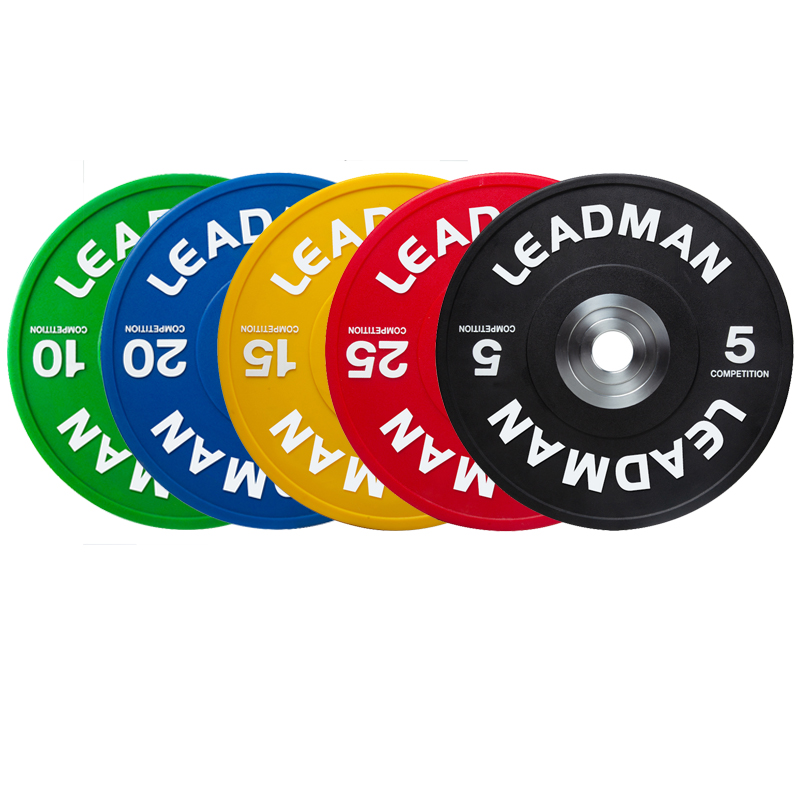
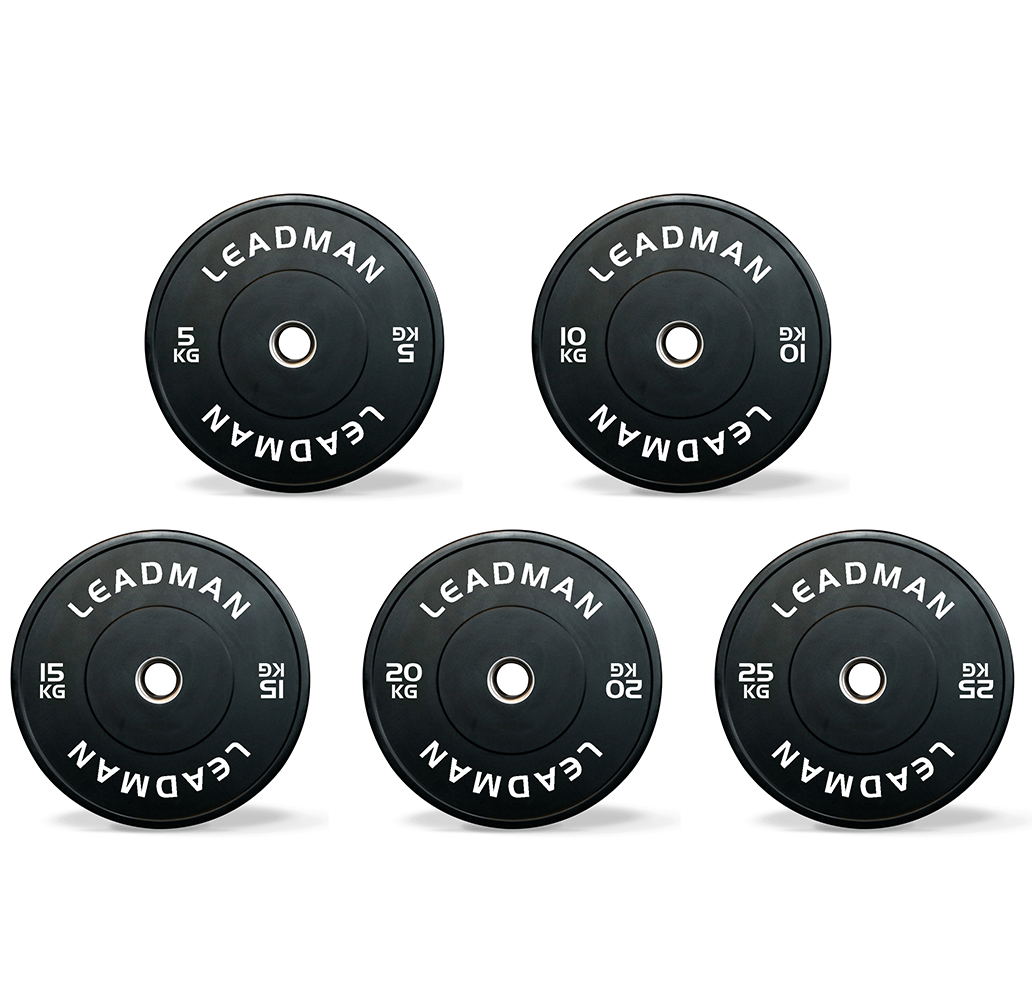
Rubber bumper plates are mandatory for facilities where barbells are dropped from overhead. Virgin polyurethane plates (85-95 Shore A) rebound 10-15cm from a 1.5m drop, last 8-12 years commercially, and emit no odor. Recycled crumb rubber plates (65-80 Shore A) rebound 25-40cm, smell like tires for 4-8 weeks, and last only 3-5 years. A 20kg urethane plate measures 32-38mm thick; a recycled rubber 20kg plate measures 55-65mm, limiting sleeve loading capacity. The steel insert is the most common failure point—bonded inserts can spin after repeated drops, while bolted inserts (3-6 bolts through the rubber) extend plate life by 40-60%.
Fractional plates (0.25kg, 0.5kg, 1.25kg) enable micro-progression for plateau-breaking. Storage method affects longevity: vertical storage prevents cupping in rubber plates; horizontal stacking compresses bottom plates, causing concave faces. Cast iron plates stored horizontally require a raised hub to prevent face-to-face contact. For facility planning, a recommended inventory ratio per 100kg total weight: 30kg of 5kg/10kg plates (most frequently handled), 50kg of 20kg/25kg plates, and 20kg of 2.5kg and smaller plates. CrossFit boxes should prioritize virgin polyurethane with bolted inserts; general health clubs can use machined cast iron; hotel fitness centers need coated plates for noise reduction.

Let our experts design the perfect gym solution for your business. Get a free consultation and quote today.