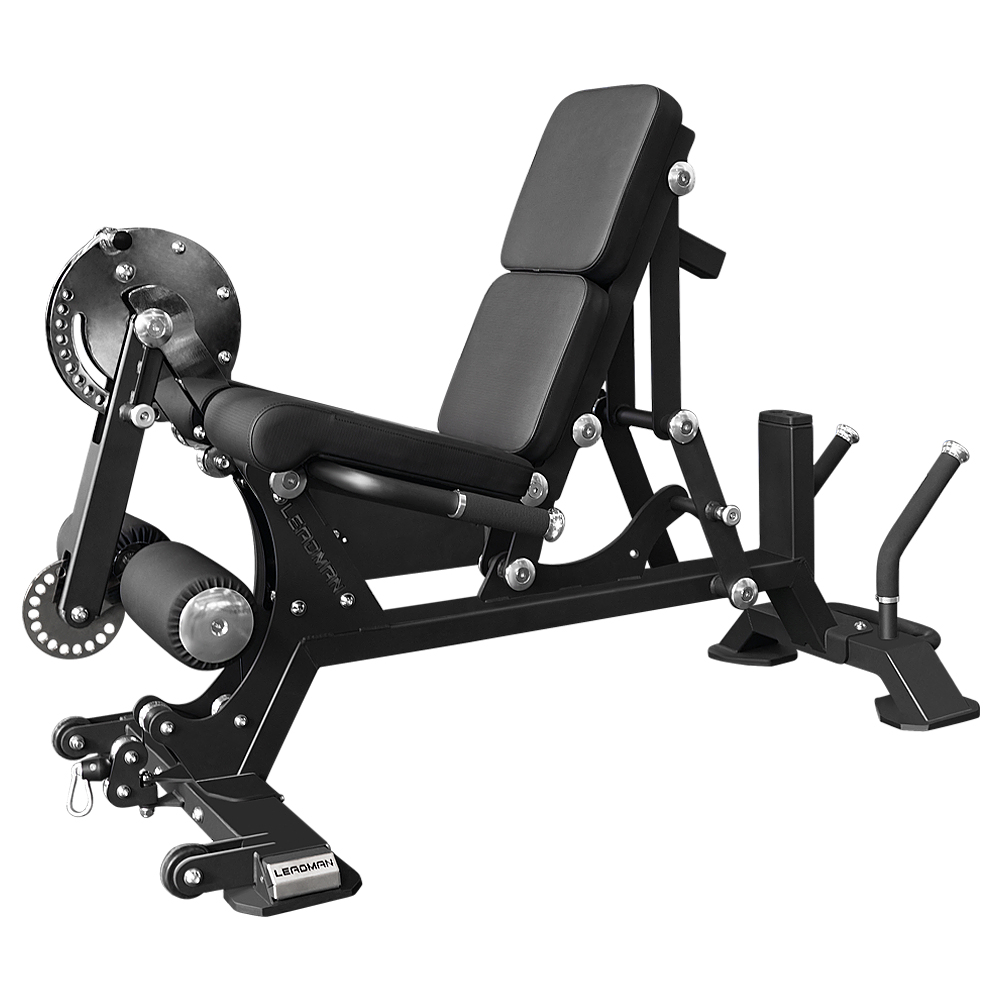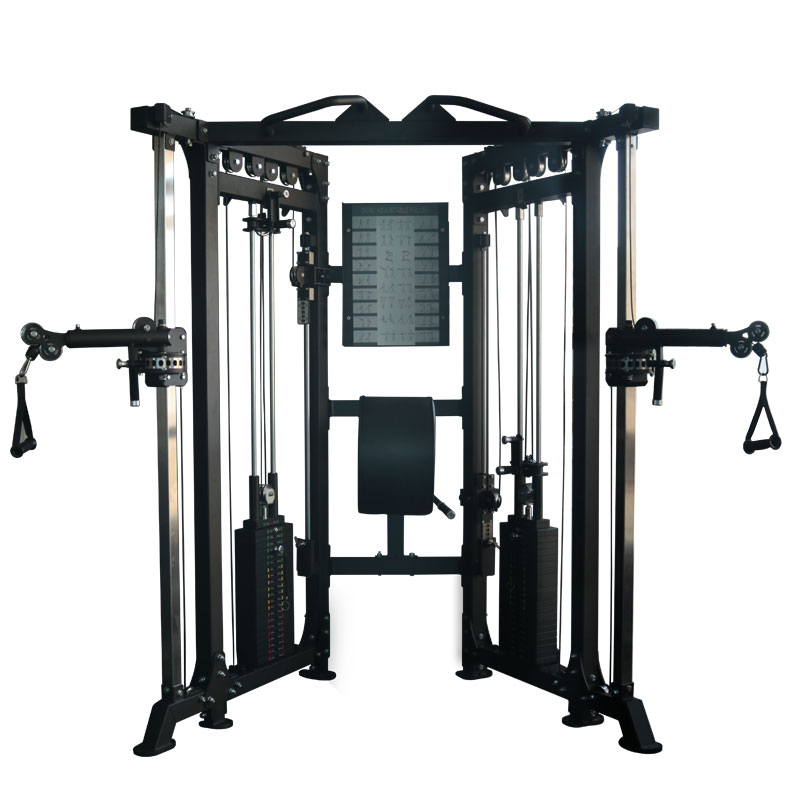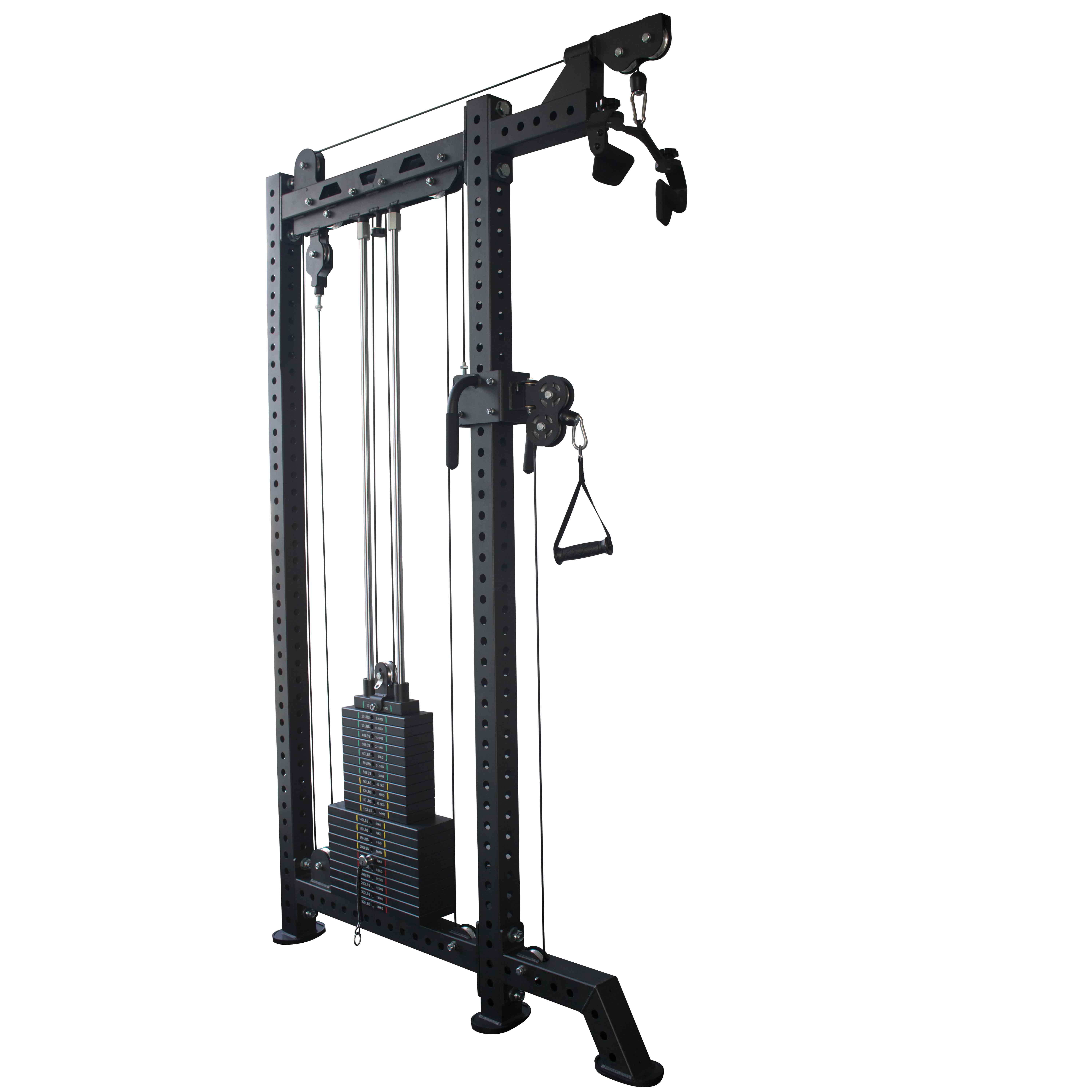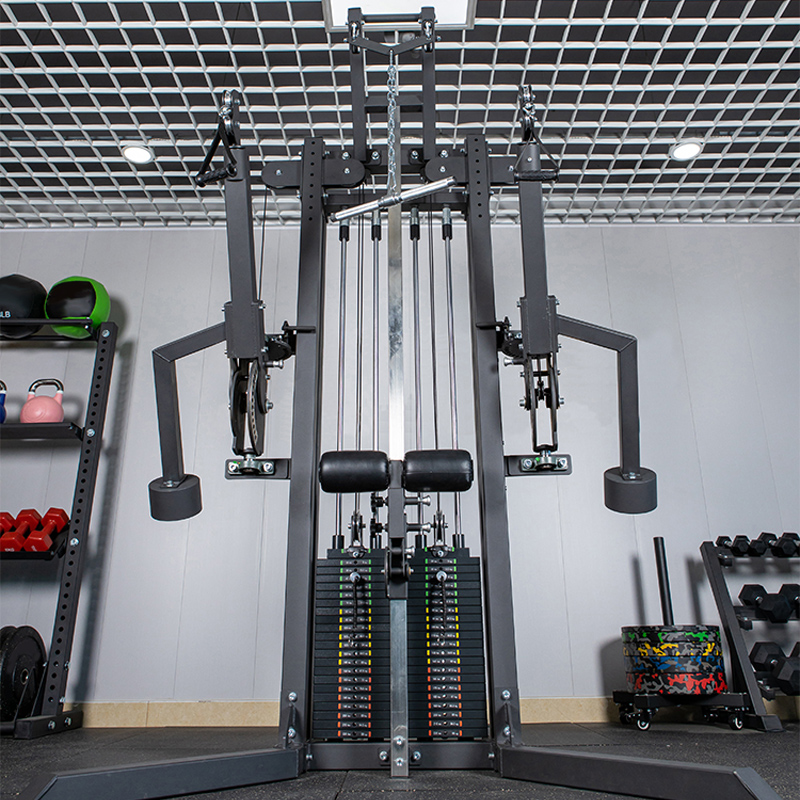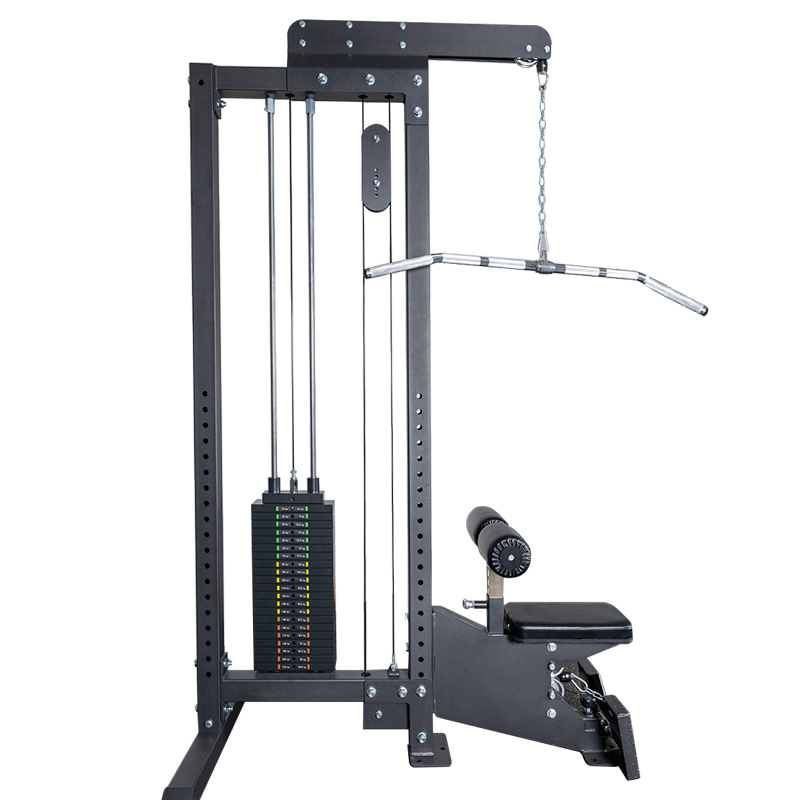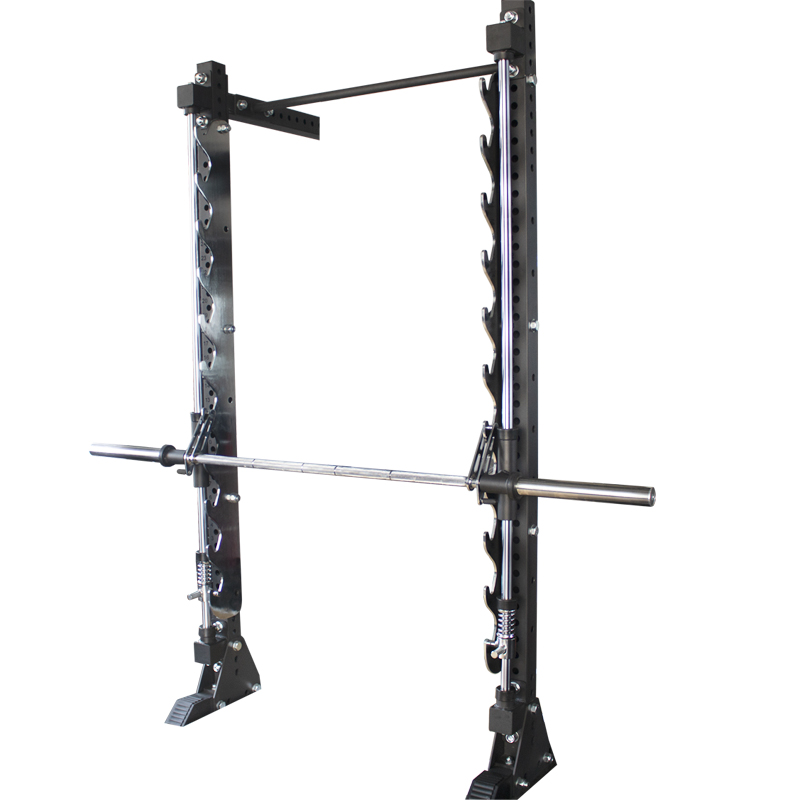
Back workout machines divide into three primary types: lat pulldown stations (vertical pulling, wide/narrow grips), seated row machines (horizontal pulling, scapular retraction), and back extension benches (spinal erector isolation). Commercial-grade units use 11-gauge steel frames, sealed bearings, and 7x19 aircraft cable systems with swaged end fittings. The cable travel ratio determines resistance feel: 2:1 provides smoother motion but halves felt weight (200 lb stack feels like 100 lbs); 1:1 delivers direct heavier resistance with shorter travel. Premium lat pulldowns use variable-radius cams that match the natural strength curve—less resistance at full stretch (where lats are weakest), more at contraction (where strongest). Fixed-radius pulleys create resistance that peaks mid-movement, causing premature failure. Lap pad mechanisms require positive locking under load; gas-assist or pop-pin systems with 5-7 height positions accommodate torso lengths from 15 to 22 inches.
Seated rows target rhomboids and middle trapezius through scapular retraction. Cable rows offer constant tension but higher cable wear at the 90-degree exit bend; plate-loaded rows eliminate cables but produce linear resistance curves (heaviest at start when lever is horizontal, lightest at finish). Chest pads must adjust in height (to contact sternum, not clavicles) and depth (arm length accommodation). Back extension benches require adjustable pelvic pads positioned just below the ASIS (anterior superior iliac spine); incorrect pad placement forces lumbar flexion or converts the movement to a hip hinge. Commercial benches use 45-degree angles for reduced spinal compression (30-40% less than 90-degree horizontal benches) and range-of-motion stops preventing hyperflexion beyond 30 degrees.
Lat pulldowns primarily drive shoulder extension/adduction (lat width), while seated rows drive scapular retraction (mid-back thickness). A complete back zone requires both vectors—minimum ratio of 2 pulldowns per 1 seated row for general commercial gyms. Plate-loaded T-bar rows and leverage rows suit hardcore facilities (unlimited resistance, no cables) at $5,000-10,000 per station. Cable-based machines for physical therapy require starting resistance under 20 lbs (via 2:1 or 4:1 ratio). Maintenance: inspect 7x19 aircraft cables monthly for broken wires (“fish hooks”); replace immediately if any strand breaks. Lubricate pulleys with dry PTFE spray every 6 months (never oil—oil attracts chalk dust). Weight stack guide rods require bi-weekly cleaning with isopropyl alcohol. Upholstery foam (ILD 60-85 for commercial) must remain firm; replace vinyl when cracks exceed 1 inch. A well-maintained commercial back machine lasts 10-15 years; cables and bushings are consumables requiring 2-4 year replacement cycles.
Let our experts design the perfect gym solution for your business. Get a free consultation and quote today.