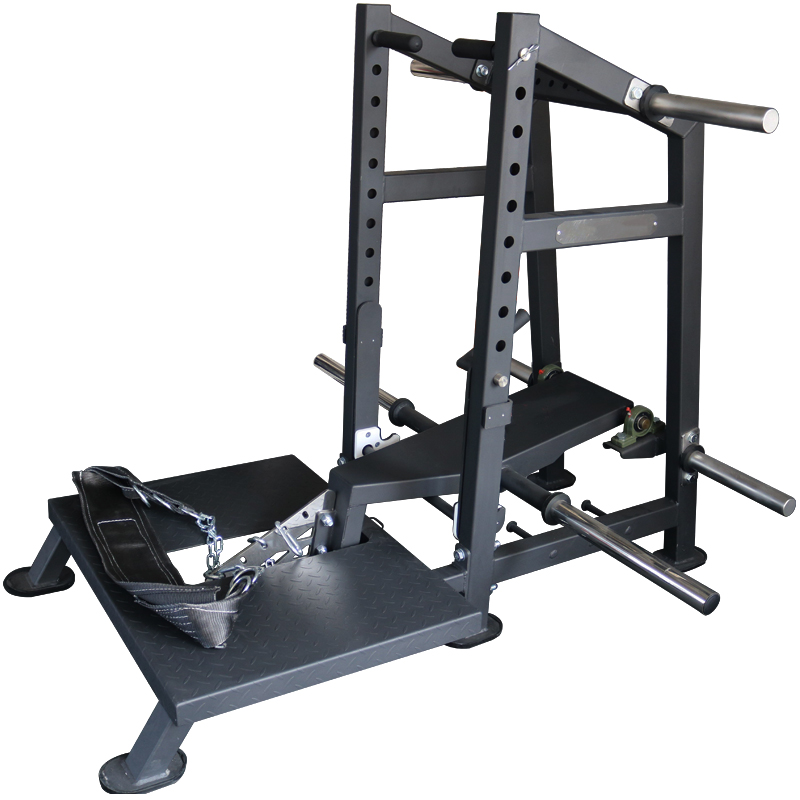
The hack squat equipment category represents a cornerstone of lower-body strength development, offering a unique biomechanical advantage that targets the quadriceps while minimizing spinal loading compared to traditional barbell squats. The hack squat machine features a fixed, angled sled that travels along precision guide rails, allowing athletes to position their feet at varying widths and heights to emphasize different muscle groups within the quadriceps complex, glutes, and hamstrings. The fixed movement path eliminates the balance requirements inherent in free-weight squatting, enabling users to push to concentric failure with reduced risk of injury—a critical advantage for both novice trainees and experienced bodybuilders seeking maximum hypertrophic stimulus. For commercial facilities, the hack squat apparatus provides a safer, more accessible alternative to barbell squatting that accommodates broader demographic participation while still delivering the resistance intensity demanded by serious strength athletes.
Engineering refinement in hack squat equipment centers on the guide rod geometry, sled bearing selection, and the shoulder pad positioning system—components that collectively determine the fluidity and safety of the lifting experience. Premium machines employ precision-ground chrome guide rods, typically 1.5 to 2 inches in diameter, coupled with self-lubricating linear bearings that resist binding even under asymmetrical loading conditions. The sled design must accommodate diverse anthropometric variations, with adjustable shoulder pads that allow users of varying heights to achieve optimal hip and knee angles throughout the movement's range of motion. For facilities prioritizing functional versatility, select hack squat machines incorporate quick-adjust foot platforms—offering multiple angle presets and textured surfaces that ensure secure footing during maximal efforts. The load carriage system, whether plate-loaded or selectorized with weight stacks, must deliver consistent resistance across the full stroke, requiring precise cable tensioning and low-friction pulleys that maintain smooth operation under repeated high-load cycles.
Commercial-grade hack squat equipment demands structural over-engineering to withstand the continuous high-impact loading characteristic of busy strength training zones. Frame construction utilizing 11-gauge steel or thicker, reinforced stress points with gusset plates, and robust cross-bracing prevent frame deflection even under 1,000-pound-plus loaded conditions. The finish quality—typically thermoset powder coating applied after comprehensive surface preparation—provides corrosion resistance essential for equipment longevity in climate-controlled but chemically active gym environments. For facilities evaluating hack squat equipment for their lower-body training zones, the integration of additional features such as user-specific exercise instruction plates, built-in weight storage pegs, and quick-changing weight horn systems significantly enhances operational efficiency and user satisfaction. The expanding adoption of plate-loaded hack squat designs reflects the trend toward versatile, heavy-duty equipment that accommodates progressive resistance programs while maintaining the biomechanical precision that distinguishes effective leg development from generalized strength training.
Let our experts design the perfect gym solution for your business. Get a free consultation and quote today.