Commercial Leg Press | 45-Degree Sled Machines for Heavy Lower Body Training

Commercial Leg Press - China Factory, Supplier, Manufacturer

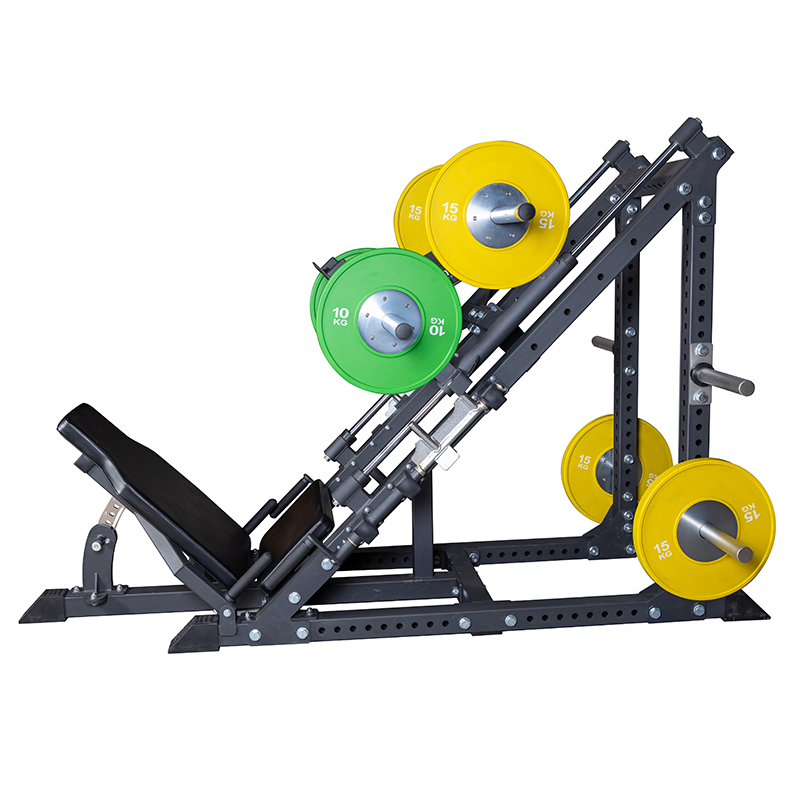
A commercial leg press is a heavy-duty strength machine designed for lower body training, featuring a seated or angled sled that the user pushes with their feet. Unlike home-grade leg presses, commercial units utilize 11-gauge or 7-gauge steel tubing, linear bearings or UHMW wear pads on the carriage guide rails, and oversized footplates with diamond-plate or laser-engraved grip patterns for traction. The primary configurations include the 45-degree angled sled (most common, balancing gravitational resistance with user comfort), the horizontal plate-loaded press (direct leverage, unlimited weight scaling), and the selectorized cable press (pin-selected weight stack, typically 250-500 lbs). For commercial facilities, a leg press sees 20-40 users daily, demanding robust construction with a frame weight exceeding 400 lbs to prevent tipping. The biomechanical pivot design must align with the knee's natural axis to reduce shear forces; poorly designed presses force the knees into valgus (inward collapse) or varus (outward) stress. Footplate adjustability (3-5 positions) accommodates different user heights and targets quadriceps versus glute-dominant pressing. The safety stop mechanism—adjustable steel blocks or rods—prevents hyperflexion and user entrapment under the carriage. Maintenance includes lubricating guide rods (dry PTFE spray), inspecting pivot bushings (every 6 months), and replacing gas-assist return springs when the carriage fails to reset. For facilities with limited floor space, a vertical leg press (standing position) reduces the footprint by 40% but requires higher initial resistance. Top-tier commercial leg presses meet ASTM F3105 or EN 957-2 Class S standards, with third-party load testing verifying 1,000+ lb dynamic capacity.
Frequently Asked Questions

The 45-degree angled sled uses gravity as resistance—the user pushes a weighted carriage along angled rails. This is the most space-efficient (approx 40″W x 70″D). Horizontal presses use a lever arm or direct cable; they feel more natural but require more floor depth (80-100″) and have different resistance curves (heavier at start).
Plate-loaded models: unlimited (user loads plates). Weight stack selectorized models: 250-500 lbs (felt resistance varies by cable ratio). Frame capacity: 1,000+ lbs dynamic load. Always verify manufacturer test certifications—third-party testing (MET Labs, TÜV) is preferred over self-declared ratings.
Monthly: clean guide rails and apply dry PTFE lubricant (never oil). Every 6 months: check pivot bushing wear (replace if lateral play exceeds 1mm), torque pivot bolts to spec (50-75 ft-lbs), inspect gas spring for return speed. Annually: test safety stops with 1.5x rated load.
Yes, if the machine has adjustable footplate height (3-5 positions) and a sliding seat or back pad. 5’0″ users need the footplate in the highest position; 6’4″ users need it lowest. Some premium models also adjust the starting angle of the back pad (10-15 degrees) to alter hip flexion.
Gas springs or counterweights assist the carriage return to the starting position, making it easier for smaller or rehab users to reset the sled. They also reduce the impact noise when the carriage reaches the end stop. However, they add maintenance complexity—gas springs typically need replacement every 20,000-30,000 cycles (3-5 years).

Related Products

Commercial Leg Press

Top Selling Products

Contact Form Modal

Ready to Transform Your Fitness Space?

Let our experts design the perfect gym solution for your business. Get a free consultation and quote today.
Free Consultation
Custom Design
Global Delivery
Professional Installation
WhatsApp