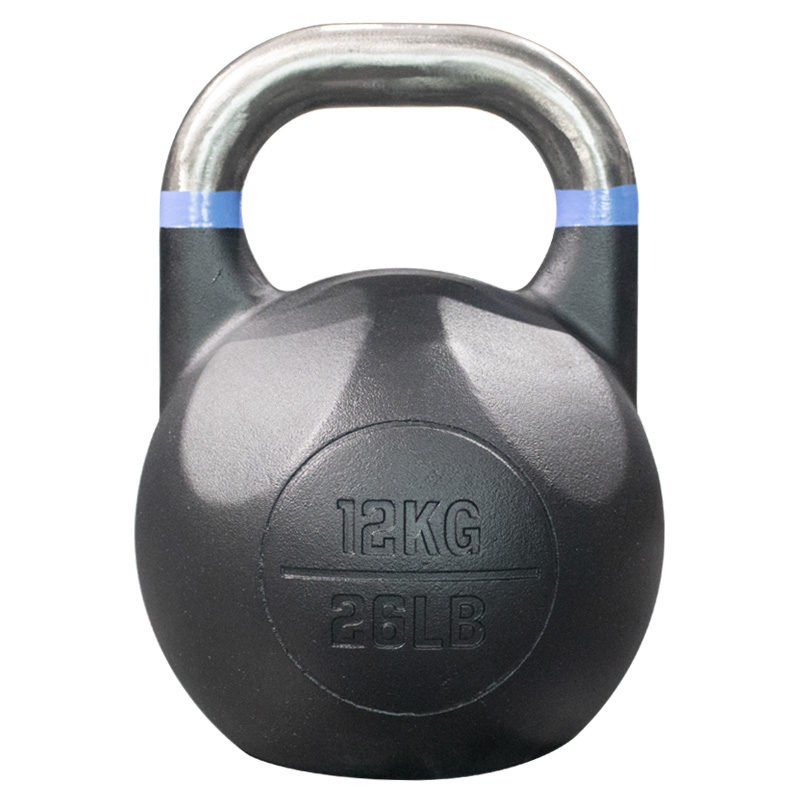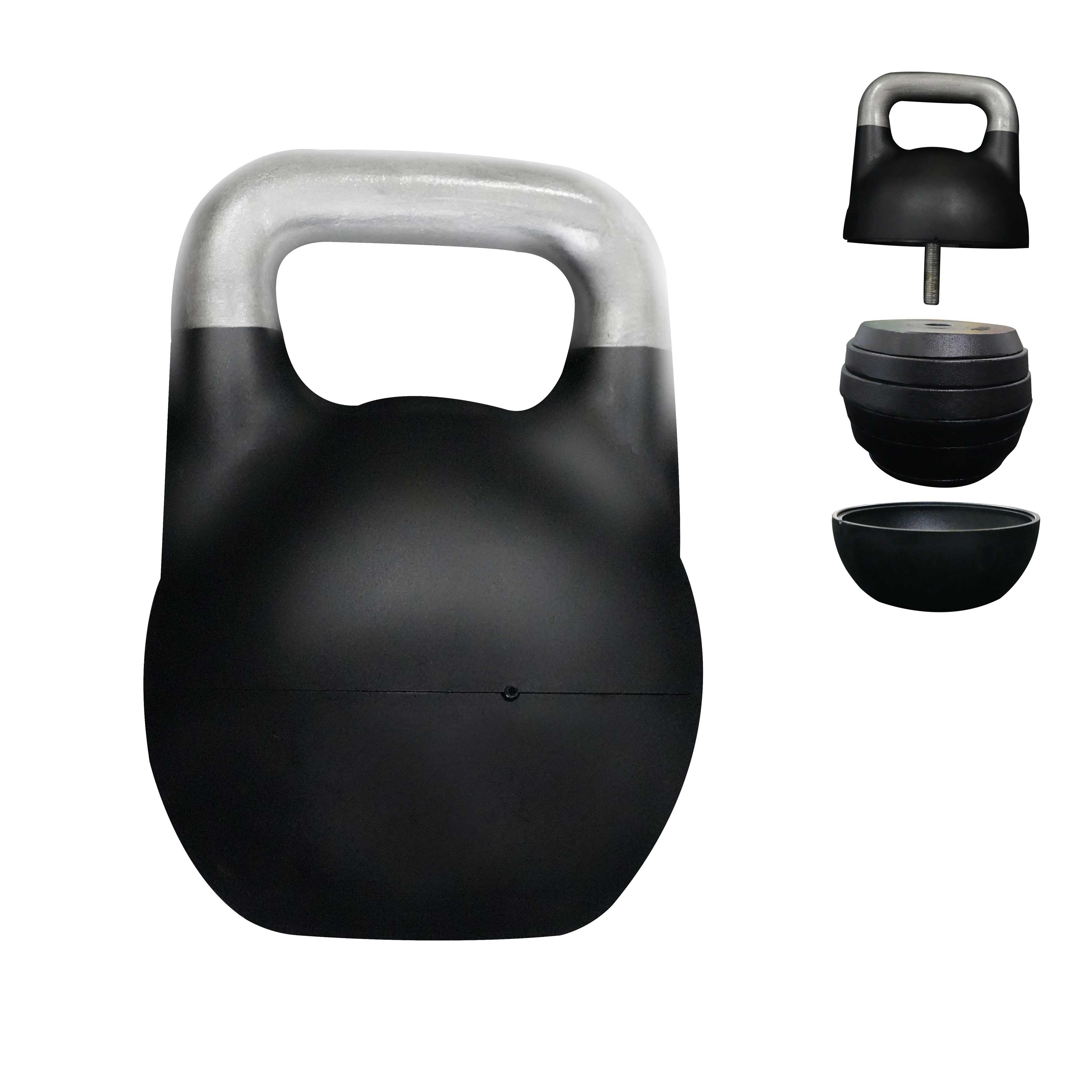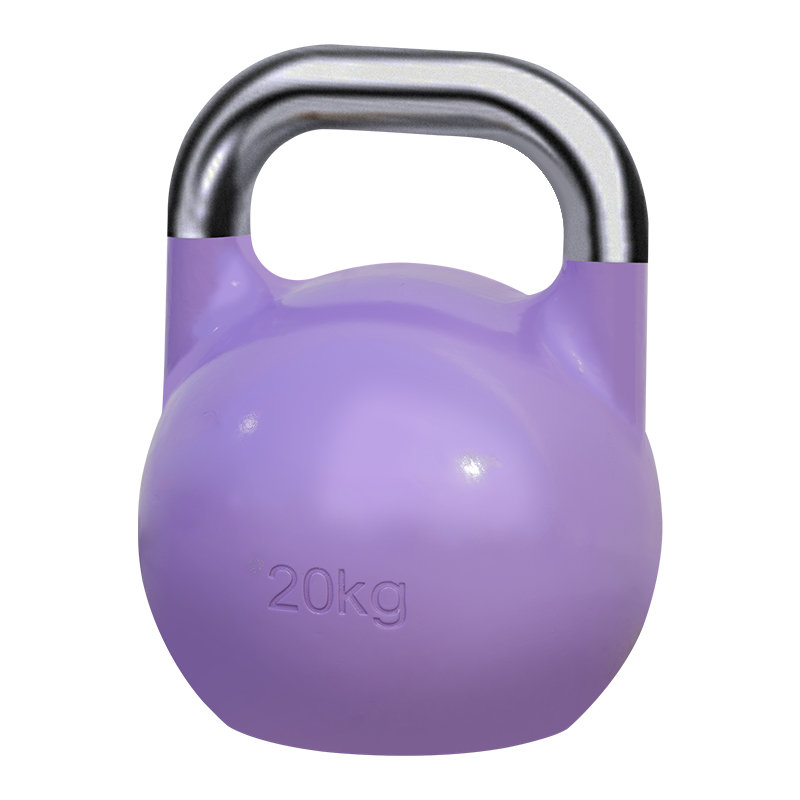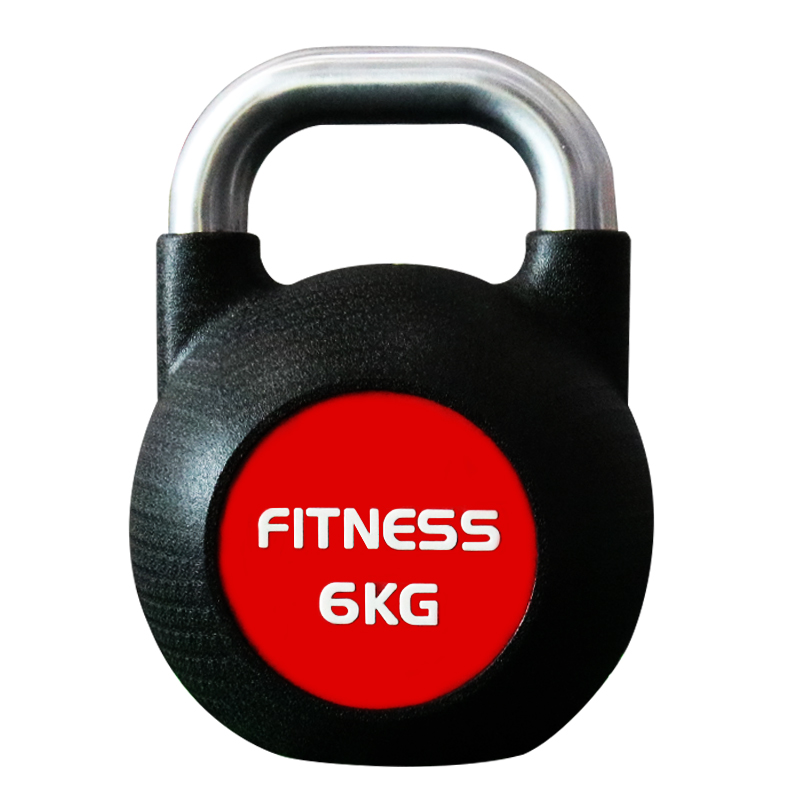
A 32 kg adjustable kettlebell replaces up to 10-15 individual kettlebells by allowing weight changes via removable plates or a rotating dial mechanism. This 70 lb capacity serves advanced strength athletes—strongman competitors, powerlifters, and high-level functional fitness users—who need progressive overload without dedicating floor space to a full kettlebell rack.
The engineering challenge of a 32 kg adjustable kettlebell lies in weight distribution and handle integrity. Premium designs use a steel outer shell with a central threaded rod or locking pin that secures weight plates inside the cavity. When fully loaded to 32 kg, the center of mass must remain stable—poorly designed adjustables shift weight toward the bottom or side, creating unbalanced swings and increased wrist torque. The handle attachment point is the critical failure zone; quality units use a continuous steel spine welded to the base plate rather than bolted or pinned handles which loosen under high-velocity movements.
User testing data from kettleball-specific forums indicates that 32 kg adjustables face higher failure rates than lighter (12-20 kg) versions. A 2023 analysis of 1,500 user reviews across adjustable kettlebell models found that 32 kg versions had 3x the reported handle loosening issues compared to 20 kg models due to greater momentum forces during swings and snatches. Conversely, premium units with fully welded internal chassis and dual locking mechanisms (threaded plus pin) showed 95% user satisfaction at 24+ months of heavy use.
For buyers investing in a 32 kg adjustable kettlebell, prioritize construction methodology over brand name. Look for units with a visible or documented internal steel frame—not just plates stacked inside a plastic or thin steel shell. Verify the locking system redundancy: a primary threaded rod plus secondary locking pin prevents accidental plate shifts if the main thread wears or loosens. Test the handle texture and thickness: 33-35mm diameter with medium-depth knurling or textured powder coating prevents slipping when hands sweat. Confirm the weight change speed: dial-based adjustments (like bow-tie mechanisms) take 2-3 seconds but add failure points; plate-loaded designs take 30-60 seconds but offer greater long-term reliability. Finally, assess base stability—the kettlebell should sit flat without rocking when placed on the floor, regardless of weight setting.

Let our experts design the perfect gym solution for your business. Get a free consultation and quote today.