
What Should Buyers Look for in a Gym Equipment Supplier?
Separate "Looking at Equipment" from "Looking at a Supplier" — They Are Different Judgments
Among the hundreds of buyers we have worked with, the most common mistake is equating equipment quality with supplier reliability. A buyer sees a supplier's sample with beautiful welds and thick steel tubes, and immediately assumes this must be a highly reliable partner. But reality often tells a different story: the sample was cherry-picked. When it comes to mass production, delivery dates slip, the cardio equipment they promised cannot be scheduled, and spare parts are nowhere to be found.
Good equipment quality only proves that the supplier has a decent set of drawings or a capable OEM partner. It does not prove that their capability as a Commercial Gym Equipment Supplier is sound. When a buyer pays, they are not just buying iron; they are buying delivery commitments, cross-category coordination, and years of after-sales support. So in this article, we are not going to talk about how to inspect a weld or measure tube thickness. We will focus exclusively on this question: how do you evaluate whether this supplier is worth entrusting with your future procurement, regardless of how good their equipment looks?
Tier 1: Threshold Requirements — Fail One, and You Walk Away
The first step in evaluating a supplier is setting a floor, not finding a highlight. There are three threshold requirements. If a supplier fails any one of them, you should disqualify them immediately, no matter how low their price is.
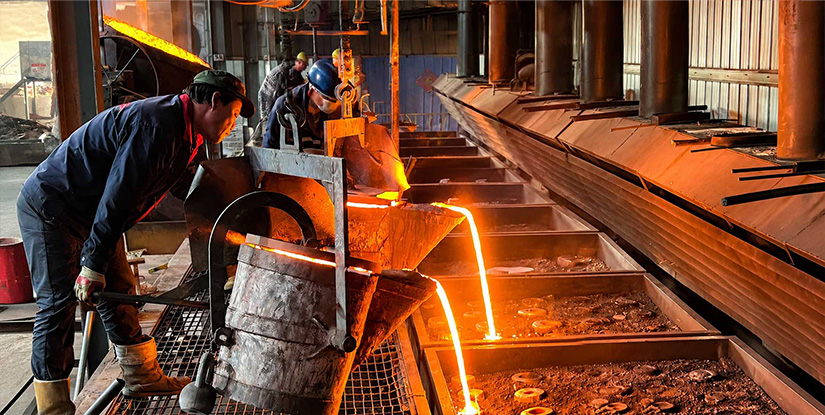
First: Supply Stability. Do not look at the "standard lead time" on their quotation sheet. Ask for the actual shipping records of the same model over the past six months. If they hesitate or if their delivery dates are frequently delayed for various excuses, this supplier will absolutely abandon you during peak season. Second: Core Category Coverage. You do not need their catalog to list hundreds of products, but if they do not have independent production lines for core commercial strength and cardio equipment, their supply is just drop-shipping. Third: Information Transparency. If they are unwilling to provide a Chinese business license, a specific model specification sheet, or a live, uncut video tour of their factory, there is likely a trading company hiding behind the curtain. A Commercial Gym Equipment Suppliers who will not even show you their cards does not deserve a spot on your shortlist.
Tier 2: Decisive Factors — What Determines If You Are Still Partners in Three Years
If a supplier passes the threshold, it means they are competent. But whether you can build a long-term partnership depends on three decisive factors. These determine your long-term maintenance costs and operational headaches.
First: Cross-Category Coordination. Many suppliers claim they "sell everything," but their strength equipment comes from one factory and their cardio equipment is rebranded from another. At delivery, not only do you receive split shipments, but the coating colors might not even match. True coordination means this Commercial Fitness Equipment Supplier can prove to you that they can unify production schedules across categories and ensure everything fits perfectly into a single container. Second: After-Sales Structure. Do not listen to "we offer a lifetime warranty." Ask the hard questions: Are spare parts held in a local warehouse or at the Chinese factory? If the latter, how long does customs clearance take? If a machine breaks, will you pay for the local technician, or do I have to absorb that cost? Third: Spare Parts Commonality. Ask whether the pulleys and cables for one model can be shared with other models. If every model uses unique, proprietary parts, your local spare parts inventory will crush your cash flow in year three.
Tier 3: Scenario Factors — Your Business Type Determines Who Fits Best
Once a supplier passes the threshold and the decisive factors, the remaining candidates are all excellent. At this point, your final decision depends on your own business model.
If you are a 200-square-meter boutique studio, you need small-batch flexibility above all else. You need a supplier who can handle mixed, small orders without cutting corners. For a 2,000-square-meter commercial gym project, you need absolute large-scale delivery capability. You need a true Bulk Commercial Gym Equipment Supplier with enough production capacity to absorb your volume and handle last-minute configuration changes. If you are a distributor, your core requirement is margin and turnover. You need a Gym Equipment Wholesale Supplier who leaves enough room for your markup and provides a product mix that is easy to sell.
Evaluating a supplier is not a checklist exercise. Use the threshold requirements to eliminate the unqualified. Use the decisive factors to evaluate long-term value. Use the scenario factors to match your business reality. After walking through all three tiers, you are not choosing the "best supplier." You are choosing the one that is least likely to force you to look for a new supplier within the next three years.